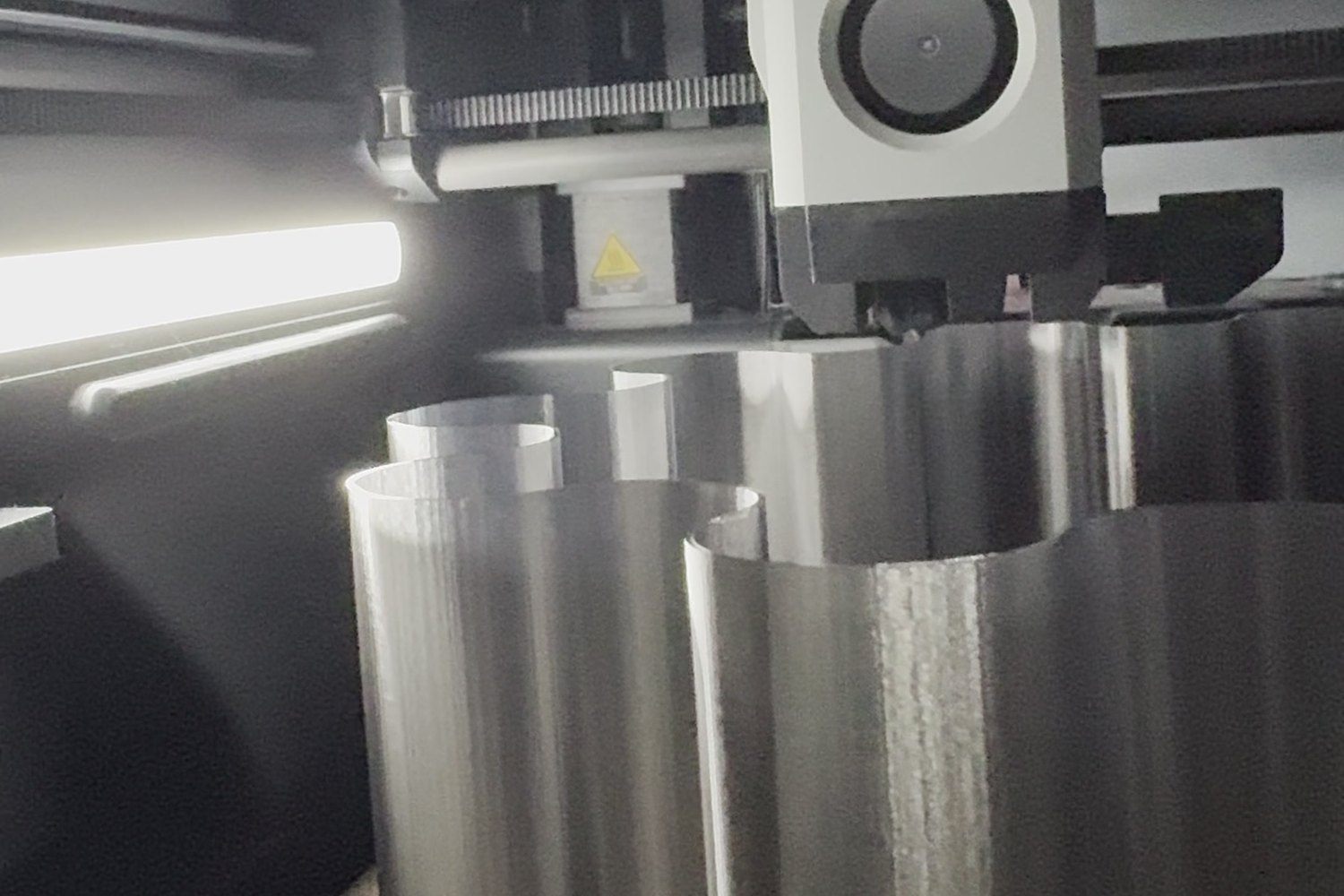
Visible layer lines are part of how FDM-made lamps are built. Here is what they mean, how they shape the glow, and what good print quality looks like.
In this story (4 sections)
Layers are how an FDM object comes into being.
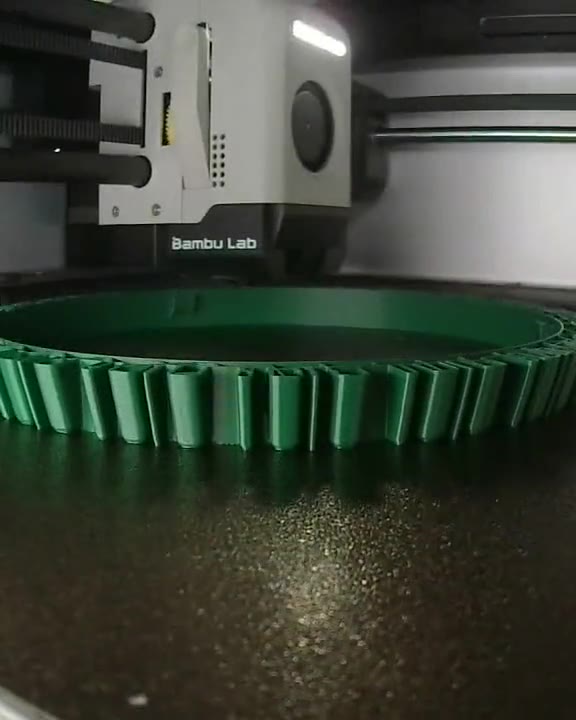
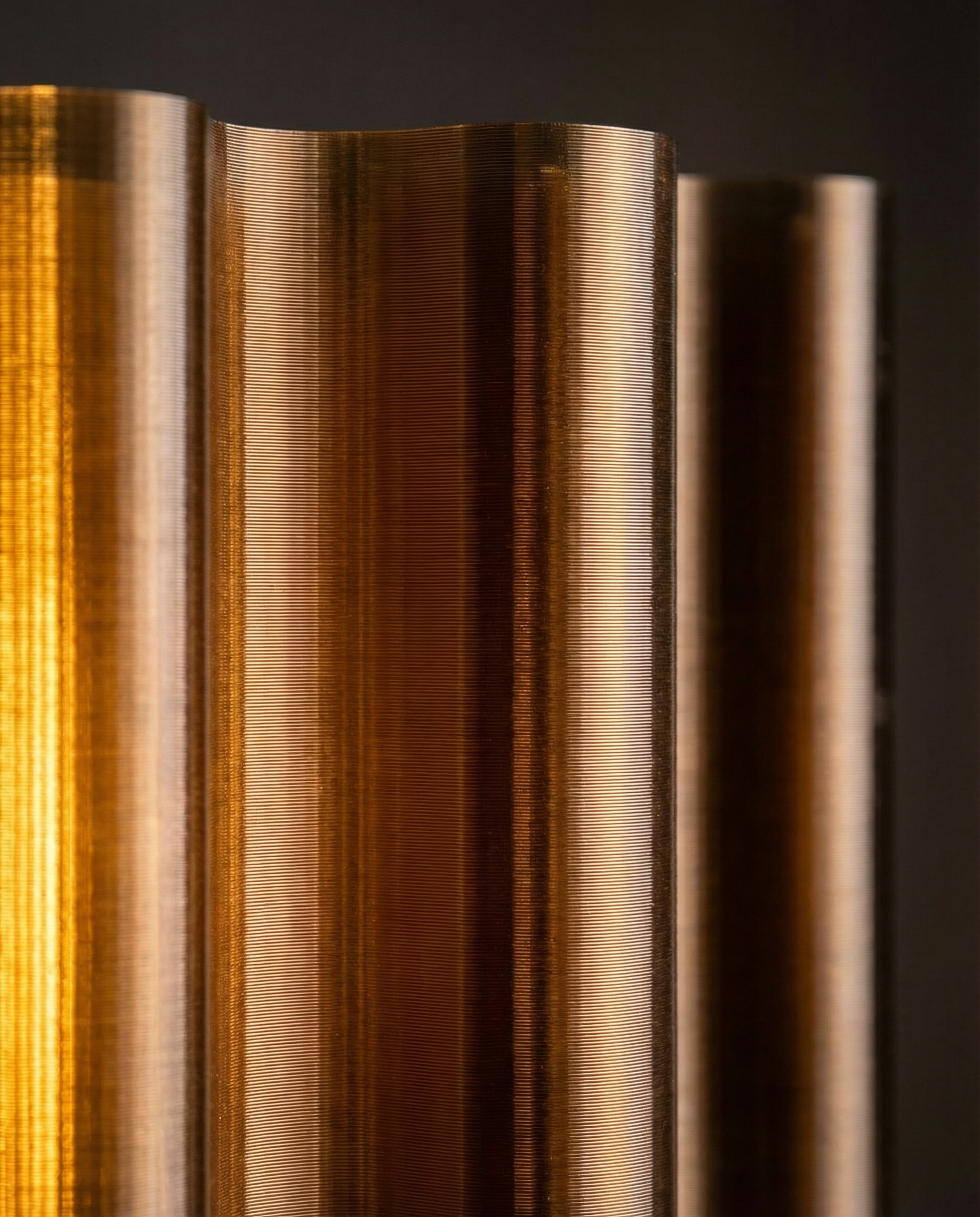
Many 3D-printed lamps are made through fused deposition modeling, or FDM. The printer places material in fine passes, one layer above another, until a digital form becomes a physical object. On a lamp shade or base, those passes can remain visible as quiet horizontal lines, ribs, or a gently stepped surface.
That texture is not automatically a defect. It is a direct consequence of the process, much like grain in timber or a seam in hand-thrown ceramic. What matters is whether the surface has been considered as part of the design: even, deliberate, and appropriate to the lamp's scale and geometry.
Geometry decides whether the layers feel graphic or soft.
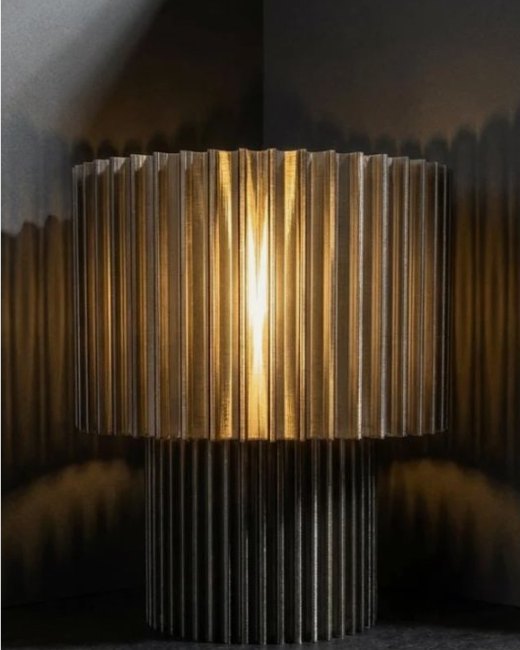
Layer lines read differently on every form. On a vertical cylinder they can feel calm and architectural. Around a curved shade, they may catch light as a soft contour. A design with ribs, folds, or repeating facets can make the additive process feel especially coherent because the form gives the layers a clear visual rhythm.
This is why print orientation and shape are design decisions, not just production settings. A thoughtful lamp uses its construction to support the silhouette people see in daylight, then lets that same surface become more nuanced once the light is switched on.
The surface changes the glow as well as the appearance.
Light travels through a 3D-printed diffuser differently from a perfectly smooth molded shade. Wall thickness, material opacity, and the slight texture of the layers can all affect how the glow spreads. The result may be a more granular, atmospheric diffusion rather than a flat sheet of brightness.
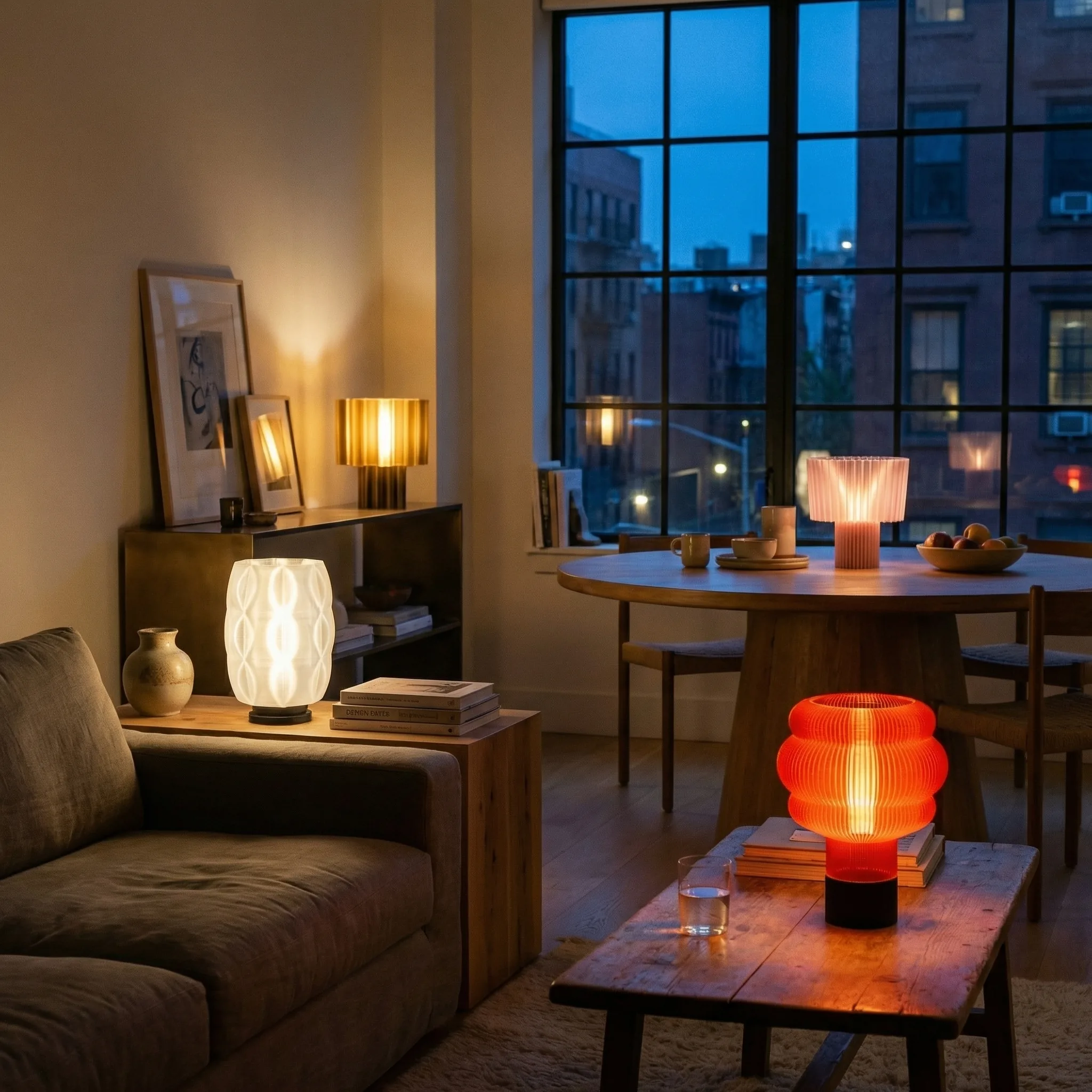
That is useful when a table lamp is meant to create ambient light. The goal is not to make the printed texture perform a trick. It is to let the object soften the source of light while still keeping a readable form and a sense of material presence.
Good visible layers should look intentional, not accidental.
When judging a 3D-printed lamp, look for consistency. The surface should have a steady rhythm, clean transitions, and a finish that suits the object rather than trying to imitate a material it is not. Small variations can be normal in a fabricated object; rough patches, unstable edges, or uneven construction are something else.
The best 3D-printed lighting does not ask you to ignore the process. It gives the process a role in the final object: a trace of digital fabrication translated into a lamp that still feels considered, domestic, and warm.