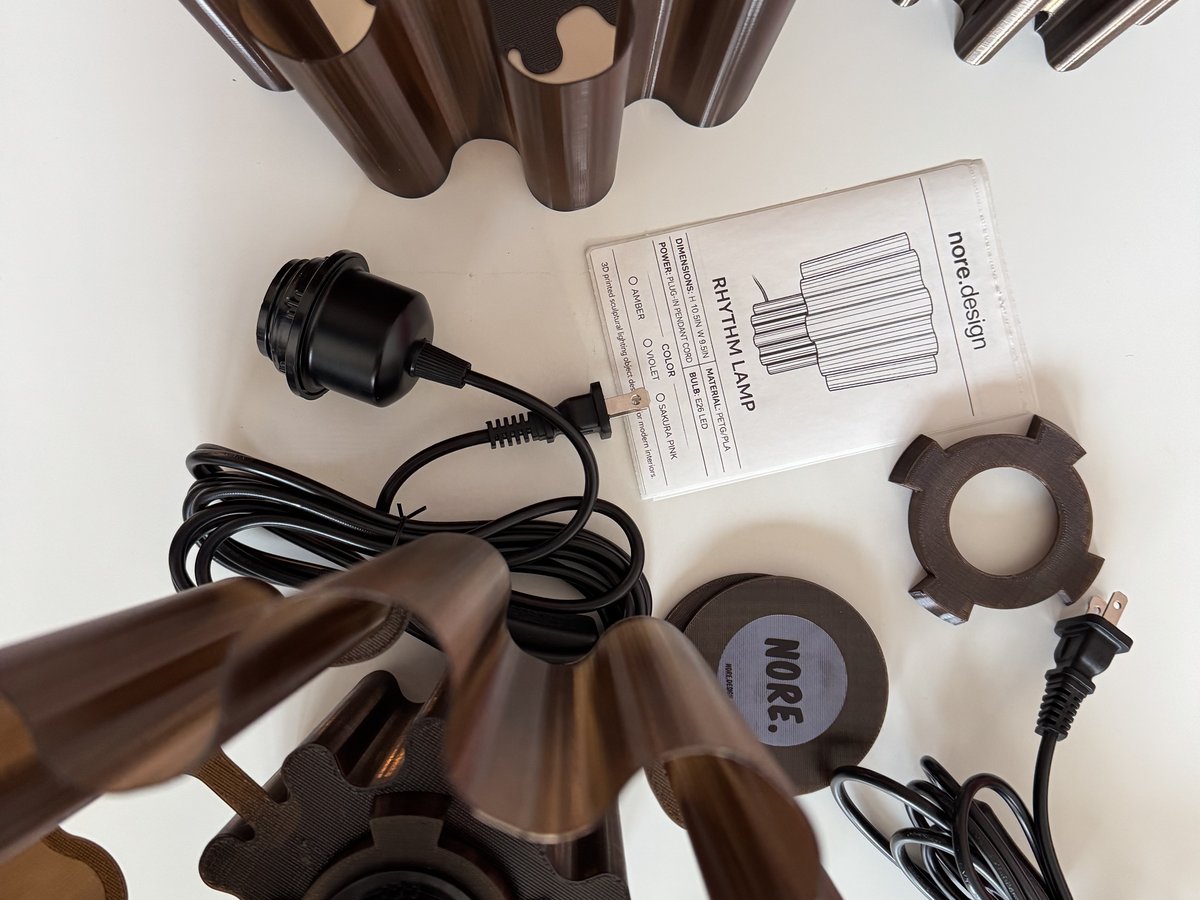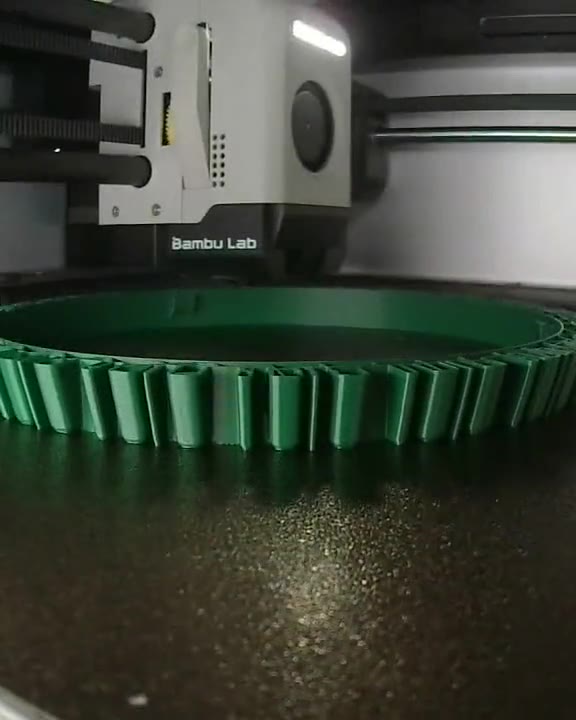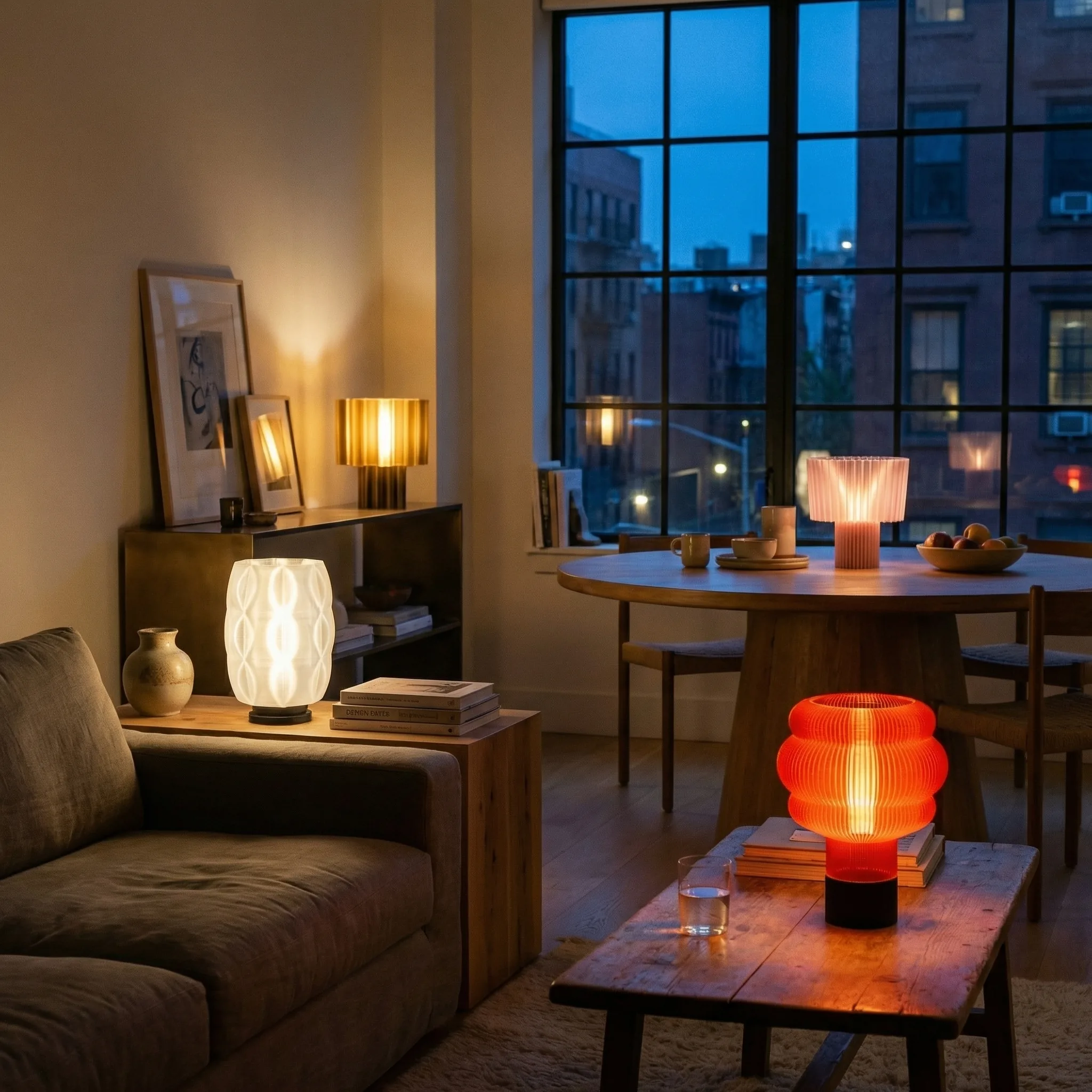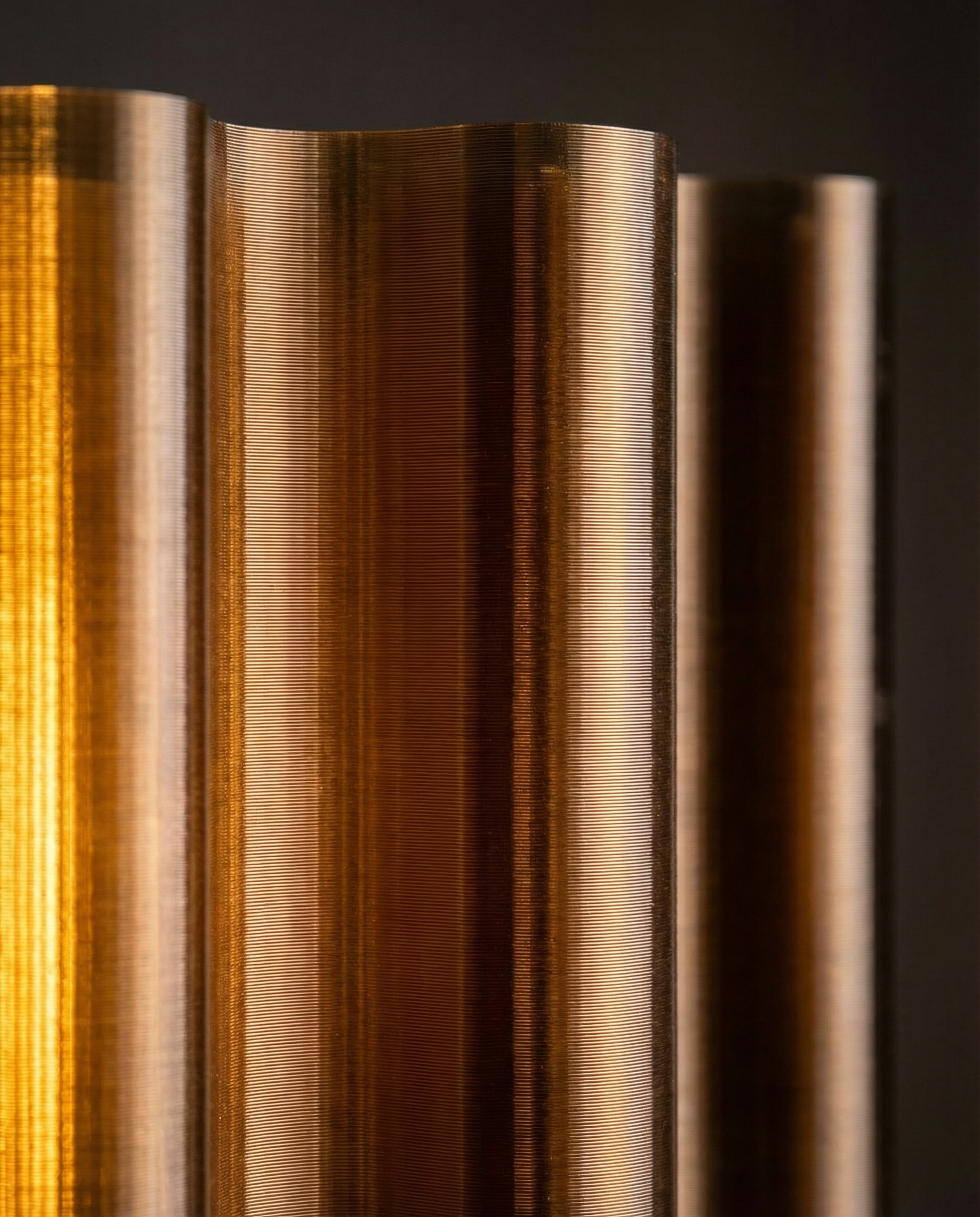
Material choice shapes more than durability. It influences finish, translucency, print clarity, and the overall feel of a 3D-printed lamp in a home.
In this story (4 sections)
PLA is often chosen for finish and visual clarity.
PLA is widely used in design-led 3D printing because it can deliver crisp layer definition, stable geometry, and a refined surface character. For sculptural lighting, that often translates into cleaner form language and a more tactile visual rhythm.
When people respond emotionally to a printed lamp, they are often responding in part to that surface quality.
PETG can offer a different balance of resilience and translucency.
PETG is often discussed in more technical terms because it can behave differently under stress and can offer useful material properties for certain applications. In lighting, though, the question is not only strength. It is also how the material diffuses light, how it prints, and whether it supports the intended finish of the design.
There is no universal winner outside the object itself.
The better material depends on the lamp. Form, wall thickness, target glow, and intended room use all shape the right choice. Material decisions in design objects should be made in context, not in abstraction.
For customers, the real question is how the lamp feels at home.
A good lighting object should feel coherent when you live with it. The material should support the right glow, the right texture, and the right long-term impression. Technical comparisons matter, but they only matter if they improve the final object in the room.