A clear guide to how layered fabrication becomes a refined lamp with warmth, structure, and atmosphere.
In this story (4 sections)
It starts with the form, not the machine.
At NORE, 3D printing is not the concept. It is the production method that allows a designer's geometry to stay precise, lightweight, and expressive. Every lamp begins as a sculptural form designed around how light should move through it, not just how it should look when switched off.
That distinction matters. A lamp that photographs well but throws harsh light does not belong in a real room. We design around atmosphere first: glow quality, surface rhythm, silhouette, and how the object sits on a table or shelf.
The object is built in layers.
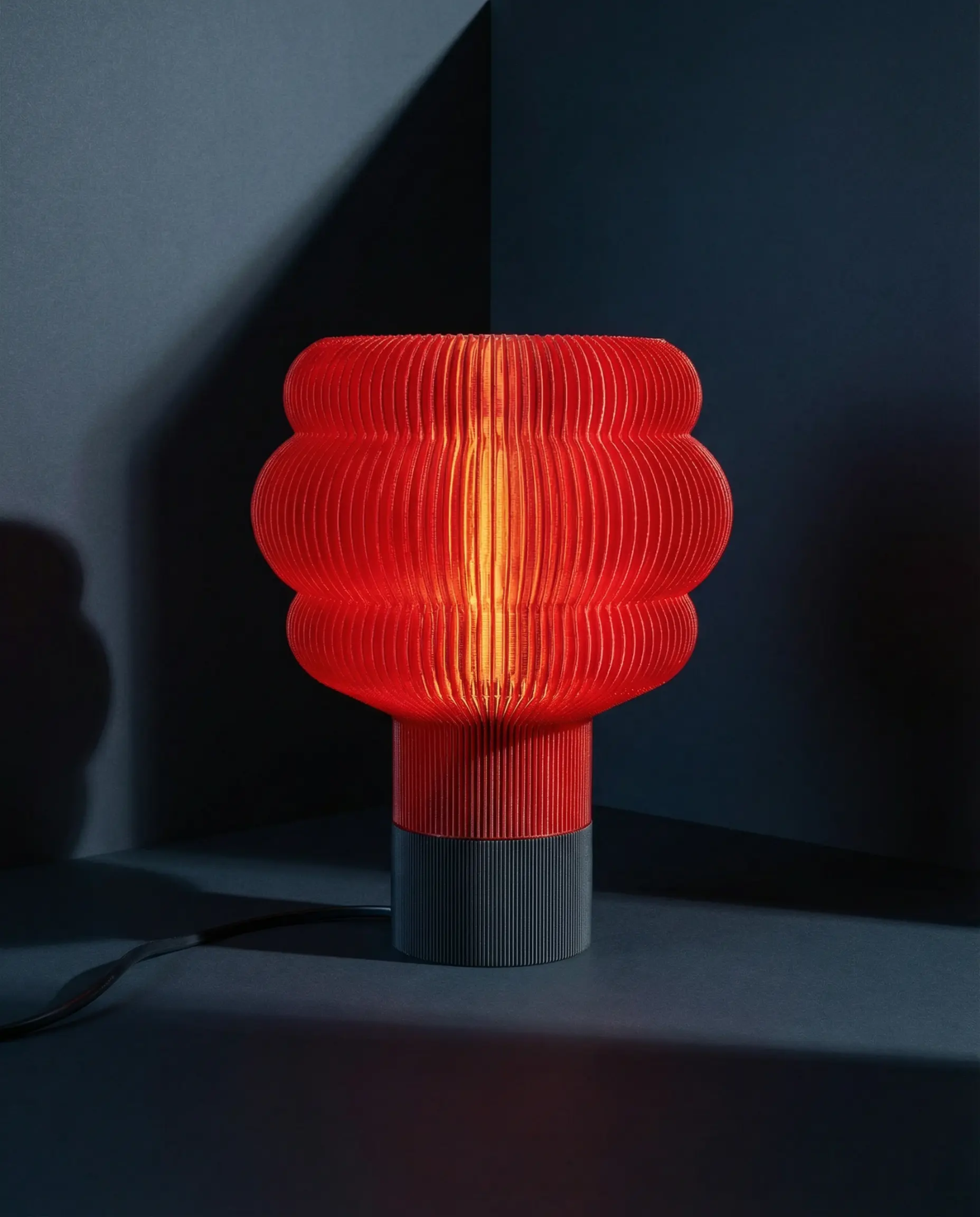
A 3D-printed lamp is created by depositing material layer by layer. Instead of cutting away from a solid block, the printer builds the body gradually, following the digital structure with high consistency. This makes complex folds, ribs, and curved diffusers possible without traditional molds.
Those visible layers are not a flaw to hide. In the best objects, they become part of the character - subtle, tactile evidence of how the piece was made.
Material choice affects the glow.
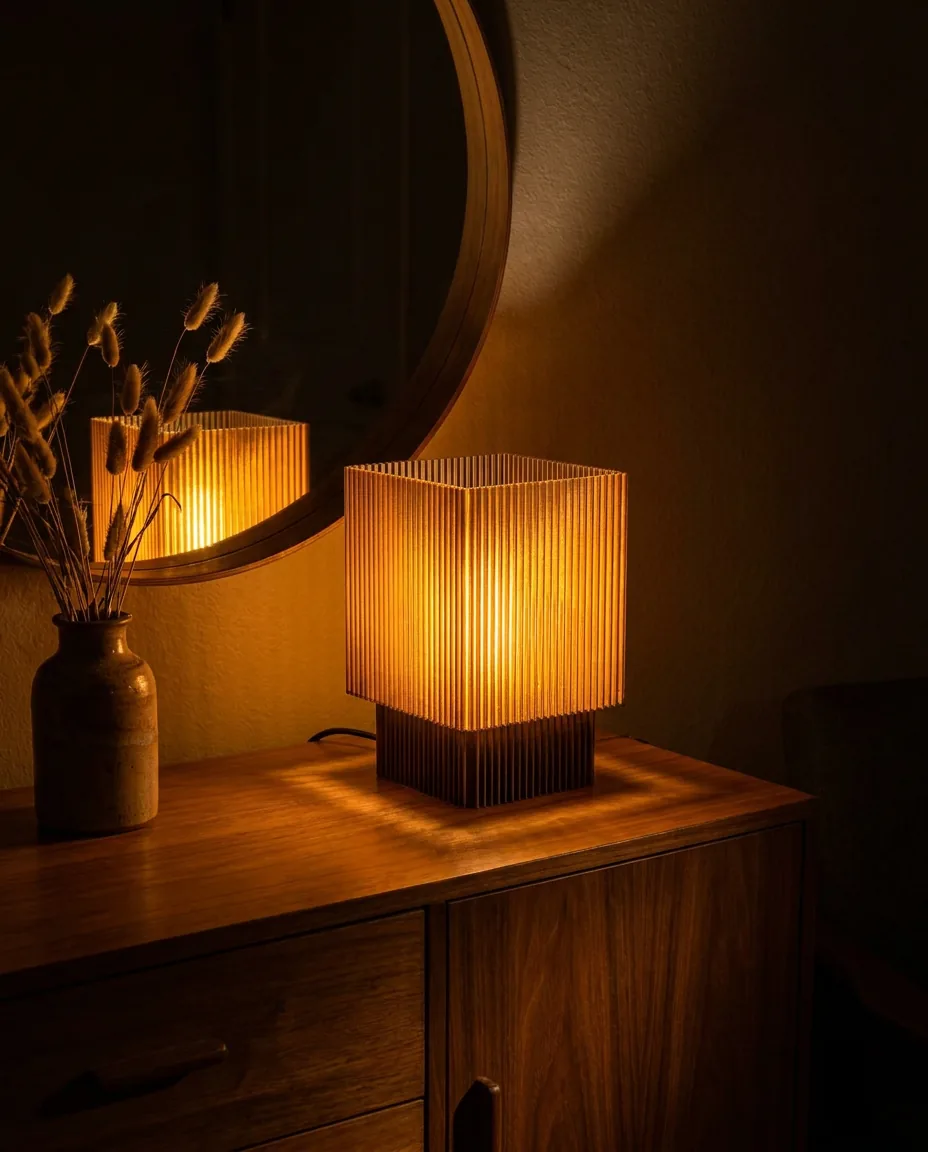
The way a lamp diffuses light depends on wall thickness, geometry, and material behavior. Slight changes in opacity or print density can make a lamp feel crisp and architectural or soft and atmospheric.
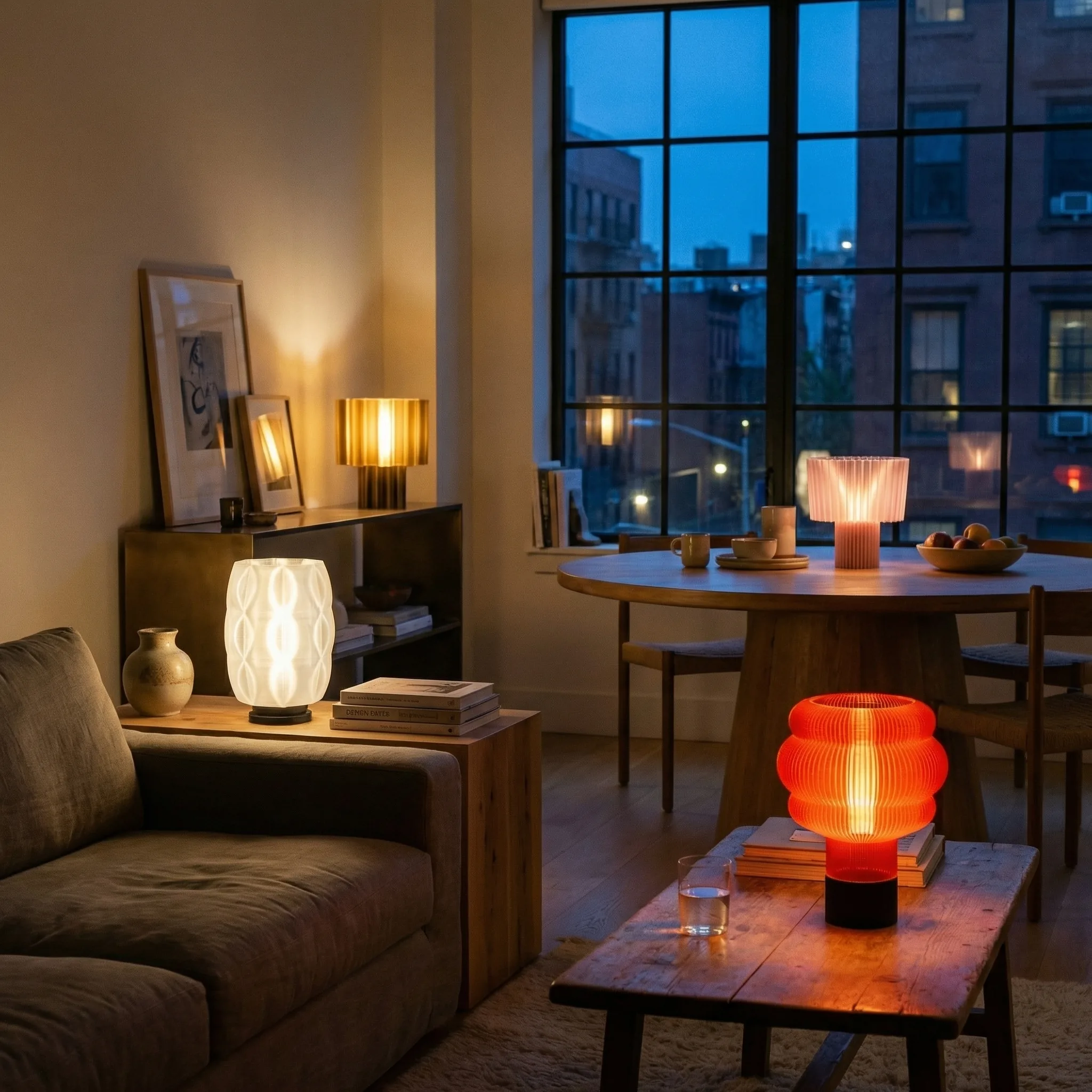
That is why 3D-printed lighting is not one generic category. Two lamps made with similar materials can feel completely different depending on how the shade geometry handles diffusion.
Assembly still matters.
Printing is only one part of the process. The lamp still needs hardware, wiring, bulb compatibility, stability, and final finishing. We treat every design as an object that has to live beautifully in a home, not as a technical demo.
The result is a piece that feels both digital and intimate: a modern fabrication method, translated into warm domestic light.