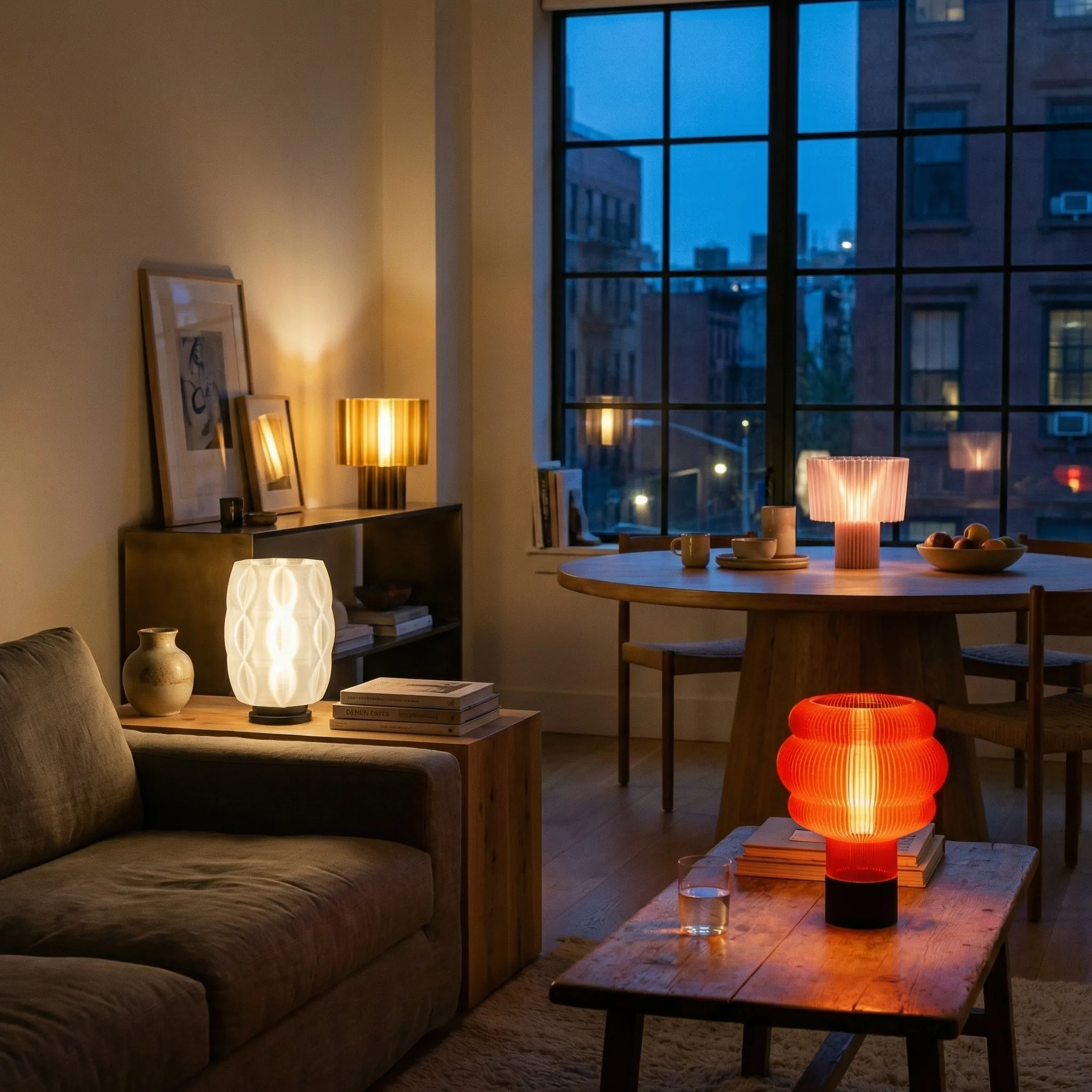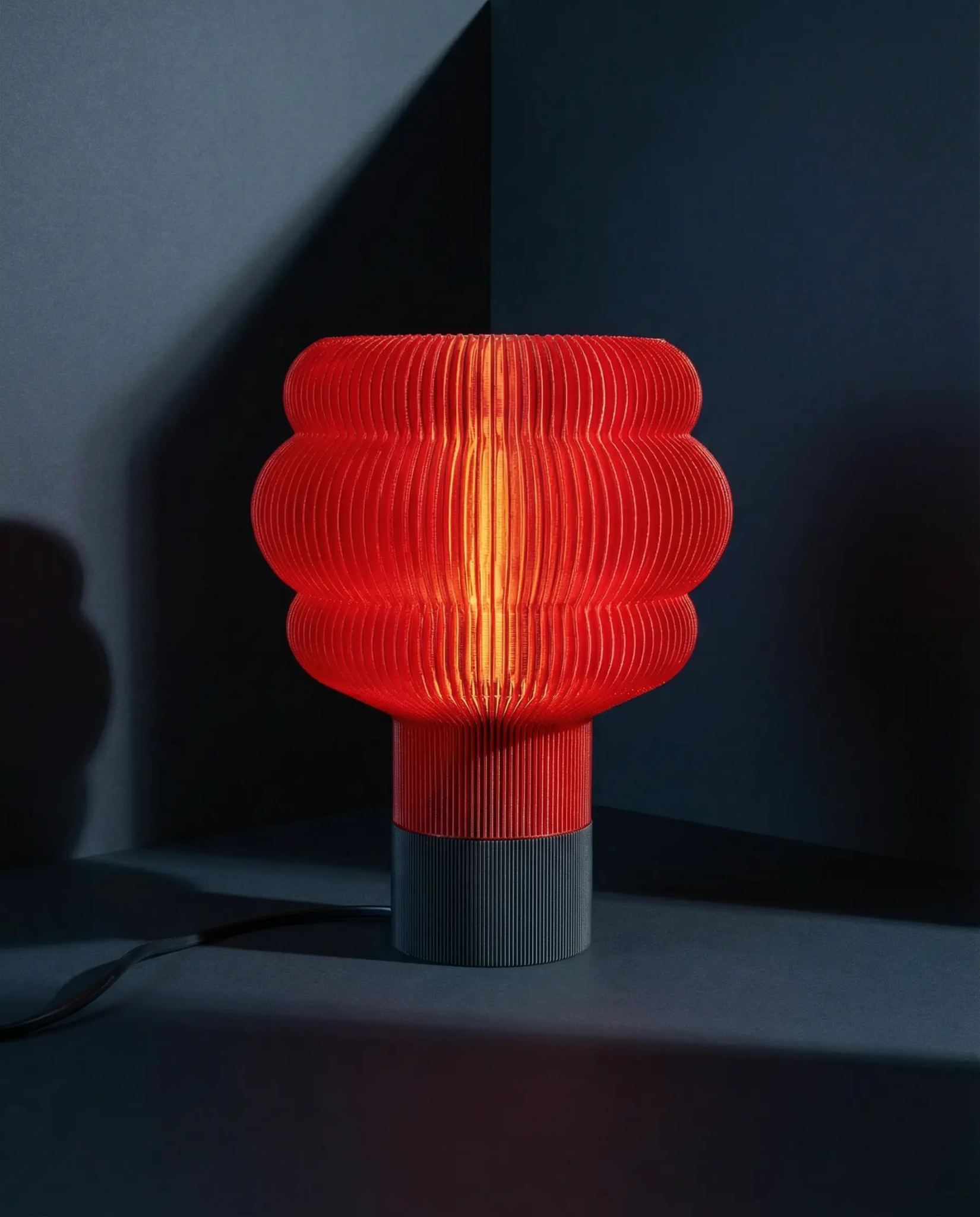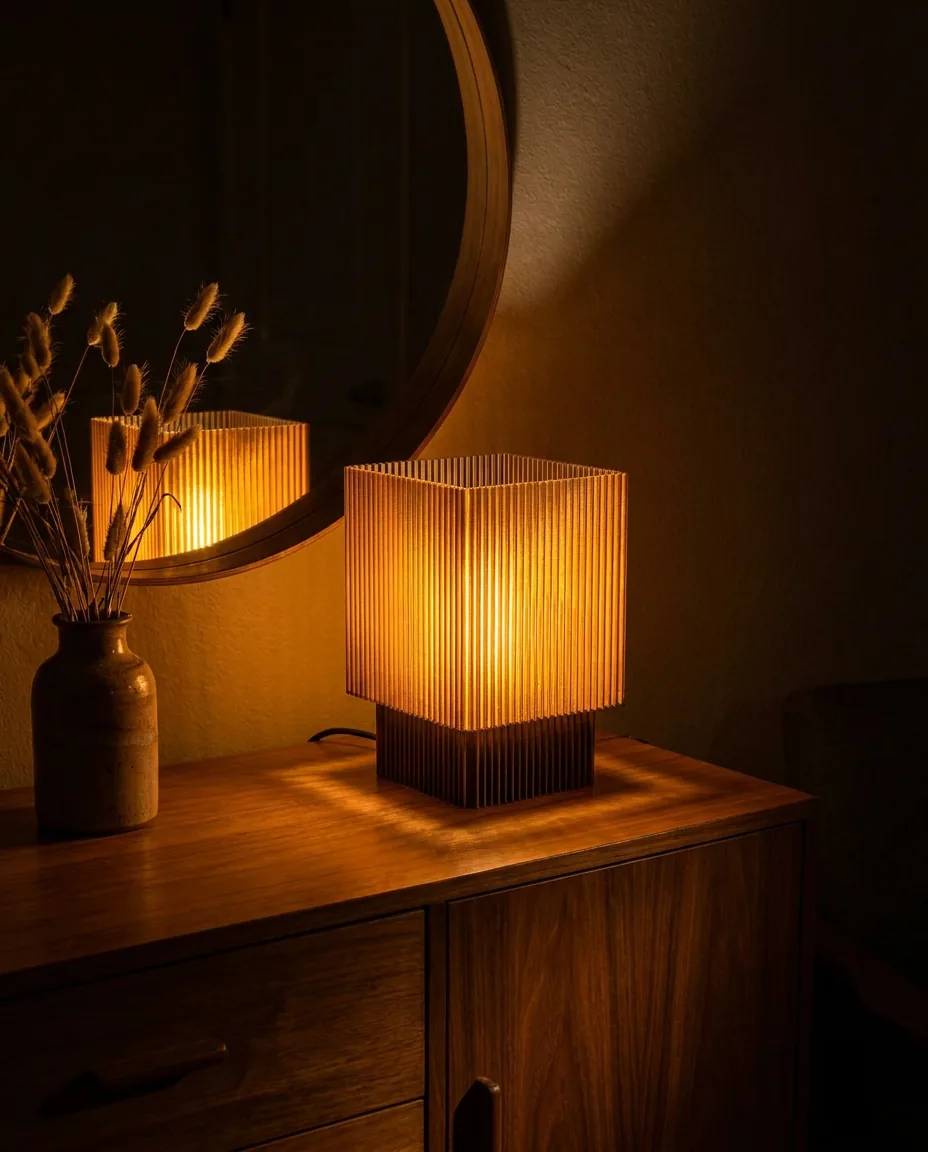
Good ambient light is rarely accidental. Shape, diffusion, color temperature, and placement all change how a lamp feels in a room.
In this story (4 sections)
Warmth begins with diffusion.
A lamp feels warm when light is shaped before it reaches the room. Diffusion softens edges, reduces glare, and lets the object act as an atmosphere source instead of a spotlight.
This is why sculptural shades matter. They are not decoration added after the fact - they are what makes the light usable.
Color temperature sets the emotional tone.
Lower color temperature creates a calmer mood. Warm light tends to flatter materials, soften contrast, and support the feeling of a room at rest. Harshness often comes from overly bright output or a cooler temperature that feels too exposed.
Placement changes everything.
The same lamp can feel gentle on a sideboard and harsh on a bare desk. Reflected light, wall tone, furniture height, and nearby surfaces all shape the final effect. This is why ambient lighting is as much about placement as product selection.
A warm lamp should still stay legible.
Softness should not mean visual blur. The best lamps still keep their geometry readable and their material presence intact. They glow without disappearing.