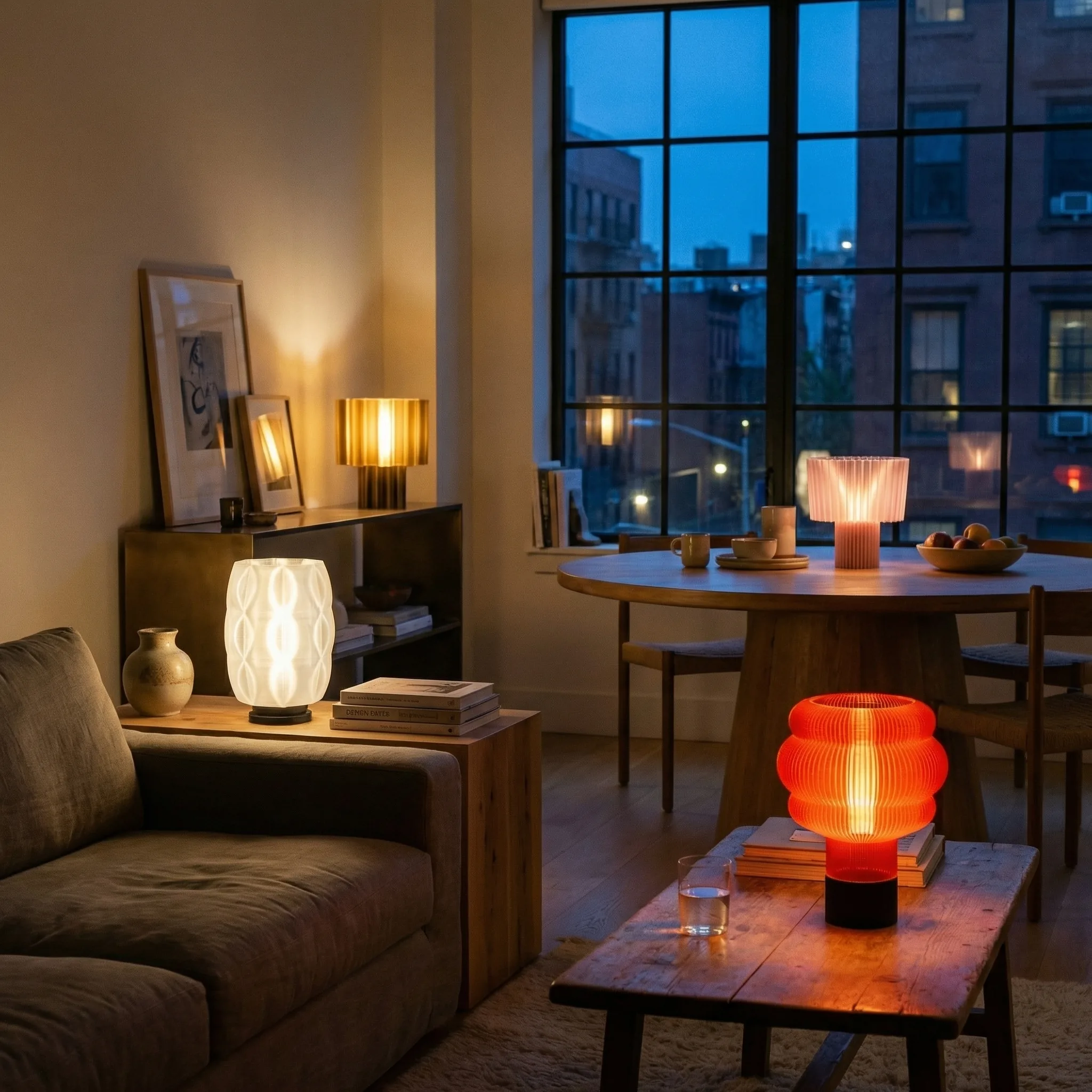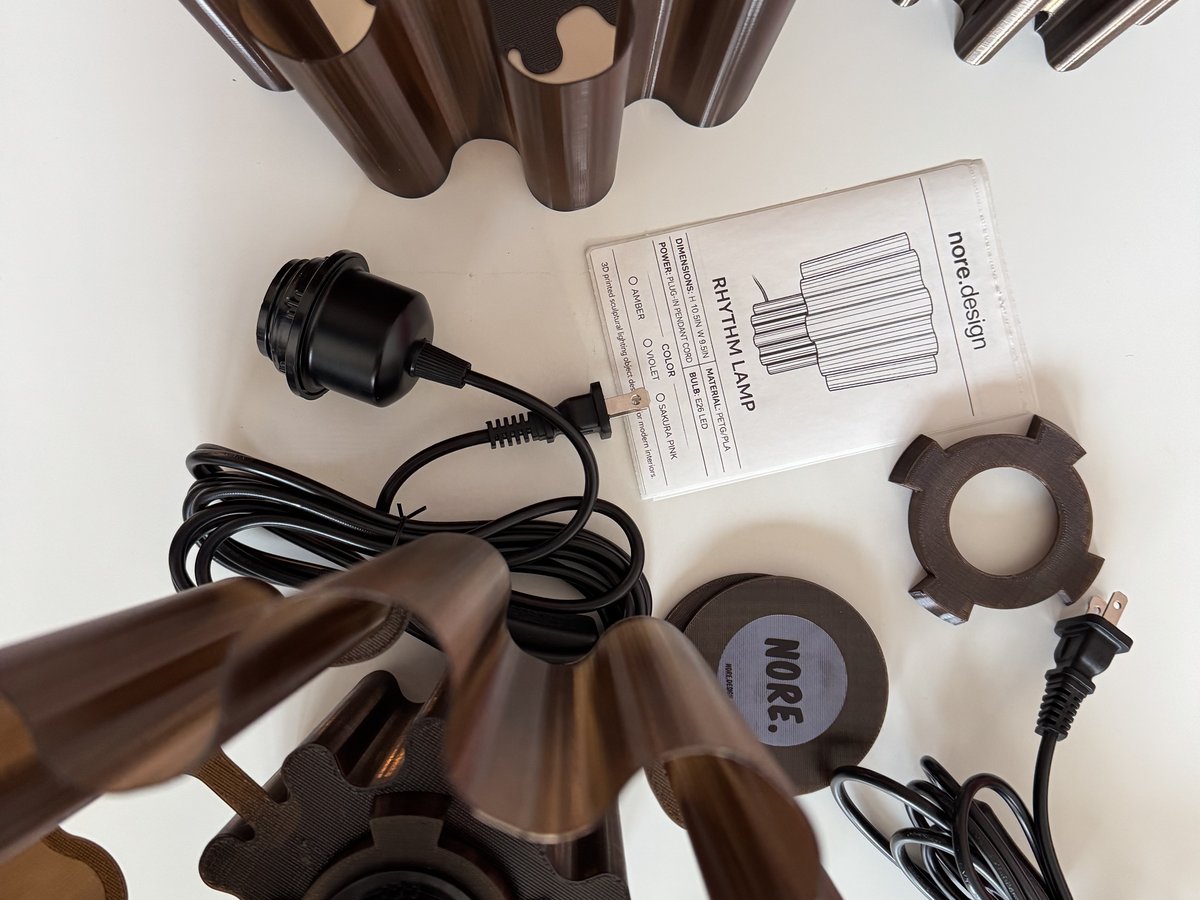
A 3D-printed lamp is not a novelty category. It is a lighting object built layer by layer, shaped by geometry, material, and the quality of the glow it creates.
In this story (4 sections)
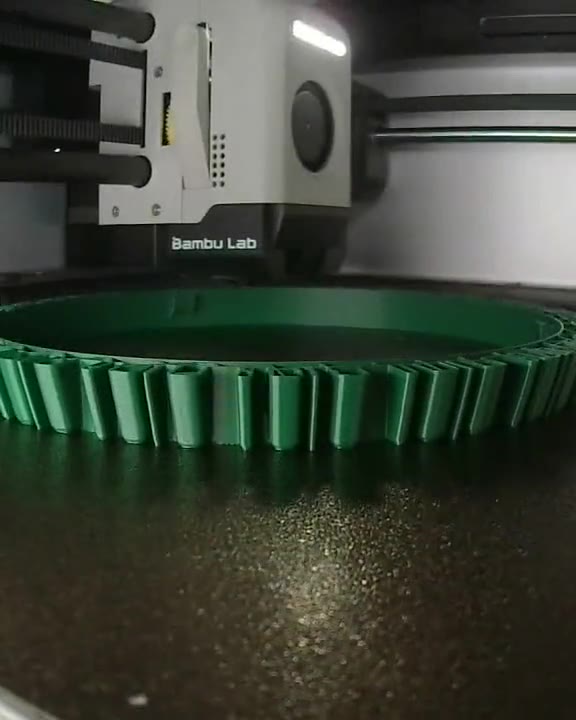
It is a lamp built layer by layer.
A 3D-printed lamp is made by depositing material in precise layers until the full object is formed. That process allows complex curves, ribs, pleats, and sculptural silhouettes that are difficult or wasteful to produce with conventional tooling.
The result is not automatically good design. The method creates possibilities, but the quality still depends on proportion, material choice, light diffusion, and the emotional tone of the finished object.
It differs from mass-market lighting in how it is designed.
Many conventional lamps are optimized for broad manufacturing efficiency first. A 3D-printed lamp can instead be optimized around shape, atmosphere, and smaller-batch production. That makes it especially suited to independent design and made-to-order collections.
For customers, that often means a piece that feels more sculptural, less generic, and more closely tied to the original design idea.
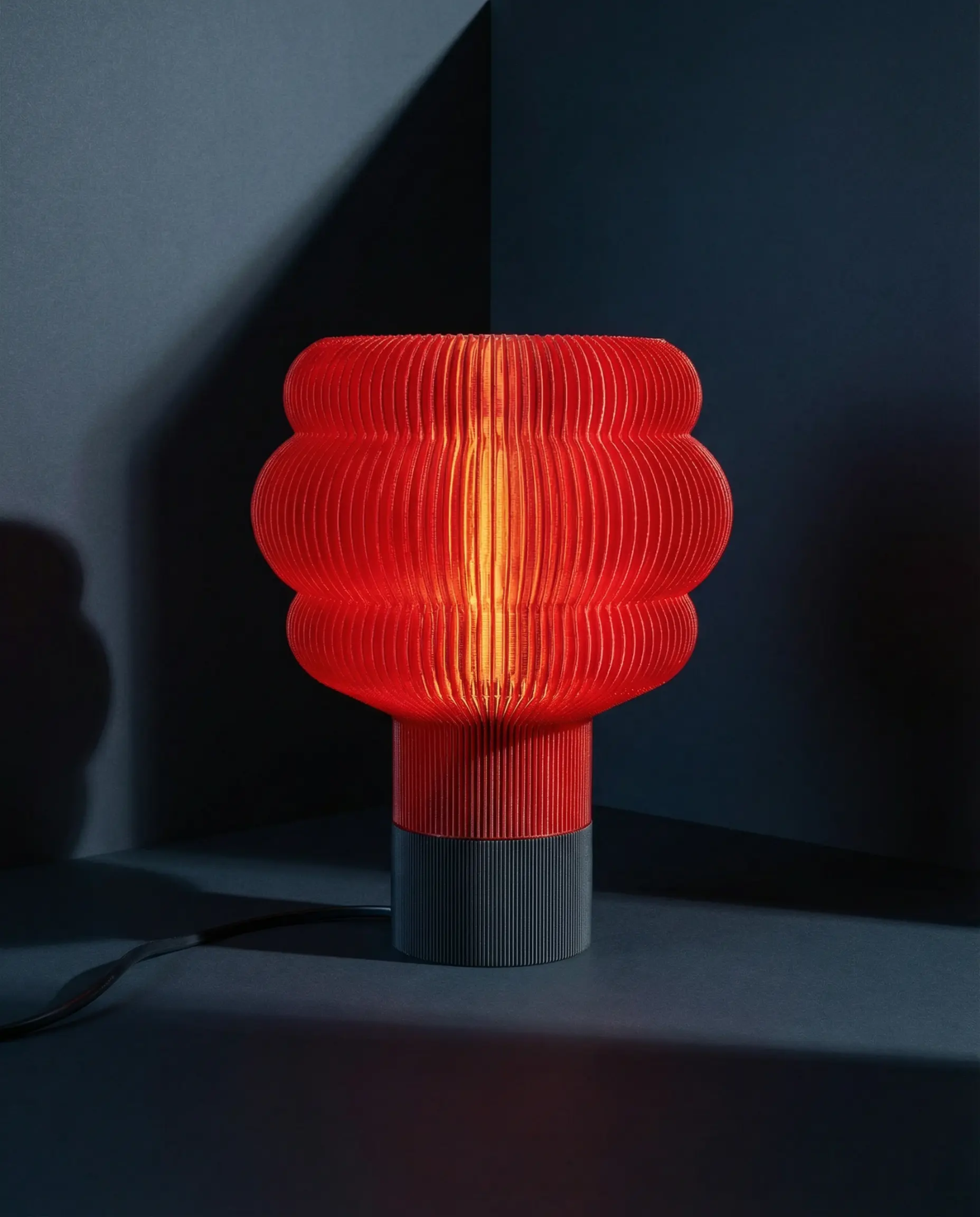
The visible texture is part of the object.
One of the signatures of 3D-printed lighting is its layered surface. In refined pieces, that texture is not something to hide. It adds rhythm, tactility, and a subtle record of how the object was made.
That is also why 3D-printed lamps often feel more intimate in person than they do in flat product descriptions. They reveal process through touch and light.
The best ones are made for atmosphere.
A great 3D-printed lamp should not feel like a gadget. It should make a room calmer, warmer, and more distinct. The best examples balance technical precision with domestic softness, so the object feels both contemporary and emotionally easy to live with.