Start beside the seating area, then check the screen from every seat. A good position keeps the lamp useful without putting its bulb or reflection in the picture.
In this story (6 sections)
Start with the seat, then choose the surface.
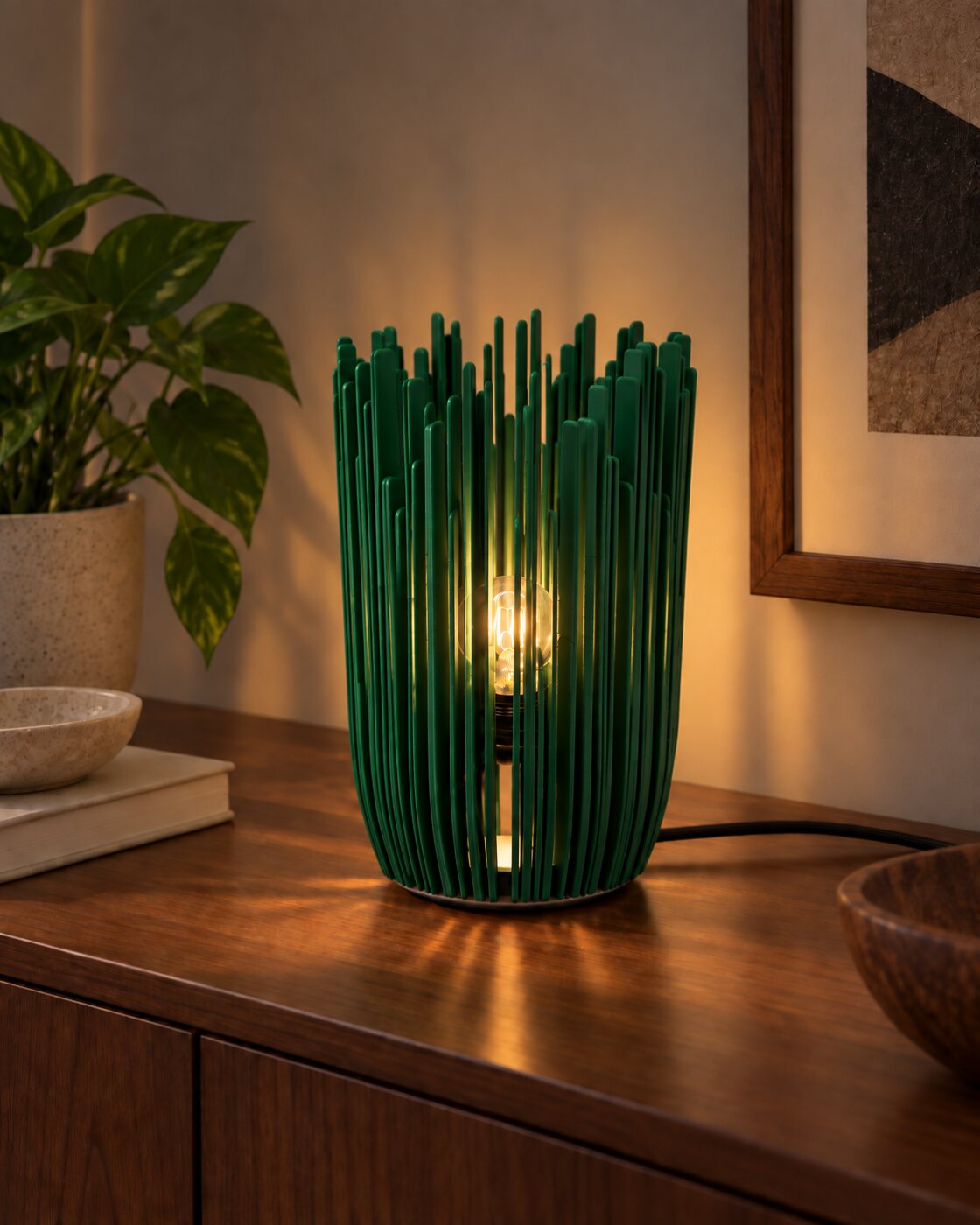
A table lamp near a TV needs to work from the sofa, not just look balanced beside the screen. Begin with a side table near the seating area or a sideboard off to one side. Treat either position as a trial: the angle of the screen, the seat and the lamp will determine whether you see a reflection. There is no single distance that works in every room.
Before buying, move a lamp you already own into the proposed position. Sit where you normally watch, then try the other end of the sofa and any separate chair. Notice whether the lamp interrupts the view, shines into your eyes or appears in the screen. If one seat is uncomfortable, adjust the position before choosing a new shade or finish.
Separate a screen reflection from a visible bulb.
A bright spot on the television and a bulb you can see beside it are different placement problems. The first changes as the reflected angle changes; the second remains a distracting object in your direct view. Name the problem before moving anything. A lamp can disappear from the screen but still be too prominent at the edge of your vision.
For the reflection check, switch the TV off and look for the lamp in the dark panel. Sharp’s guide to lighting for TV viewing recommends using this simple check to identify reflected light sources. Move one light at a time so you can see which change helps. Then turn the TV back on and check a darker scene from your usual seat.
Try a sideways move before changing the room.
If the lamp appears in the picture, shift it along its surface and look again. A small sideways move is an easy first experiment. Moving a lamp farther from the screen is not automatically the answer, because the reflection depends on where you sit as well. A position behind the seating can still reflect in a screen opposite it; check rather than assuming it is hidden.
Keep the successful position practical. The lamp should sit on a stable, level surface with its whole base supported. Leave the table usable for a drink or remote, and route the cable without crossing the way you walk. If the only reflection-free spot crowds a doorway or puts the switch out of reach, try another surface instead of forcing the arrangement.
Choose the shade for the view you actually have.
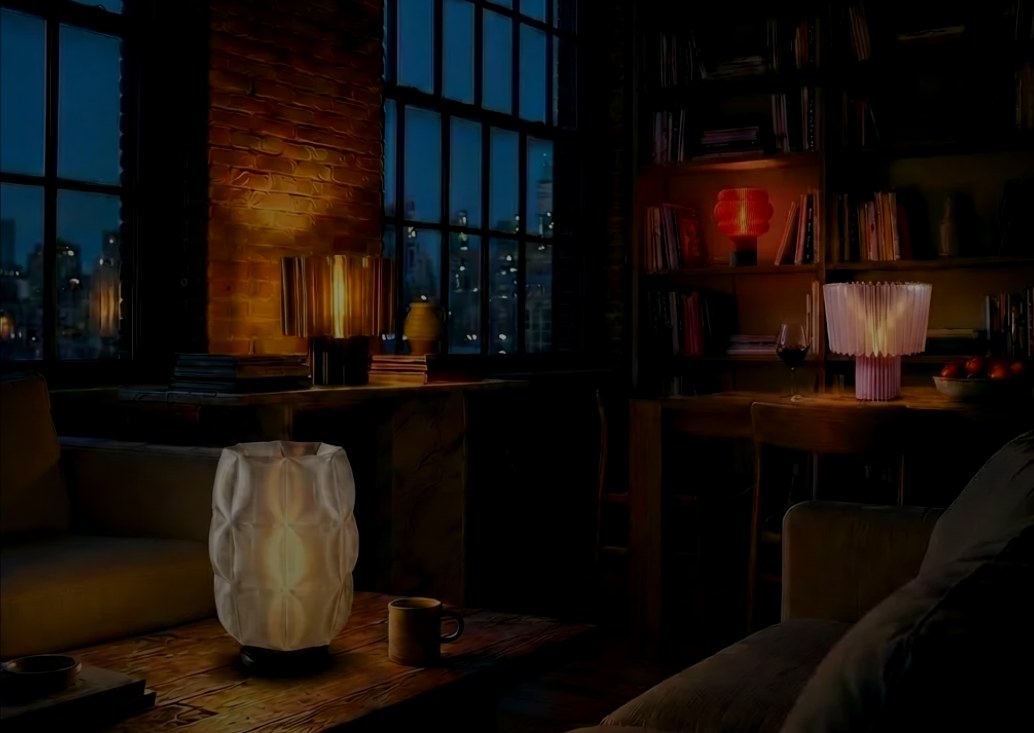
A translucent shade becomes a luminous part of the room, so it can still appear in a television even when it surrounds the bulb. UMBRIA pairs a tapered translucent shade with a dark ribbed base. It is a form to consider for a sideboard or side table, provided its position passes your seated check. The room photograph here shows its ambient glow; it does not demonstrate a TV reflection test.
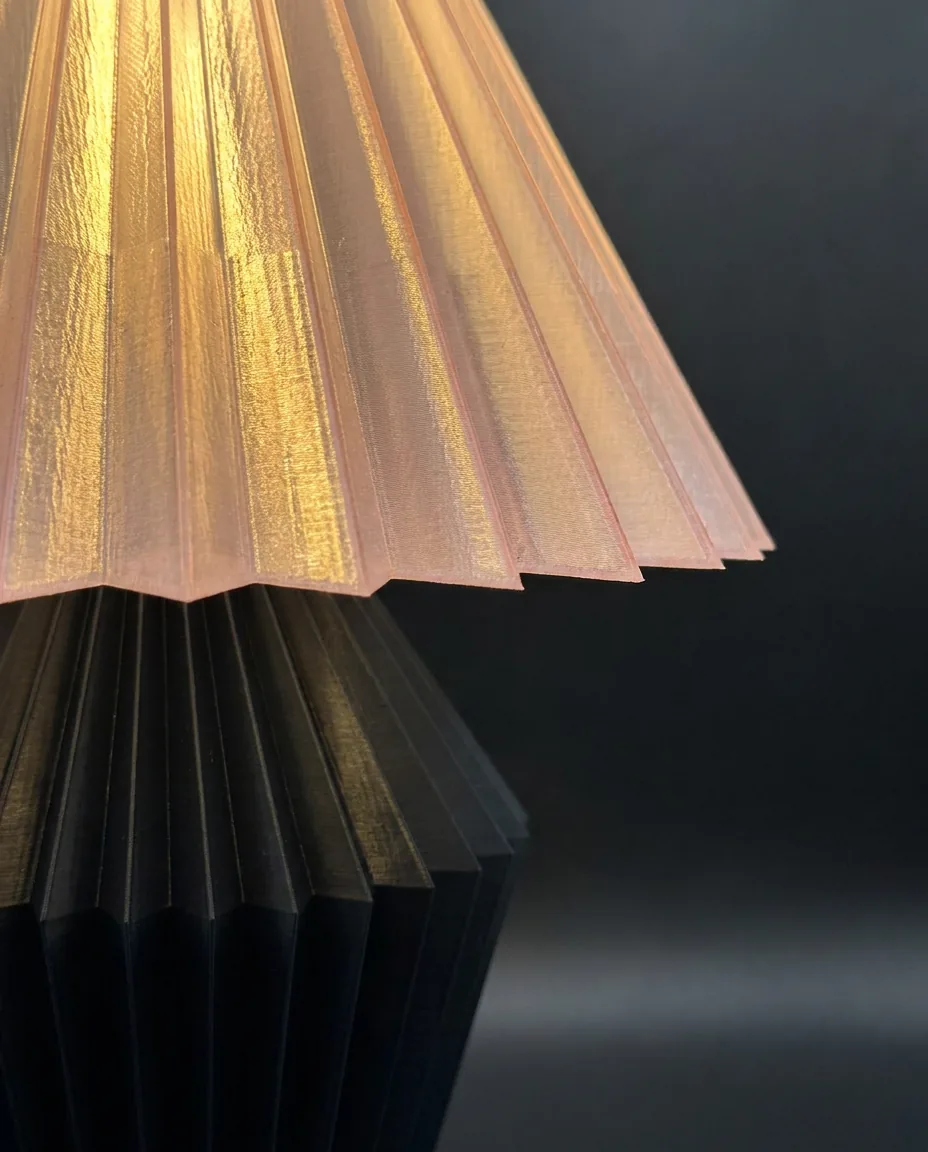
For a folded silhouette, compare PLIA and its pleated translucent shade. Neither a pleat nor a warm color guarantees that a lamp will be free of reflections. Look at how much of the illuminated surface you will see. Our comparison of translucent shades and open ribbed lamps explains the different light effects before you choose.
Keep television time and reading time separate.
One lamp does not have to solve every evening activity. A decorative glow that suits watching a film may not put enough useful light on a book. Equally, the position that lights a page well can be distracting for someone watching from the other end of the sofa. Plan which lights you will use together instead of expecting one fixed arrangement to do both jobs.
Keep an existing reading light available where you read, and assess the table lamp as a separate part of the room. If you want adjustable brightness, verify compatibility for the particular lamp, bulb and control before buying. A warmer-looking light is not necessarily a dimmer one. Our guide to reading light and ambient light can help you decide which role is missing.
Finish with a check at the time you watch.
Daylight can make a room photograph look settled while hiding the lighting problem you notice after dinner. Repeat your check in the evening with the lights you normally use. If you also watch during the day, consider the window reflections separately; moving a table lamp cannot remove a bright window from the panel. Keep each adjustment tied to the source you can actually see.
Finally, look at the room with the television off. The lamp still needs to belong beside the furniture, leave the screen unobstructed and be easy to switch on. A useful result is simple: a clear picture from the seats you use, a lamp you enjoy looking at, and a surface that still works for ordinary life. Save that placement before adding more decorative objects.