A simple way to understand the difference between reading light and ambient light, and how one table lamp can support a calmer evening room.
In this story (4 sections)
Reading light has a task. Ambient light has a mood.
Reading light is directed enough to help you focus on a page, screen, or small activity. Ambient light has a wider job: it softens the room, reduces the sense of darkness between fixtures, and makes the room feel occupied after sunset. Confusion comes when a lamp is expected to be both the brightest task light and the gentlest background glow at the same time.
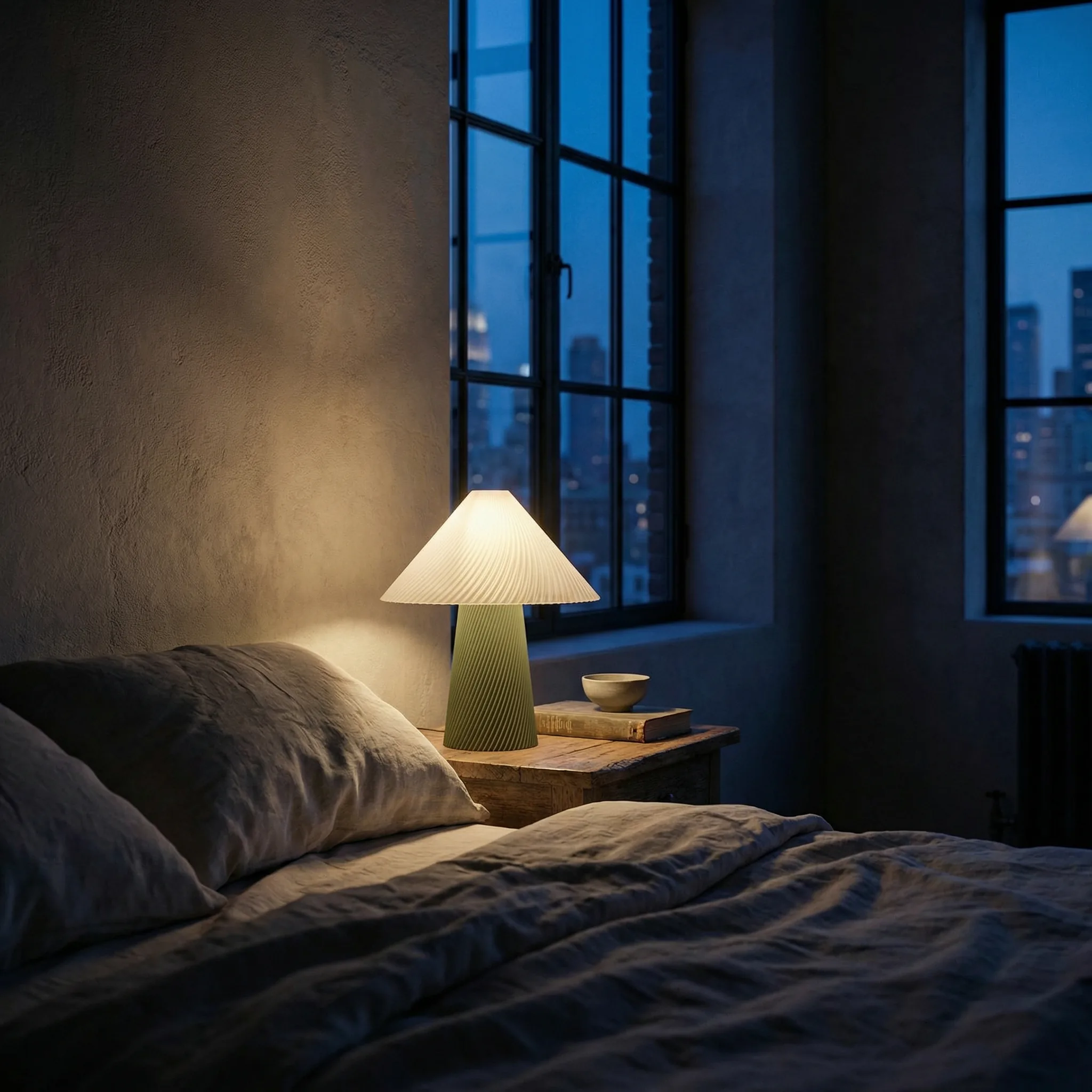
A table lamp can support either role, but its placement tells you which one will dominate. Beside a chair or at the edge of a bed, it can contribute useful local light. On a console, shelf, or sideboard, it is more likely to shape atmosphere first.
For reading, think about direction and glare.
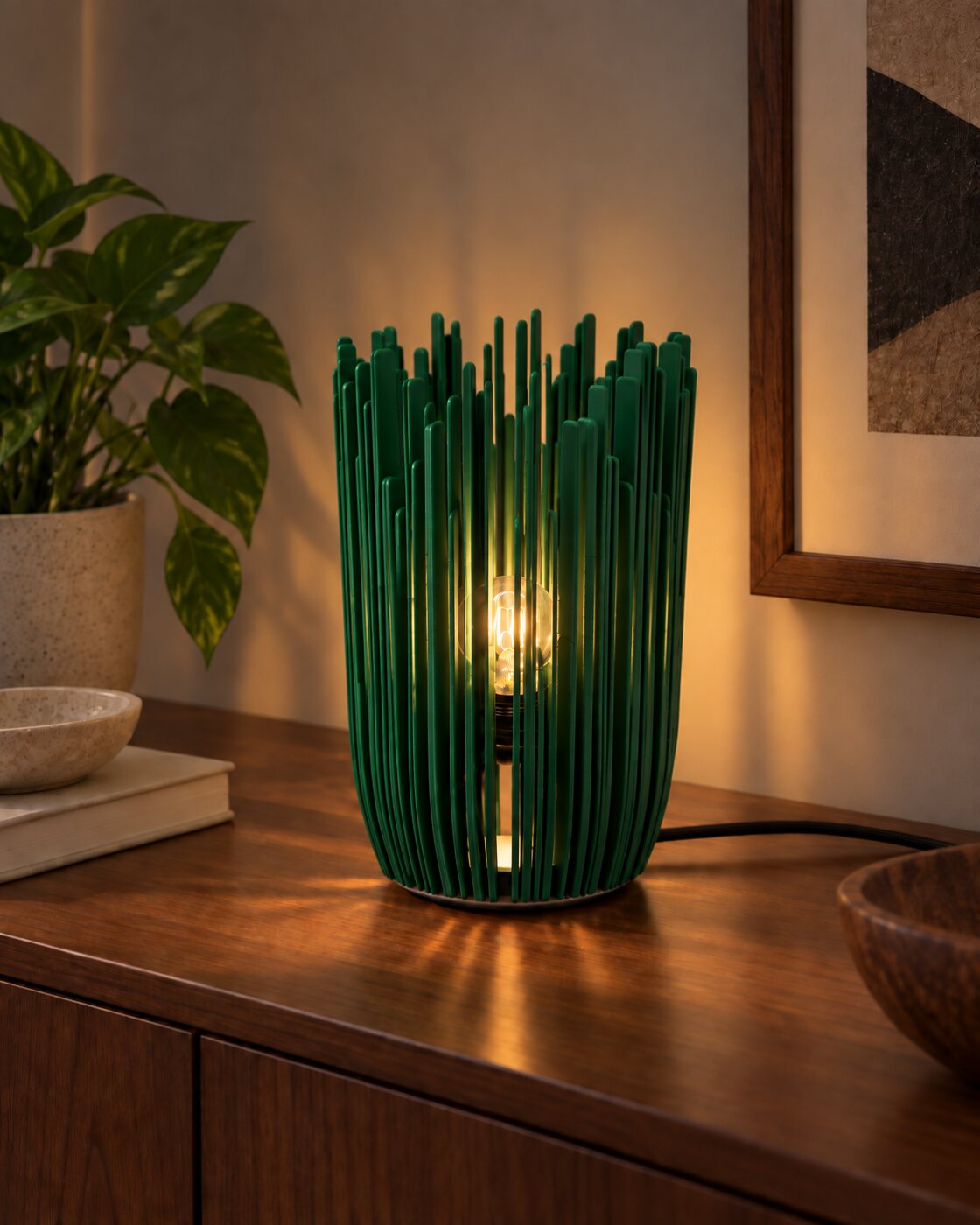
If you intend to read beside a lamp, place it where the light can reach the page without landing directly in your eyes. The surface around it matters too. A pale wall or matte tabletop can help spread the glow gently, while a glossy table or exposed bulb can create more contrast than you want at night.
A table lamp is often most comfortable as a companion to a reading chair, not a substitute for every kind of task light. Let it make the seat inviting and add a more focused light only if the activity truly needs it.
For atmosphere, think about what the light touches.
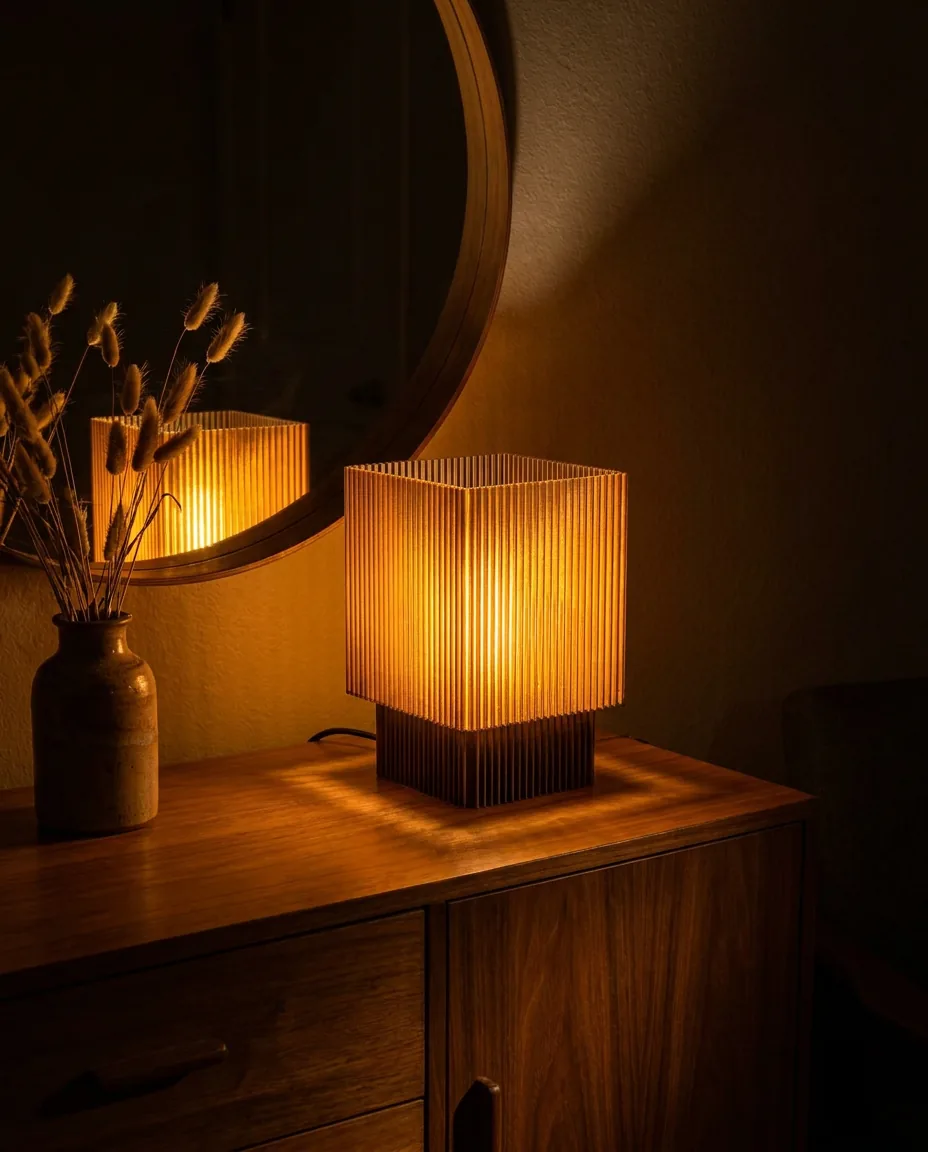
Ambient light is felt through its effect on nearby surfaces. Place a lamp where it can catch the edge of a curtain, the texture of a wall, a stack of books, or a piece of art. This creates depth and helps the room feel less like it has one central source and more like it has a visual rhythm.
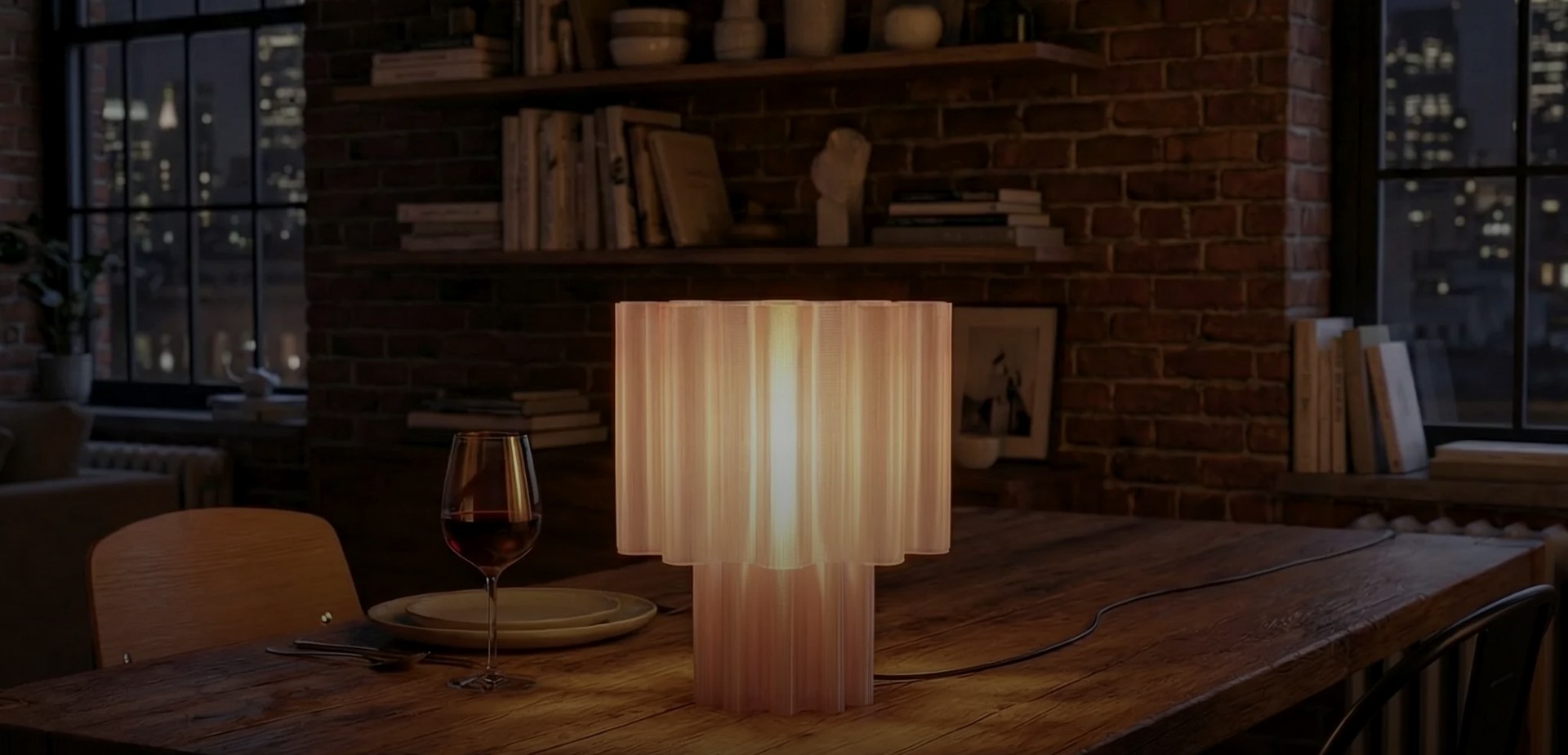
The lamp itself matters even when it is off. A ribbed, translucent, or architectural form gives the room a focal point in daylight and a softer presence when lit. That dual role is what makes a table lamp more than a practical accessory.
Build the evening around more than one source.
The most comfortable rooms usually have layers: one source for the whole room, one or two lower lamps for warmth, and perhaps a more focused light where it is genuinely needed. You do not need every layer in every room. Even adding one table lamp can make a hard overhead fixture feel less dominant.
Choose the table lamp for the role it will play most often, then let its glow do the rest. When it supports a calmer evening, it has already done something more valuable than simply adding brightness.