A practical guide to layered lighting in a small living room, using table lamps and placement to create depth without filling every corner.
In this story (4 sections)
Begin with the corners that disappear after dark.
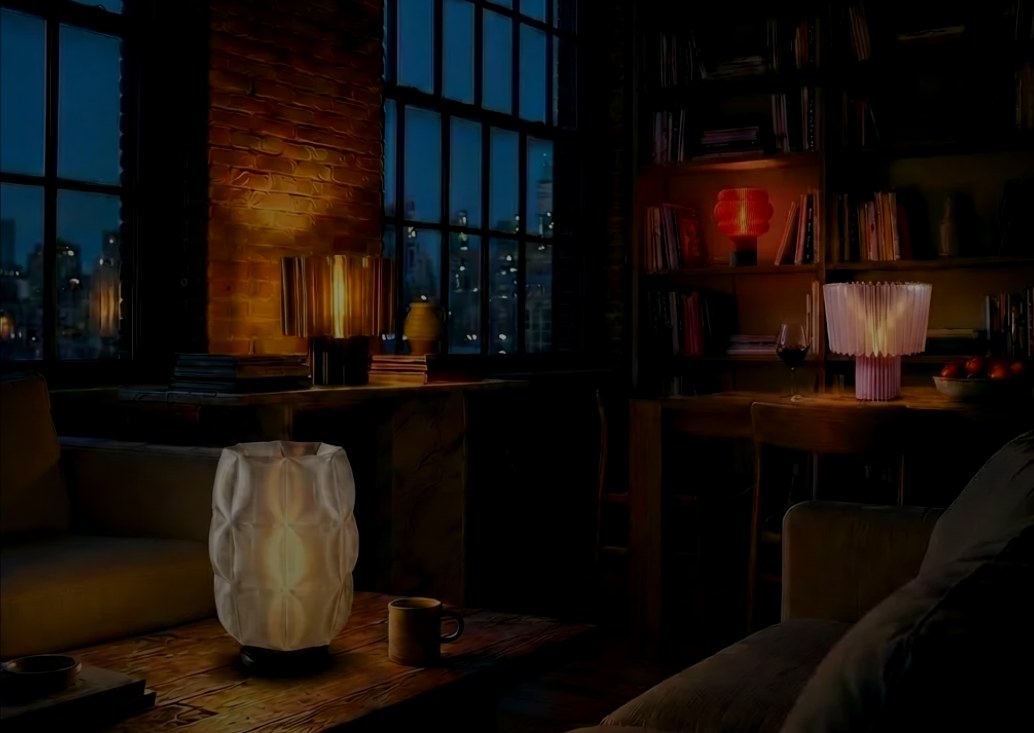
Small living rooms can feel flat when all the light comes from one point above the room. The center may be bright while the seating area, bookshelf, and wall behind the sofa disappear into one dark shape. Start by noticing which part of the room you want to keep present in the evening, not by adding light everywhere at once.
A table lamp is useful because it works at a lower level than a ceiling fixture. It gives the eye another place to travel and makes the room feel deeper without taking up floor space or demanding another large object.
Give the room one warm anchor.
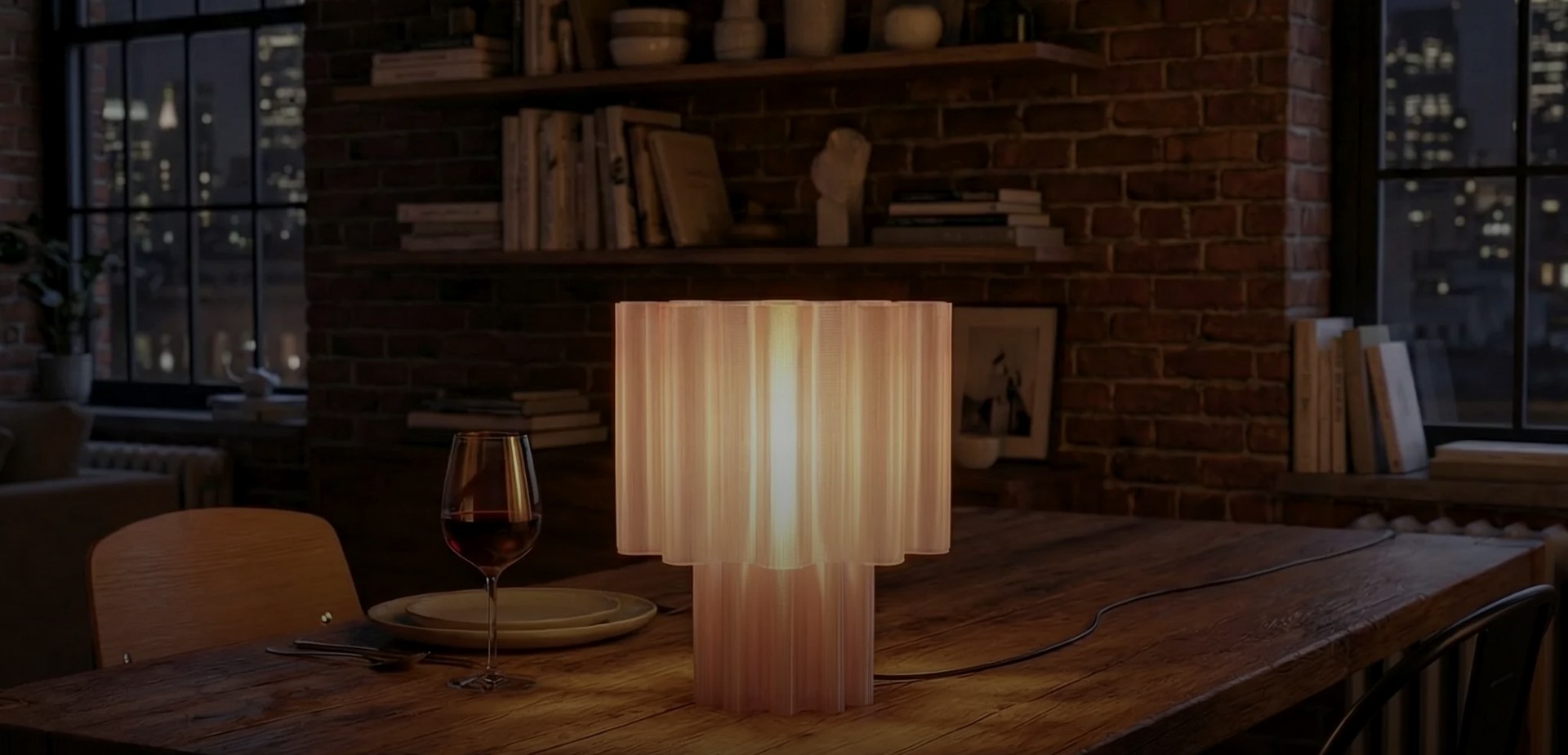
Choose one surface near where you sit most often: a side table, a shelf behind the sofa, a low console, or a small credenza. That lamp becomes the room's evening anchor. It should feel visible from the main seat but not placed so centrally that it reads like a second overhead fixture.
In a compact room, one carefully placed lamp usually has more impact than several little light sources. It creates a clear focal point and leaves the rest of the room with the breathing room that makes it feel larger.
Use reflected light to create depth.
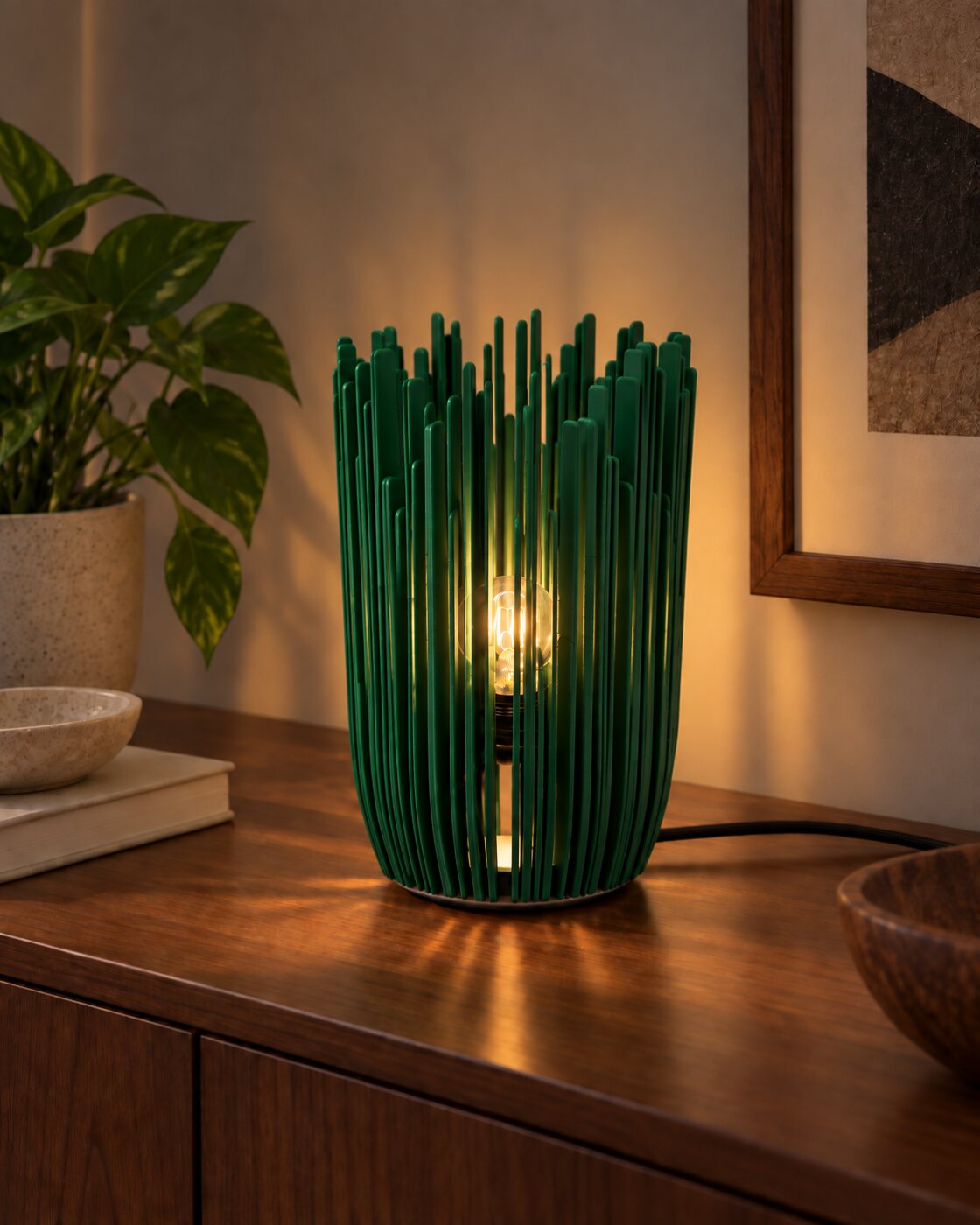
Light becomes more interesting when it reaches a surface before it reaches you. Place the lamp near a wall, curtain, artwork, or open shelf and let those materials carry some of the glow. A white wall will make the effect feel broader; a darker wall will keep it more intimate; books and objects will create small shifts in shadow.
This approach is especially helpful when there is not room for a floor lamp. You can use the surfaces you already have to make the lamp feel more spatial and the room feel less defined by its footprint.
Keep the light levels intentionally uneven.
A relaxing room is not uniformly bright. It has areas of clarity and areas that can recede. Let the table lamp make one part of the space feel warm and let a softer secondary source, if you have one, pick up another edge. The contrast should feel gentle enough that the room stays easy to move through.
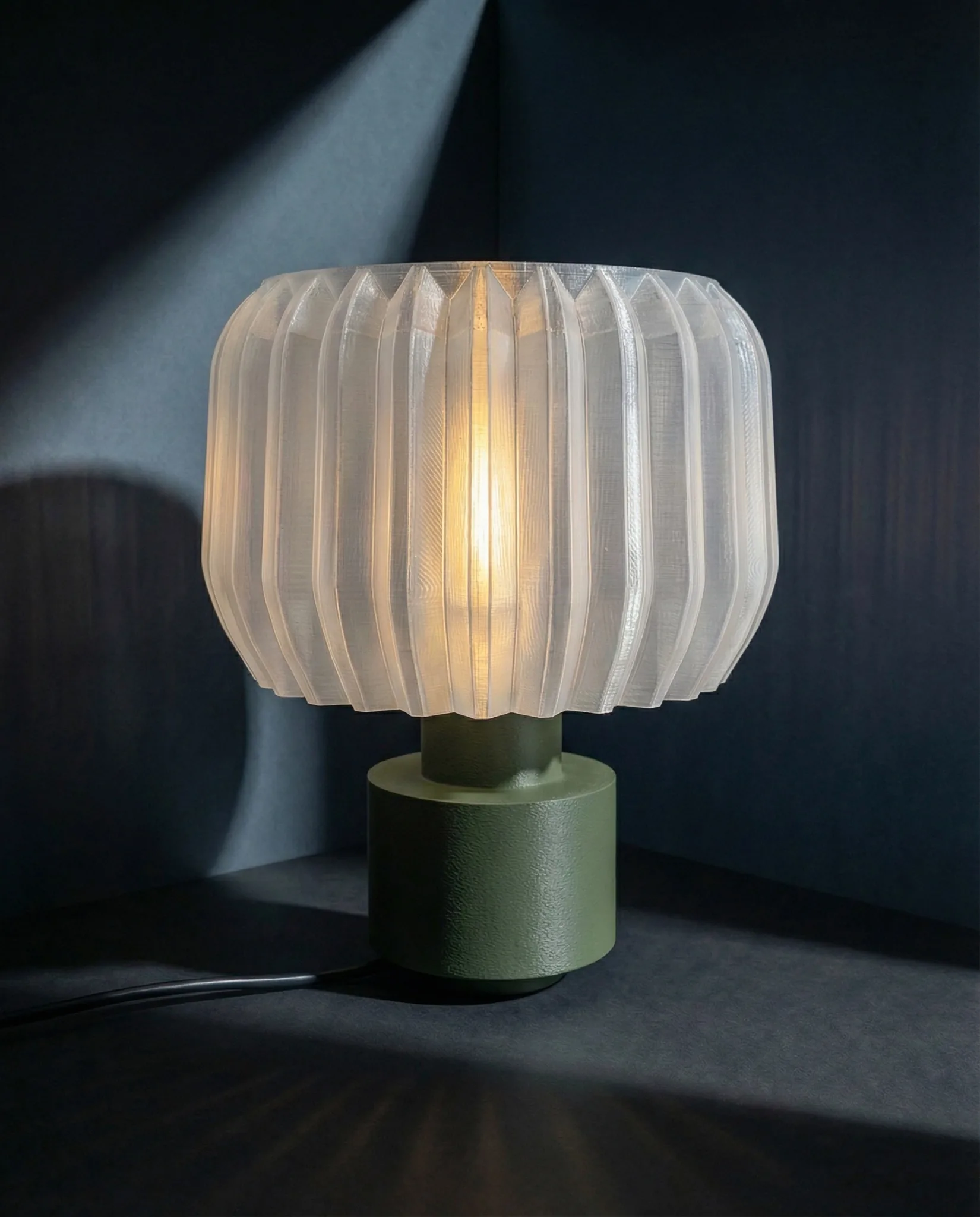
When choosing the lamp, think about its silhouette as well as its glow. In a small living room, a sculptural object earns its place when it adds atmosphere while taking up very little visual real estate.