A practical guide to choosing a living room table lamp for warm ambient light, the right scale, and an atmosphere that feels intentional after dark.
In this story (5 sections)
Start with the feeling the room needs after dark.
A living room lamp is rarely only a source of light. It is often the thing that shifts the room from daytime utility into evening atmosphere. Before choosing a shape or color, decide what you want the light to do: soften a reading corner, add depth to a shelf, make a sofa area feel more settled, or give the whole room a quieter glow.
For most living rooms, a table lamp works best as ambient or accent light rather than the only light source. It should make the room feel inhabited without putting a hard pool of brightness in the middle of it.
Choose the placement before the lamp.
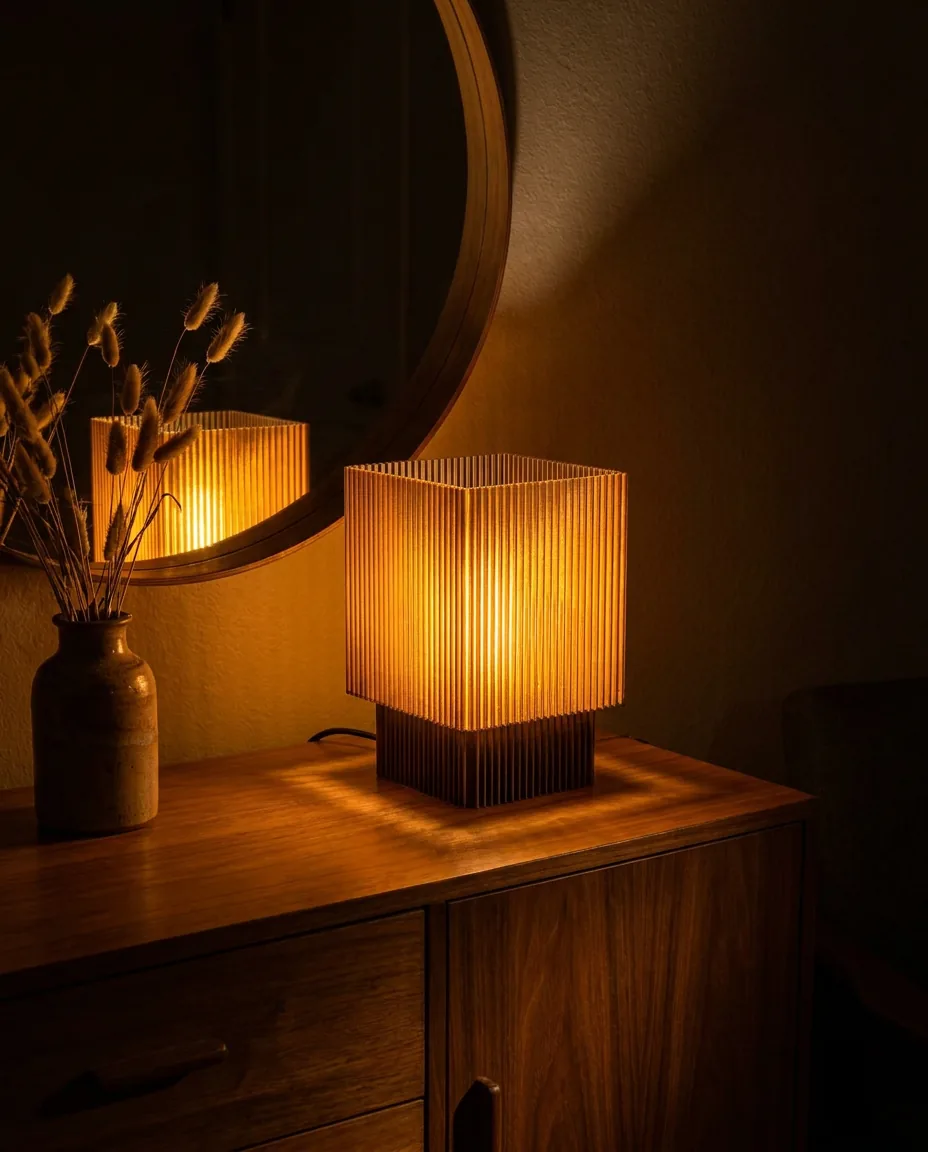
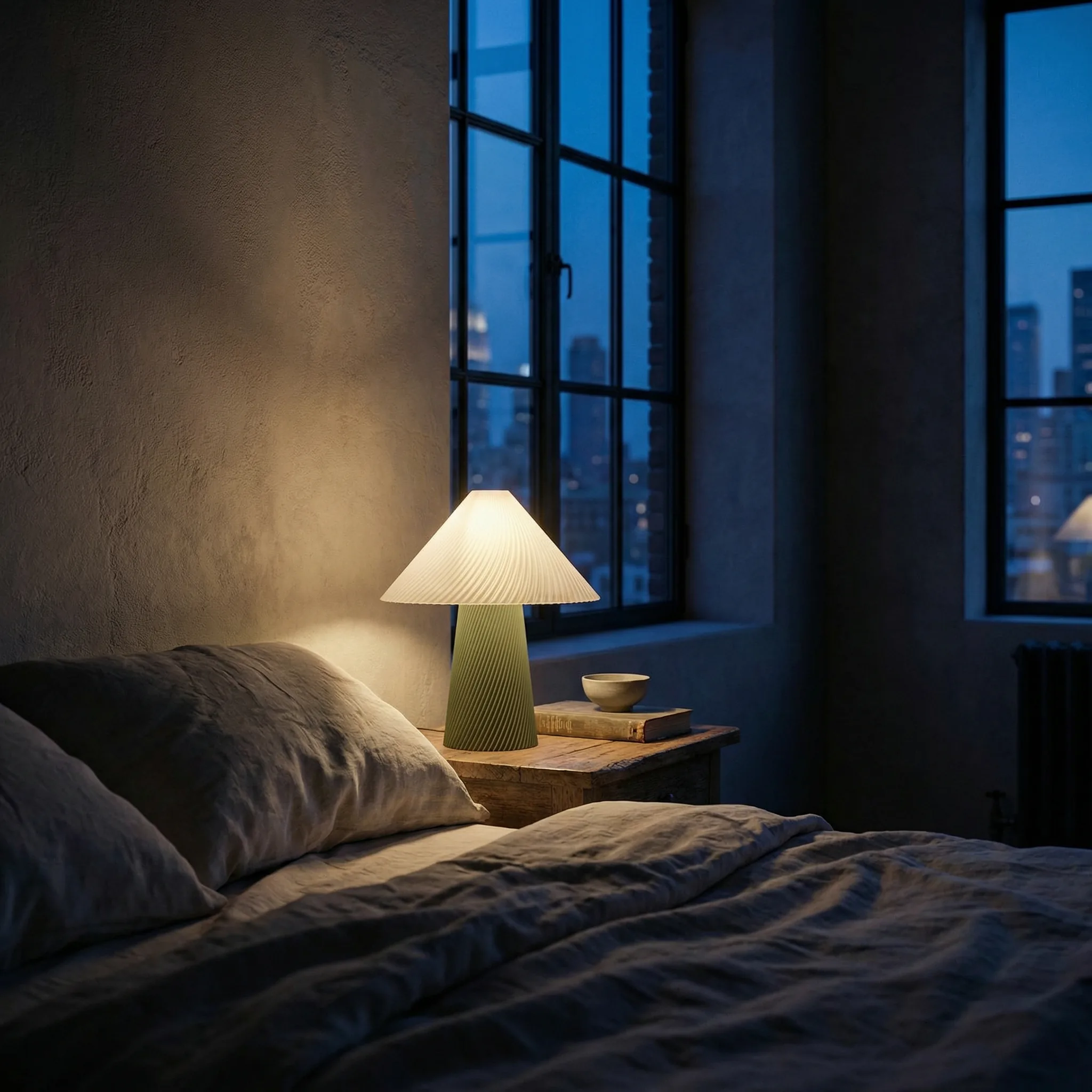
The same lamp can feel completely different on a side table, console, bookcase, or low credenza. Look for a surface that gives the lamp enough visual space and lets its glow travel across nearby walls, books, artwork, or textiles. A lamp tucked into a crowded corner can disappear; one placed beside seating can make the whole zone more inviting.
Think about sightlines too. When people are seated, the light source should feel present but not distracting. A sculptural silhouette can be a focal point, but it should not block a conversation or compete with the television wall.
Get the scale right for the furniture around it.
A small table lamp on a large console can look accidental, while an oversized one on a narrow side table can make the room feel crowded. Compare the lamp to the table, the seating height, and the negative space around it. The goal is a proportion that reads as intentional from across the room, not just when viewed up close.
A useful starting point is to let the lamp occupy part of the surface rather than dominate it entirely. Leave room for the ordinary things that make a living room real: a book, a glass, a small tray, or nothing at all.
Prioritize soft diffusion over raw brightness.
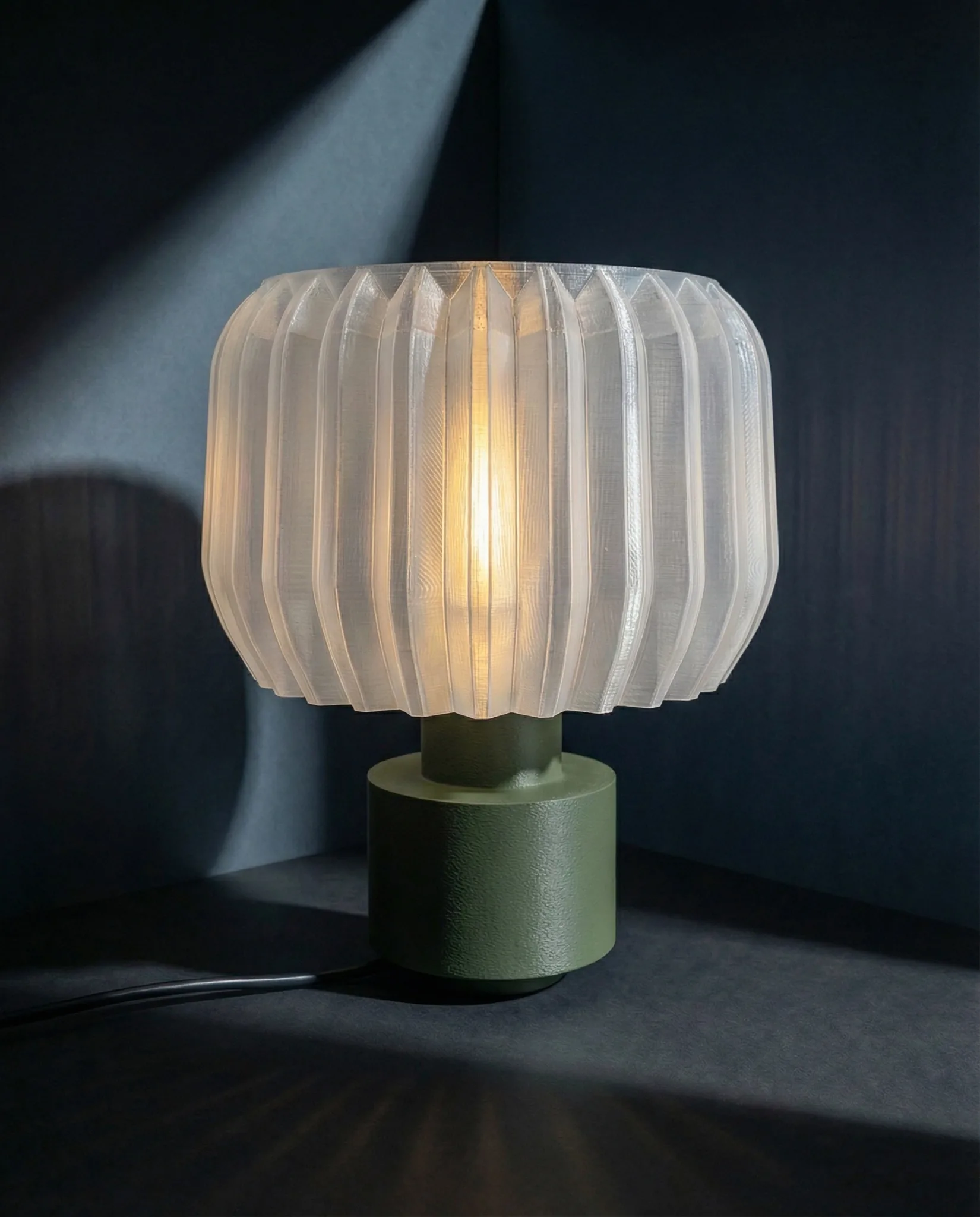
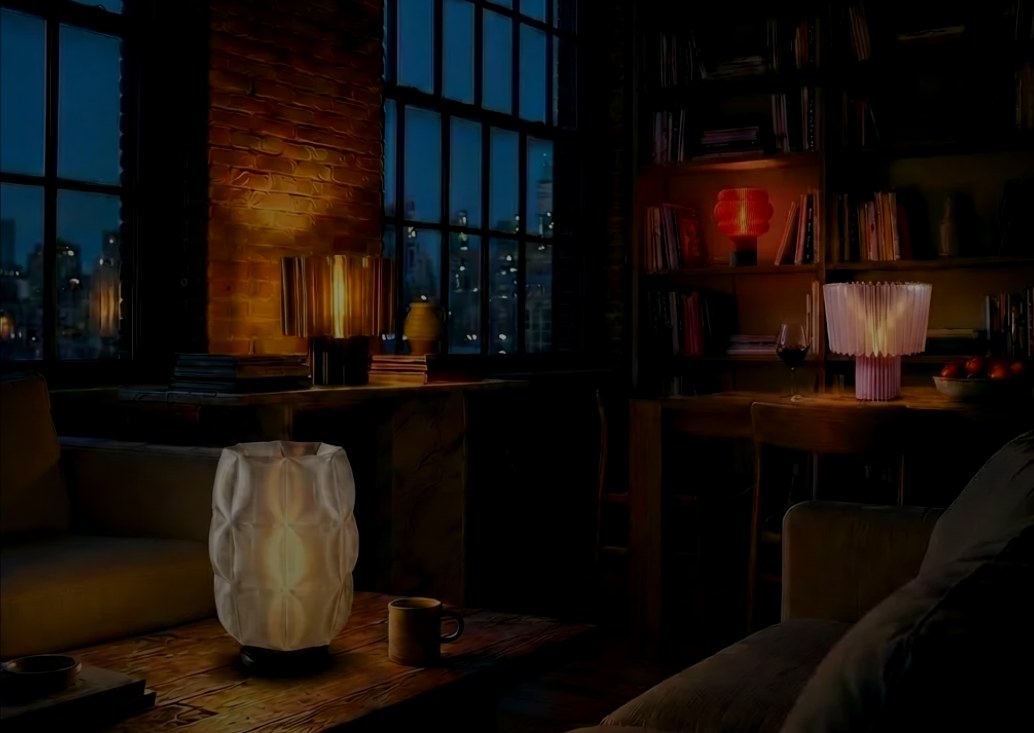
Living rooms usually need layers of light. A well-diffused table lamp helps reduce the contrast between bright ceiling fixtures and dark corners, creating a more relaxed visual field. Shades with folds, ribs, translucency, or considered geometry can soften the light before it reaches the room.
Warm LED light is especially useful in spaces meant for rest, conversation, and winding down. The object should still have a clear form when it is switched off, but when lit it should make the room feel less exposed.
Let color and material support the room, not overpower it.
A neutral living room can hold a colored lamp beautifully when the finish echoes something else in the space: a textile, piece of art, book spine, or accent chair. In a more layered room, a smoky, translucent, or quiet finish can give the eye a place to rest while still adding texture.
The right choice is not always the safest one. A sculptural table lamp can be the small decisive object that makes the room feel personal. What matters is that its color, material, and glow belong to the same emotional temperature as the room around it.