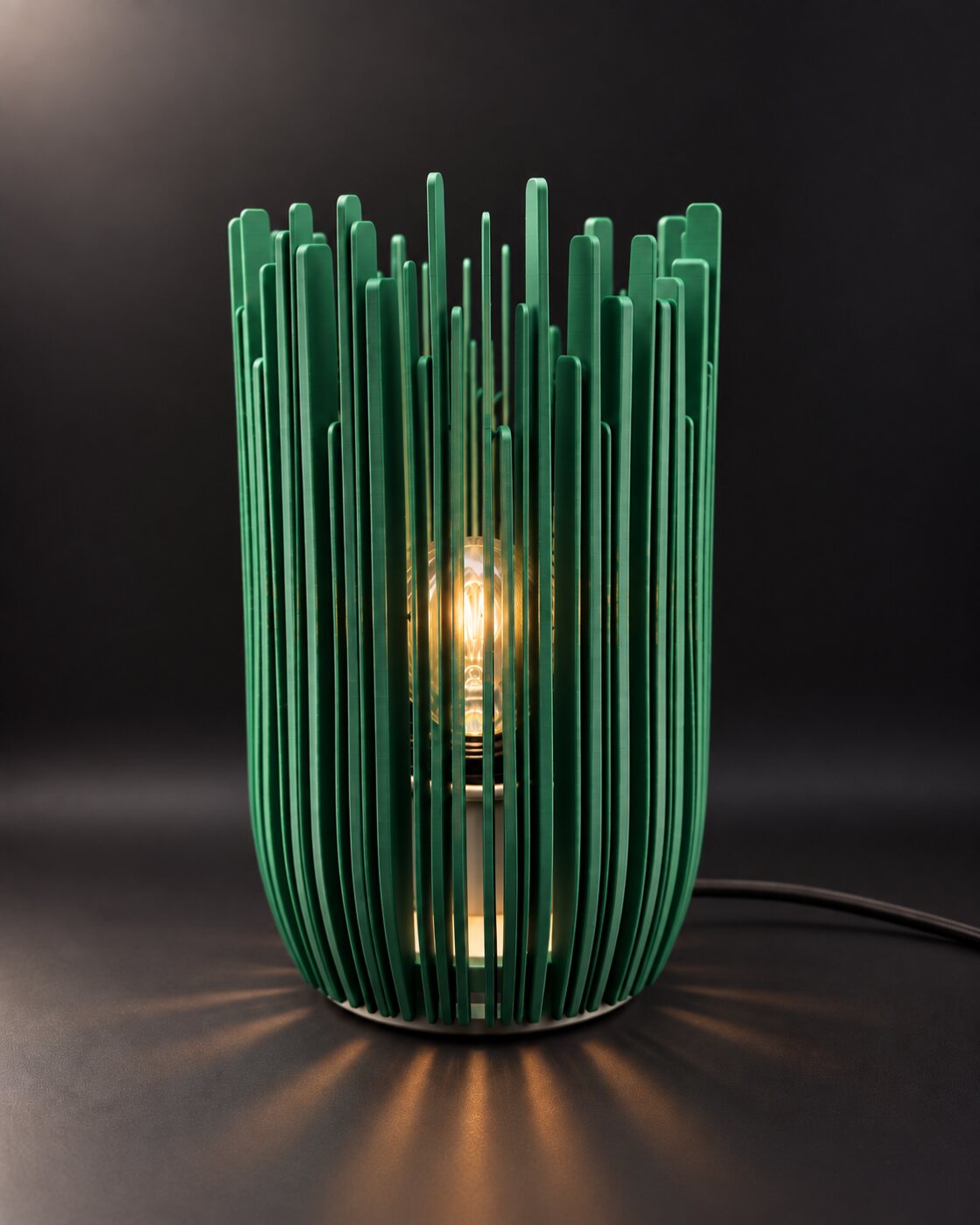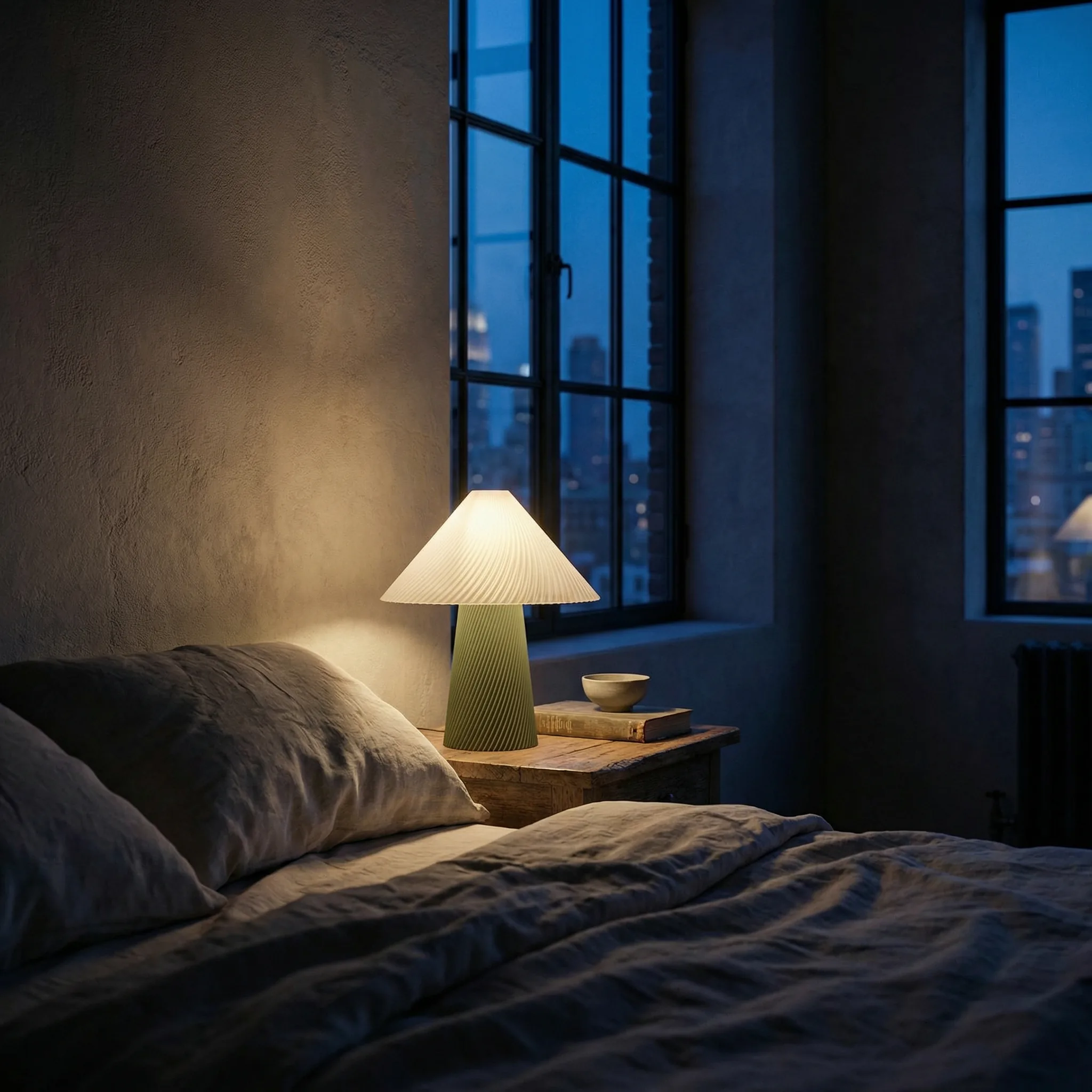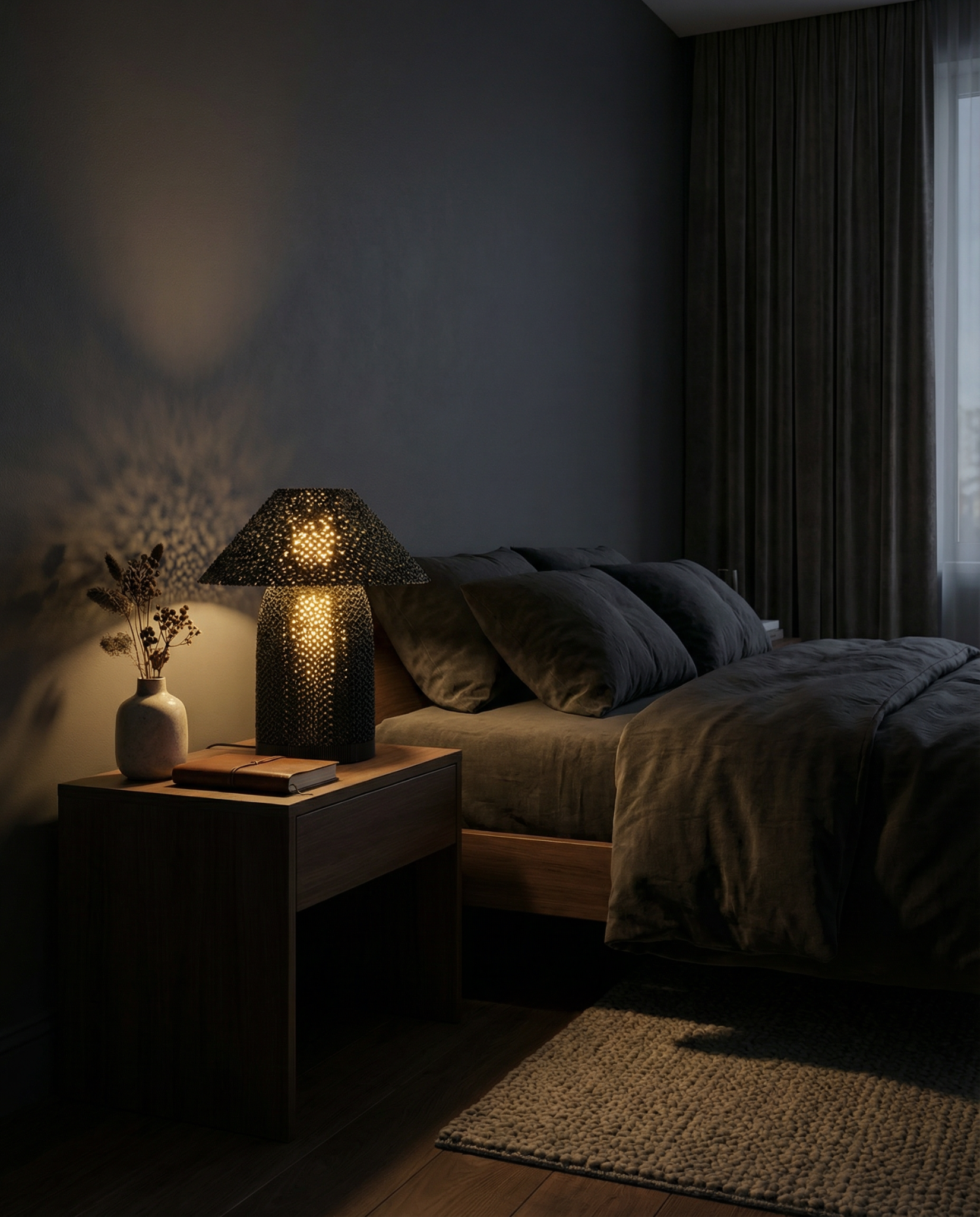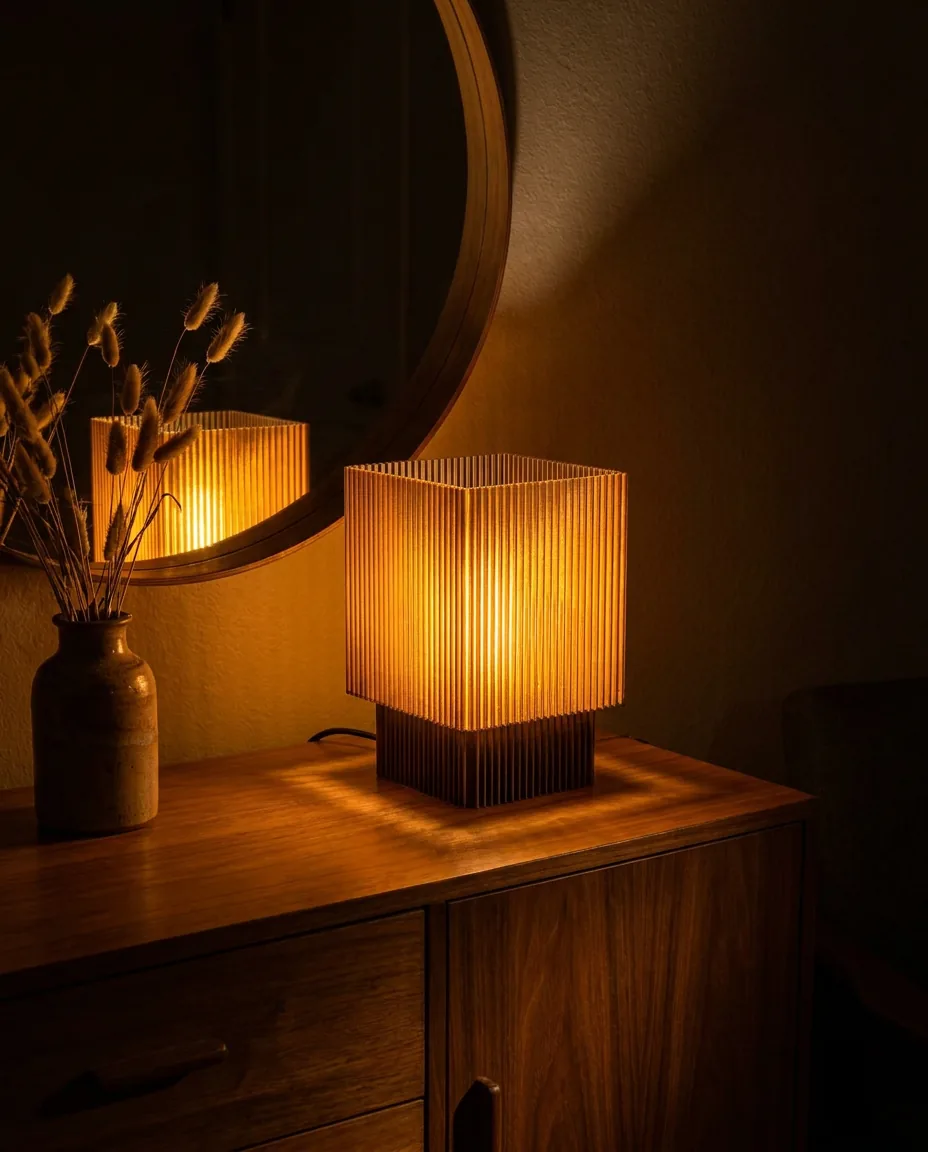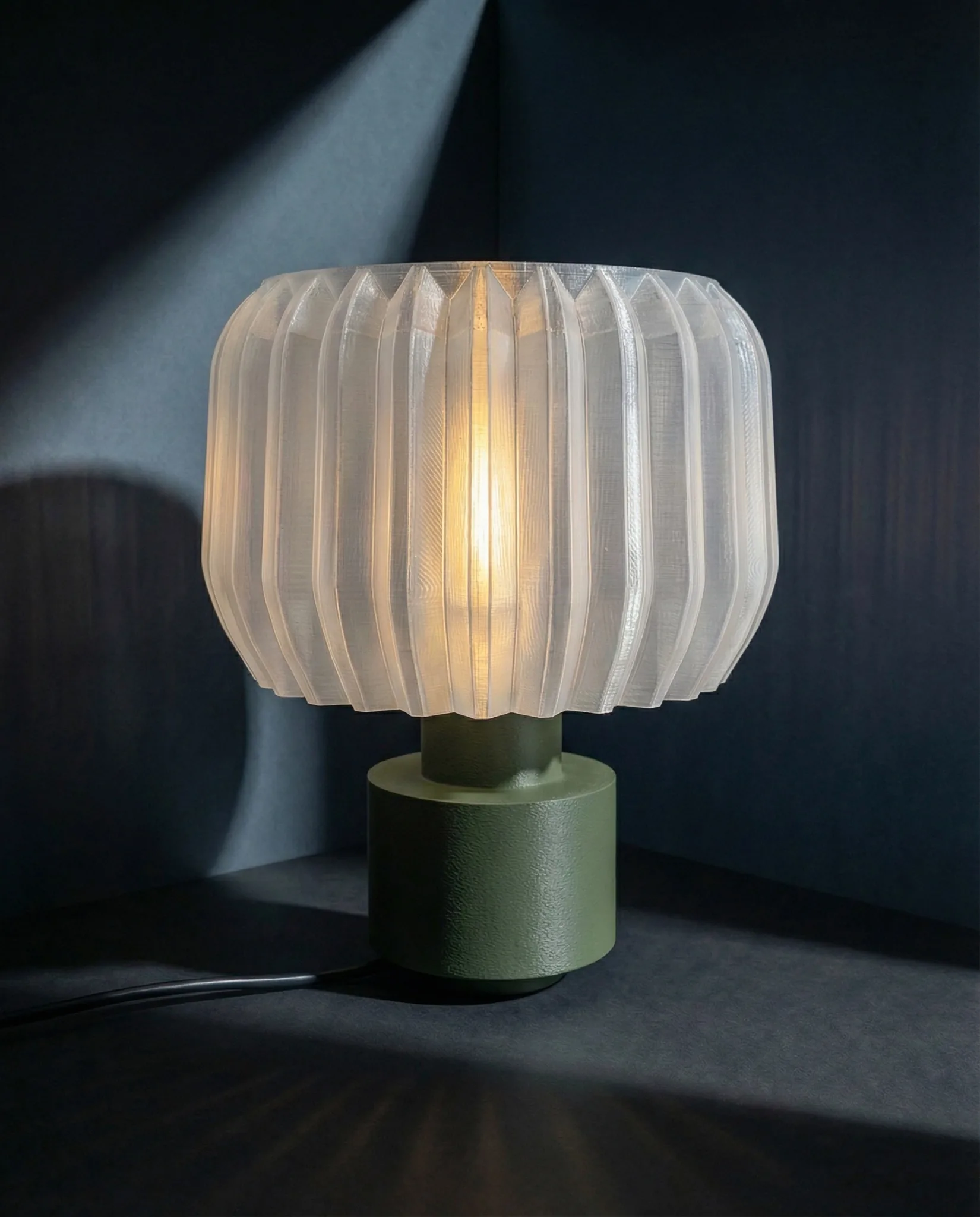
Lamp size changes everything: visual balance, glow spread, and whether the object feels resolved in the room or oddly out of proportion.
In this story (4 sections)
Start with the surface the lamp will live on.
A lamp does not exist in isolation. Its size has to respond to the table, console, shelf, or nightstand beneath it. A generous console can support more height and volume, while a narrow bedside surface needs a lamp that feels deliberate without crowding everything around it.
The easiest mistake is choosing a lamp based only on product photos instead of the surface and room where it will actually live.
Think about both height and volume.
People often focus only on height, but width matters just as much. EVERGREEN makes the comparison concrete: Standard is 10.5 inches tall by 7 inches wide; Large is 13.5 inches tall by 8.5 inches wide. The Large adds 3 inches of height and 1.5 inches of width, so its proportions change more than a photograph viewed on its own may suggest.
Measure the available surface and the clearance beneath any shelf. A paper circle 7 inches across, then one 8.5 inches across, gives you a simple way to compare the space each EVERGREEN size occupies alongside a book or glass. Leave room for the cord and for your hand to reach the switch.
Light spread changes with proportion.
Dimensions describe the object, not a measured brightness result. A larger body does not by itself tell you how much light reaches a book or a wall. Compare the bulb option and shade construction alongside size, and use the product’s lit and unlit views to understand its form. Decide separately whether you need ambient atmosphere or focused reading light.
The room should still breathe around it.
A lamp looks right when the room still has breathing space around it. If the object swallows the surface or competes too heavily with nearby art, furniture, or architecture, it will feel forced. Good scale is rarely about maximum size. It is about proportion, rhythm, and ease.