A translucent shade makes the surface itself glow; open ribs let you see light through gaps. Compare the two effects before choosing a textured table lamp for a bedside, sideboard or console.
In this story (6 sections)
Why texture is worth looking at this autumn.
In its September 22 report from Maison & Objet Pulse 2026, Houzz documented 3D-printed forms, translucent sculptural lighting and woven designs. That is a useful design signal for autumn shopping: the way a lamp is constructed can be as visible as its silhouette. It does not mean every textured lamp produces the same kind of light.
Our practical takeaway is to look past the word “ribbed.” It can describe folds in a continuous shade, solid ridges on an otherwise smooth surface, or separate elements with open space between them. Those structures can look related in an unlit product photograph while behaving quite differently once the bulb is on. Choose the effect you want to live with, then consider the color and shape.
A translucent shade becomes a glowing surface.
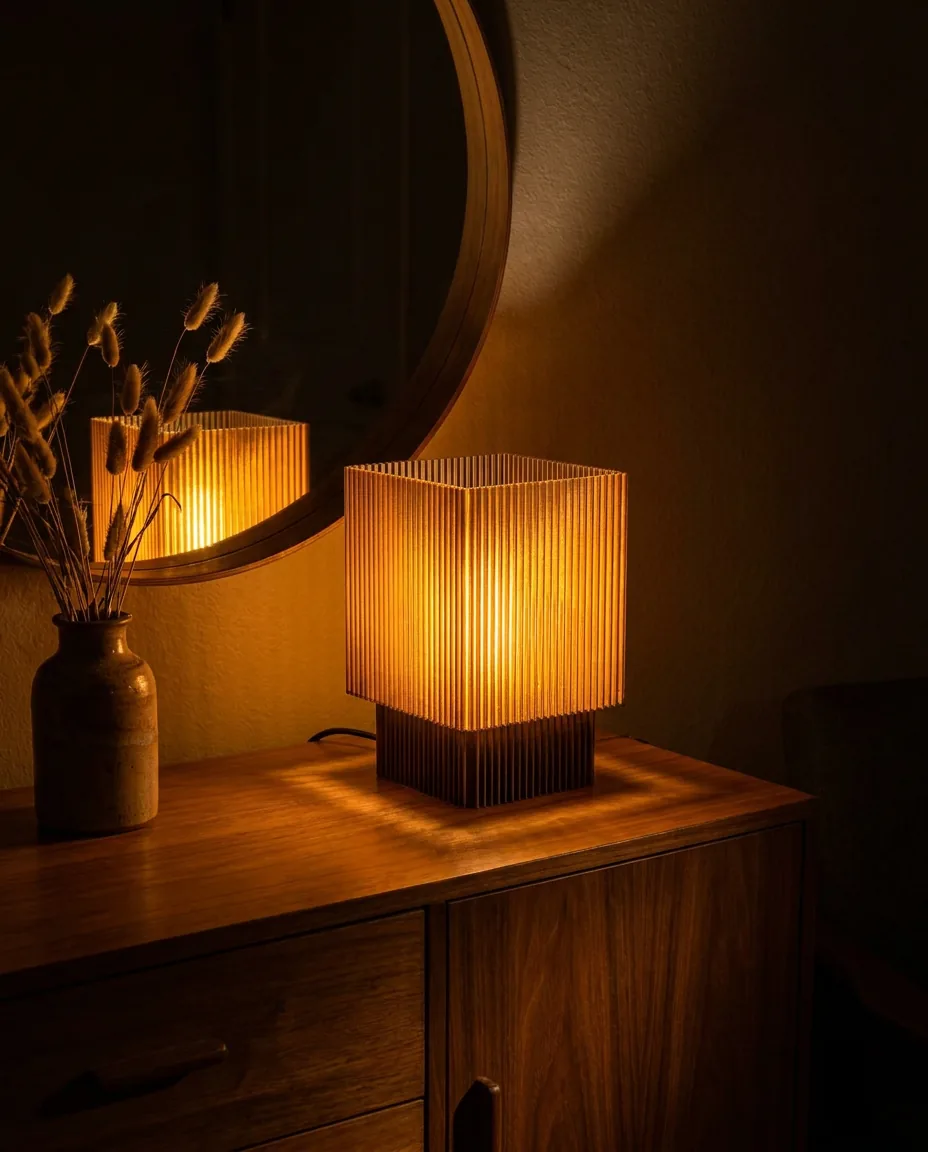
A translucent shade allows some light through its material while obscuring a clear view through it. The illuminated surface becomes part of what you see. Folds and changes in thickness can create bands of brighter and darker color, so a shade may retain its texture when lit rather than turning into a flat patch of brightness.
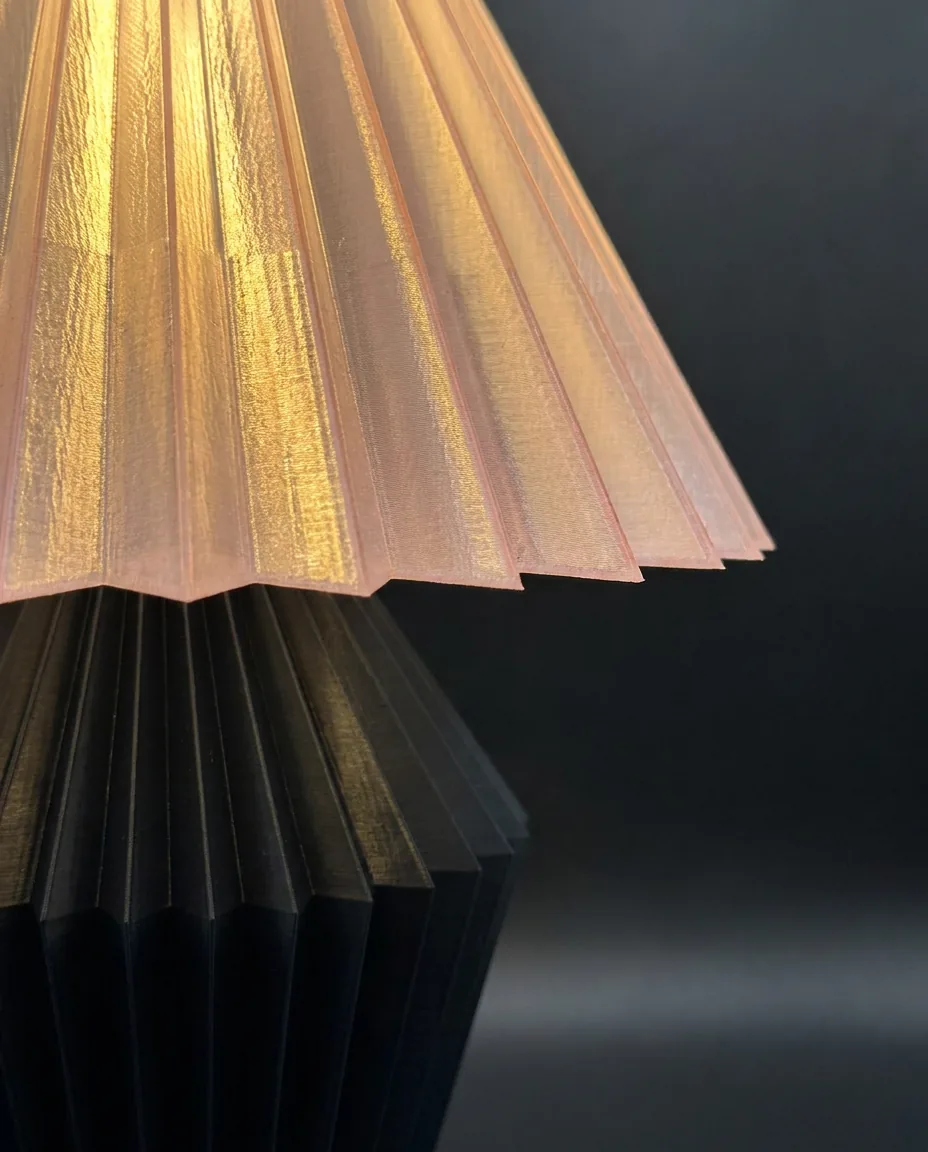
On PLIA, a folded translucent shade sits above a black faceted base. The pleats give the blush surface its rhythm, while the base adds a contrasting shape below. It is a useful example to consider when you want the shade itself to be the focus of a bedside or vanity arrangement. Look at both lit and unlit images to judge whether you enjoy both versions.
“Translucent” is not a promise that every bulb will be equally well hidden from every angle. Openings at the top or bottom can change the view, particularly beside a low chair or on a high shelf. Check the lamp from the position in which you will actually use it.
Open ribs make the gaps part of the design.
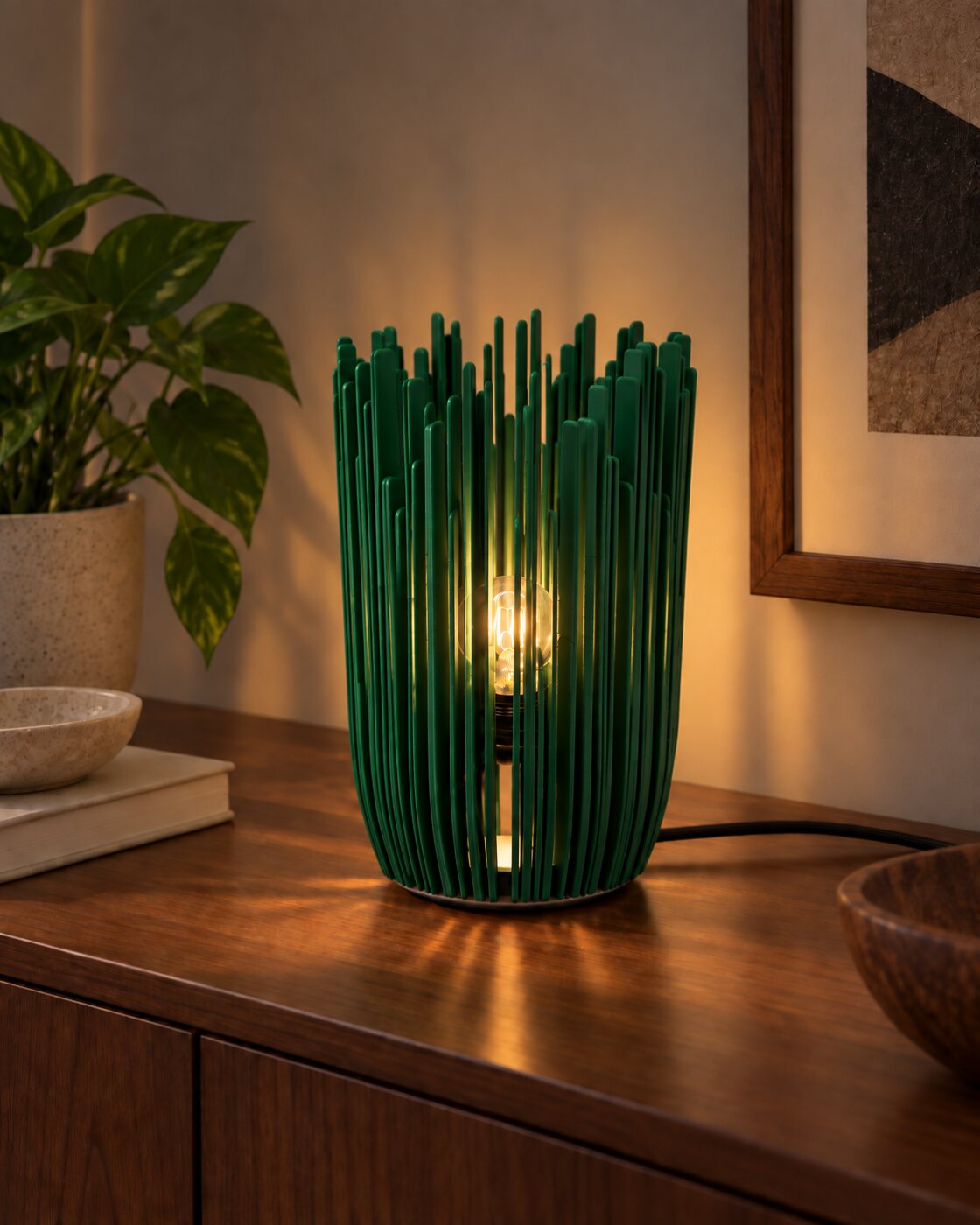
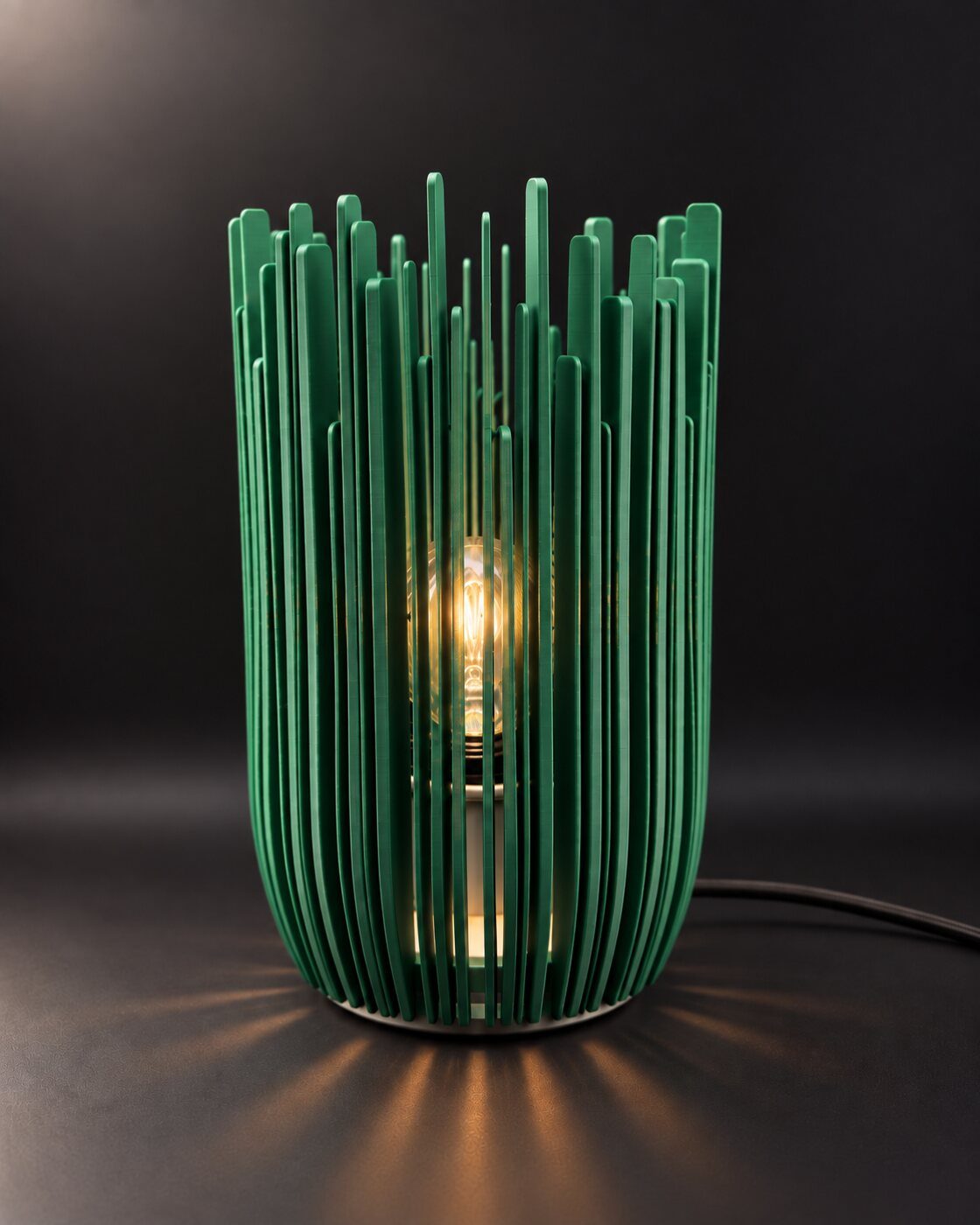
An open structure leaves space for a direct view of the light source. EVERGREEN uses separate vertical green ribs around a visible internal bulb. The staggered rib heights form the silhouette, and light escapes between them. Its product photographs show lines of light and shadow extending across nearby surfaces.
This can be an expressive choice for a sideboard or console where the lamp has some visual space around it. The surrounding surface matters: a pale tabletop makes a different background from dark timber or a crowded arrangement of objects. Judge the effect in relation to that background, rather than assuming the studio photograph describes every room.
If you prefer not to see the bulb while sitting down, check the open design especially carefully. Changing placement can help, but an open rib cage should not be chosen on the assumption that it behaves like a closed diffuser. The visible source is part of this particular design.
Texture and diffusion can also work together.
A lamp can have an expressive outer shape and another element that softens the source inside. BILLOW combines a translucent PLA shade with an inner diffuser. Its wavy, ribbed outline provides the texture, while the inner diffuser is part of how it produces its ambient glow. That is a different construction from EVERGREEN’s open ribs.
When comparing lamps online, look for a description of the actual construction. Is the texture molded or printed into a continuous wall? Is there a second diffuser? Can you see the bulb in the photographs? A close-up of the material and an image taken with the lamp switched on are usually more useful than a long list of style labels.
The manufacturing method alone does not answer these questions. Two 3D-printed lamps can have very different geometry and light effects. Treat “3D printed” as information about how the object is made, then assess the specific shade and openings.
Choose by your view from the room.
At a bedside, imagine your eyes at pillow height as well as when sitting up. On a console, consider the doorway and any mirror behind the lamp. On a sideboard, look from the sofa across the room. The same lamp may feel comfortably decorative in one position and too visually bright in another because the source moves into your line of sight.
For a gentle glowing object near a resting place, begin by comparing shaded designs and the visibility of their bulbs. For a more graphic pattern on an uncluttered surface, compare open structures and their lit photographs. Neither preference requires a whole-room makeover. Moving a lamp to a more suitable surface can be more effective than adding more decorative objects around it.
Keep reading needs separate from atmosphere. Our guide to reading light versus ambient light explains why a decorative glow may need a separate reading light beside it.
Compare both states before deciding.
Give each candidate two jobs: look considered in daylight and create a light effect you enjoy after dark. Compare its widest dimension with the available surface, review the bulb and control information on the product page, and check how the cord reaches the outlet. A beautiful texture still needs to work within those everyday limits.
Finally, decide which detail you want to notice first. With PLIA, it may be the folded glowing shade. With BILLOW, it may be the wave-like outline around diffused light. With EVERGREEN, it may be the green ribs and the illuminated gaps between them. That choice is more useful than buying a trend in the abstract: it describes the actual object and atmosphere you are bringing home.