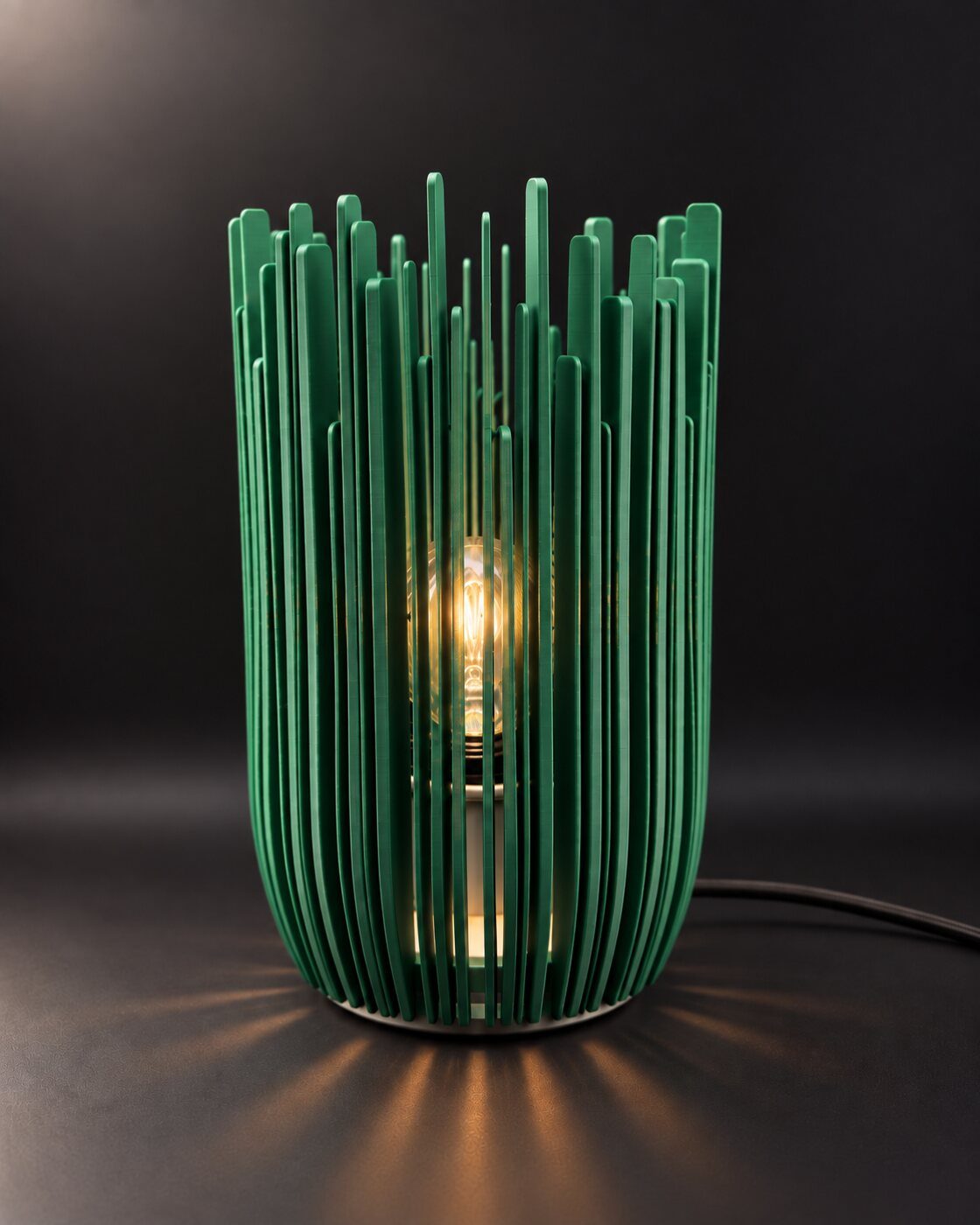
Start with the lamp’s widest point, leave a clear place for everyday objects, and check the view from the doorway. A narrow console needs a lamp that fits the way you move through the room.
In this story (6 sections)
Measure the widest part, not just the base.
A lamp for a narrow console table should fit within the usable depth of the surface, including its shade or outermost ribs. Measure from the wall to the front edge, then subtract any space you need for a cable, a raised back edge or objects you actually use. A small base does not guarantee a small footprint: a broad shade can still project into the hallway.
Make a paper outline of the lamp’s maximum width and place it on the console. Walk past with a coat or bag, open nearby doors and reach for the drawer underneath. This simple trial tells you more than a photograph of an empty table. Keep the full outline comfortably away from the front and side edges; if the fit feels precarious, choose a narrower lamp or a different surface.
Give height a job in the composition.
Once width works, consider height alongside the objects behind the console. A low lamp beneath a large painting leaves more of the artwork visible. A taller form can connect a low table to a high mirror, but it may also obscure the mirror or put the brightest part of the lamp directly in your view. Check from both the doorway and the adjacent room.
There is no single lamp-to-table ratio that resolves every hallway. A console behind a sofa is often seen while seated; an entry table is usually seen while standing. Build a temporary silhouette with a box or rolled paper at the proposed height. Look at the whole wall rather than the table alone. For more general proportion advice, use our table lamp size guide.
Compare the full measurements in our guide to choosing the right table lamp size, then return to the specific depth and sightlines of your console.
Choose one lamp before considering a pair.
On a compact entry console, start with one lamp near an end and keep the other side useful. A shallow tray for keys and a small patch of empty surface may be all the arrangement needs. Avoid placing the lamp where its cord, shade or switch interrupts the spot you naturally use when coming through the door.
A pair can suit a longer console, especially beneath centered artwork, but two lamps also require two clear footprints and a workable route to power. Mark both outlines before buying. If symmetry leaves nowhere for a bag or a book, a single lamp is the more practical choice. Balance it with the visual weight of the artwork instead of adding another object simply to fill a gap.
Check what the mirror will reflect.
A mirror can repeat the lamp’s shape beautifully, but it can also repeat a view of the bulb. Stand where you enter the room and move a little to either side. Then check from the sofa or dining chair if those places face the console. A lamp that looks comfortable head-on may produce a distracting reflection from another angle.
If the bulb is visible in the mirror, first try moving the lamp sideways. If the reflection still bothers you, consider a shade that screens more of the source. Do not assume a warm-colored bulb automatically solves glare: the position of the light and how much of it you can see matter too. Keep enough other lighting available to move through the hallway comfortably.
Match the light effect to the location.
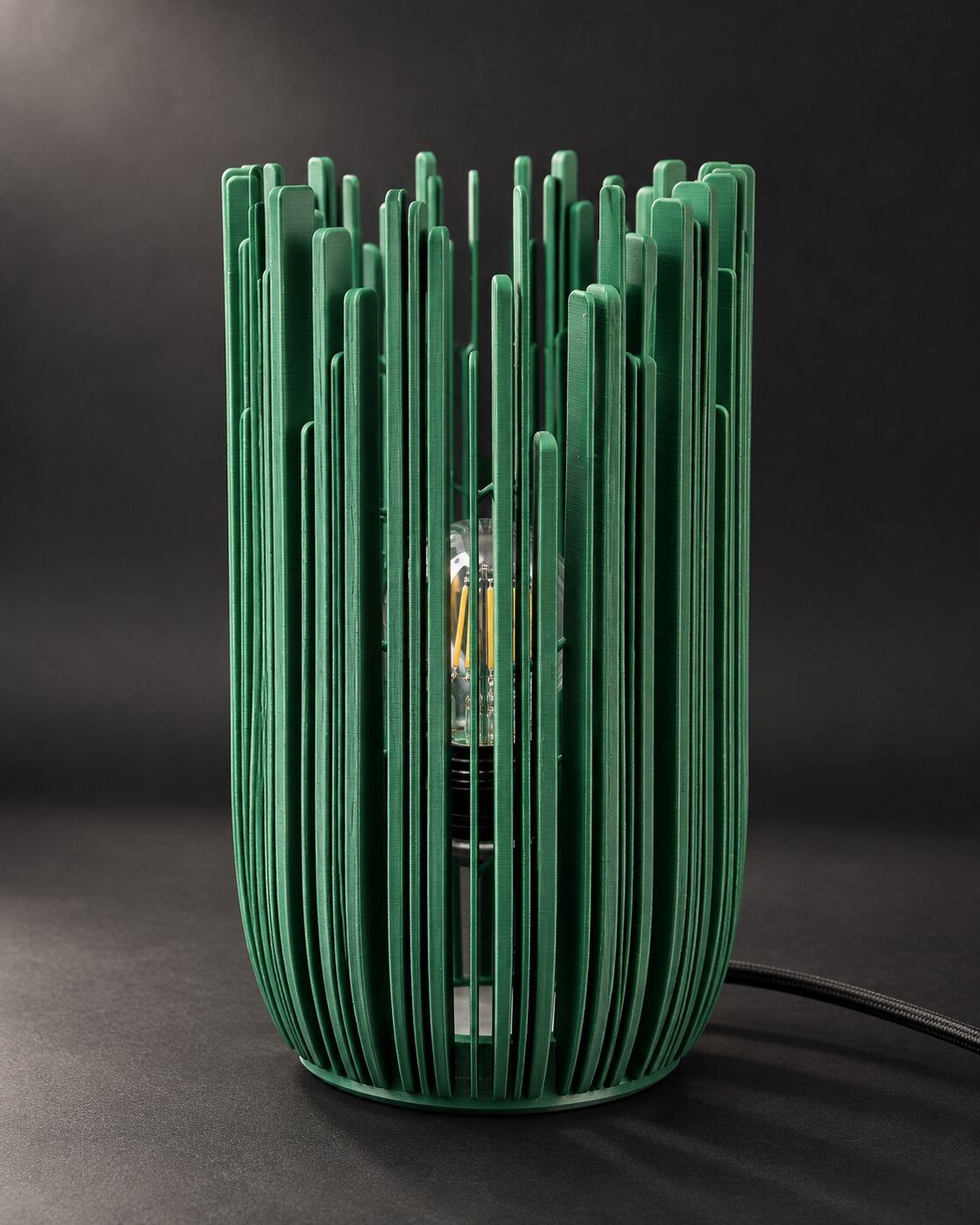
For a console where you want an open, architectural object, EVERGREEN offers a useful size comparison: the Standard is 10.5 inches high and 7 inches wide; the Large is 13.5 inches high and 8.5 inches wide. Its bulb remains visible through the vertical ribs. Consider that view, as well as the dimensions, if the console faces a seat or mirror.
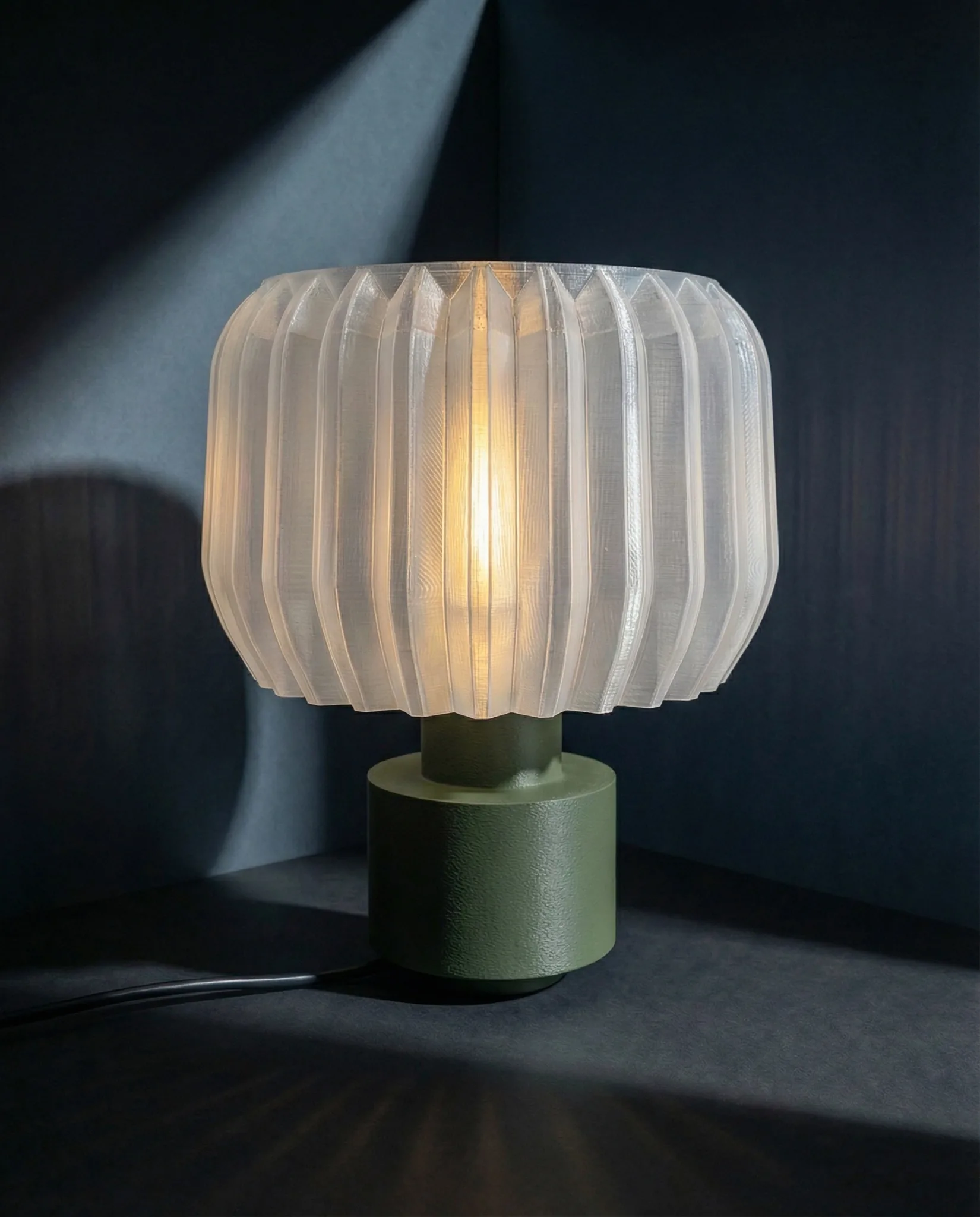
For a different effect, BILLOW uses a translucent shade and inner diffuser around its light source. Its wavy form can give a plain console a softer outline. Check the current product dimensions against your paper template rather than assuming a rounded lamp is compact. These are different design choices; select by the light you want and the room you have.
Use the console lamp to add a welcoming local glow. An entryway with steps, several doorways or a long passage still needs lighting that lets you see those features clearly. Keep that practical requirement separate from the decorative role of the object on the table.
Plan the cord and the everyday routine.
Locate the outlet before settling on the arrangement. Route the cord behind the furniture without stretching it across a walking route or trapping it in a drawer. Make sure the switch is reachable from the side you normally approach. A lamp can look perfectly placed and still be frustrating if turning it on means reaching behind a mirror every evening.
Then put the ordinary objects back: keys, mail, glasses, perhaps a small bowl. Check that the lamp sits on a stable, level surface and that nothing needs to lean against it. The best final arrangement should be easy to use without rearranging it. When width, sightline and access all work, the styling usually needs very little else.