Choose a bookshelf lamp by the space around its whole shape, the view from your seat and the route to an outlet. A compact light should leave the shelf useful and the lamp easy to reach.
In this story (6 sections)
Measure the opening in three directions.
A table lamp can work on a bookshelf when the entire lamp fits comfortably, the furniture can support it and the arrangement follows the lamp’s placement instructions. Start with the clear height between shelves, usable depth and width of the opening. Measure from the actual back panel or wall, including anything that projects into the space. A narrow base does not guarantee a narrow lamp: the shade may extend much farther.
Make a simple cardboard outline of the candidate’s widest dimensions before ordering. Stand it in the opening without switching on or covering any existing lamp. This is a visual fit check, not a substitute for the manufacturer’s required clearances. If the shape only just fits, choose a different position. You need room to reach the switch, remove the lamp and take a book out without brushing the shade.
Decide whether the shelf needs a glow or a work light.
A bookshelf lamp is often most useful as a small illuminated point in the room. It can give a dark bookcase some presence after sunset or connect a shelf to the seating beside it. It will not necessarily light every book spine, and a glowing shade does not tell you whether enough light reaches a page in your hands. Decide which of those jobs you actually want.
If you read beside the bookcase, assess the page from your chair and keep a separate reading light if needed. Our reading light versus ambient light guide explains that distinction. For a room with several lighting needs, a shelf lamp can be one part of the arrangement described in our small living room lighting guide. It does not need to carry the whole room.
Compare the full shape, not the word “small”.
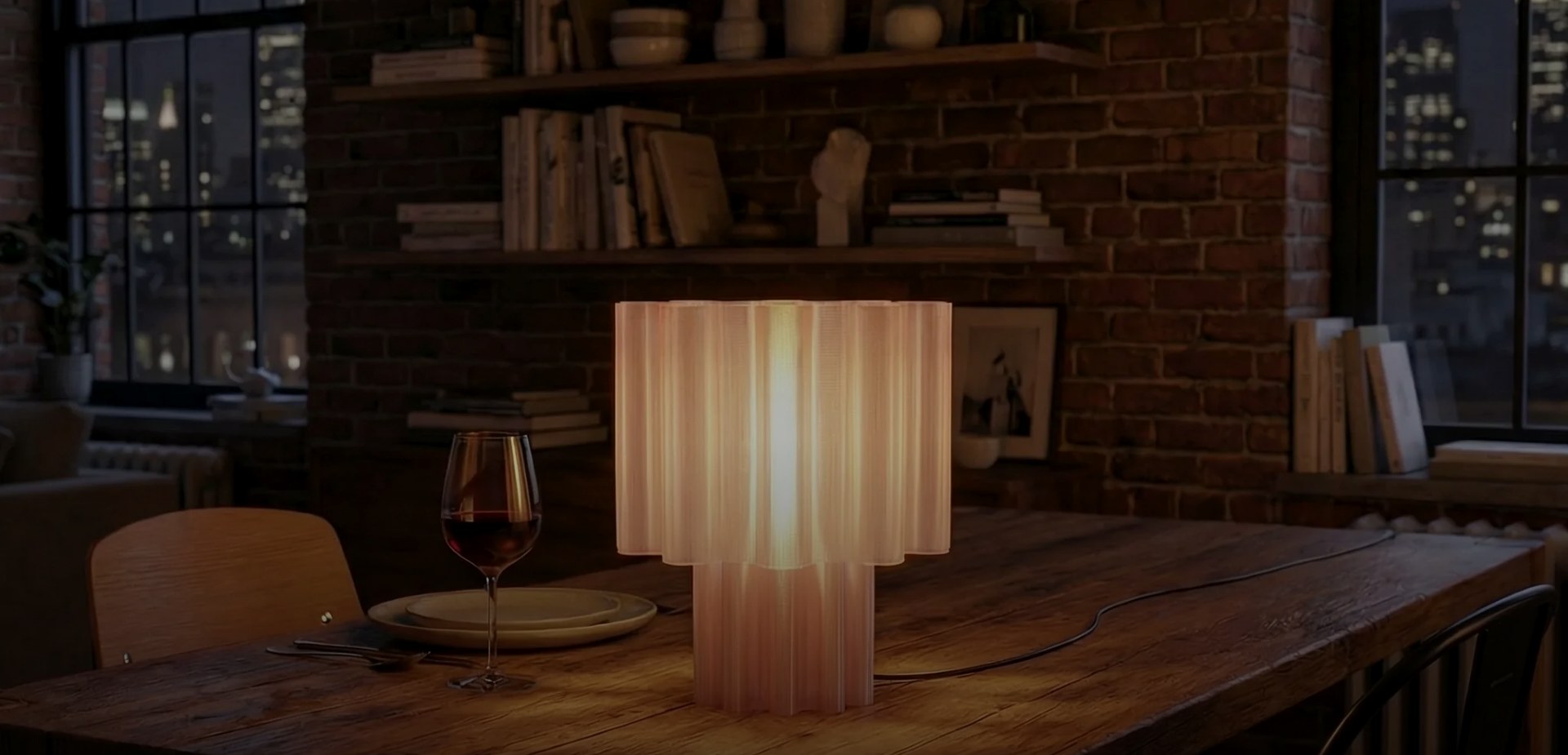
A simple geometric outline can sit comfortably among the straight lines of shelves and book spines. LINJE has a square ribbed translucent shade and a dark fluted base. The current catalog describes it as a compact cube lamp. That makes it worth considering for smaller surfaces, but it does not establish that it fits your particular bookcase. Confirm the current dimensions and placement requirements before choosing.
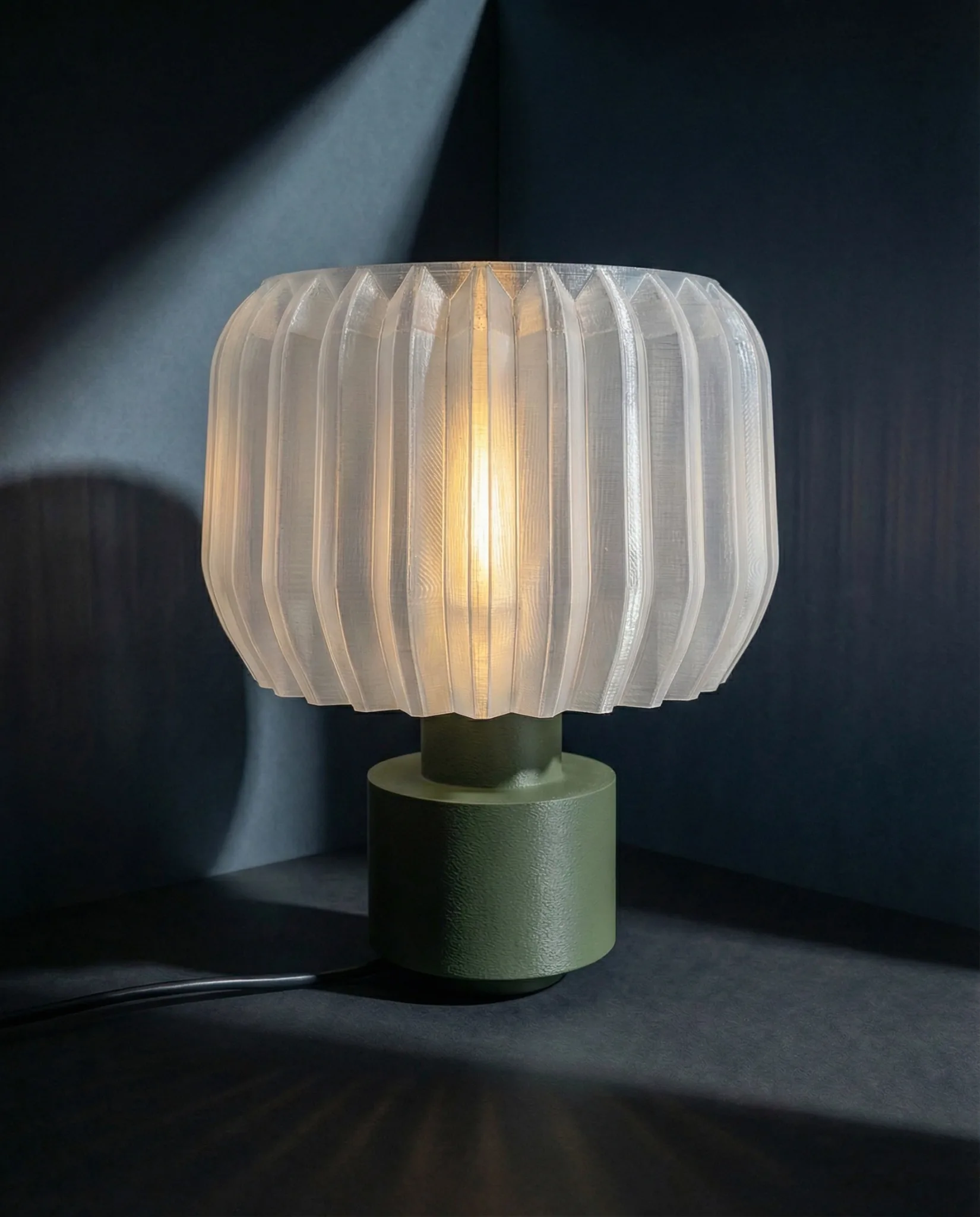
For a softer visual contrast, PUFF uses a translucent faceted shade with rounded volume. Compare how much of the opening that shape would occupy against LINJE’s straighter outline. On a shelf already full of irregular ceramics or small sculptures, a simple square can give the eye a pause. On a very ordered bookcase, a rounded object may be the more interesting interruption.
Keep the cable and switch part of the plan.
Find the outlet before deciding which shelf to use. Trace the route the supplied cable would take, allowing access to the plug and switch. Check whether the bookcase has an existing cable opening and whether the plug can pass through it. A cable should not be pinched behind furniture or pulled tight around an edge. If the route depends on forcing a plug through an unsuitable gap, choose another position.
Also check the shelf’s stated load capacity and installation instructions, particularly for floating shelves. Include the books and objects already on it when considering the load. Keep the lamp on a level, stable surface and use it with the specified bulb and clearances. Do not tuck the shade against books or drape anything over it to soften the glow. A decorative arrangement still has to follow the product’s instructions.
Look from the sofa and from the doorway.
A lamp placed high in a bookcase may put the underside of its shade directly in view from a low chair. Sit where you normally relax and look toward the proposed position. If you already own the lamp, check it illuminated there only after confirming the placement is suitable. Look for a visible bright source, an uncomfortable reflection in a framed picture or light that makes the adjacent objects hard to see.
Move a few books before moving the entire arrangement. Leaving a clear area beside the lamp can make its outline easier to read. Try keeping taller books to one side and a lower object farther away, rather than surrounding the lamp at every edge. The aim is a shelf that still works as storage. Avoid balancing the lamp on a pile of books merely to achieve a preferred height.
Make the everyday test before committing.
Imagine the shelf on an ordinary evening. Can you pull out the book you want, operate the switch and clean around the base without rearranging everything? Will the cable remain clear when an adjacent cabinet door opens? If the lamp sits beside a frequently watered plant, choose a separate dry location for one of them. These small decisions matter more than a perfectly styled photograph.
Keep your measurements alongside the product page while comparing candidates. If the bookcase is too shallow or enclosed for the lamp you like, an adjacent side table may give it a better home. Our table lamp size guide can help with that alternative. Choose the position that lets the lamp, the books and the people using the room all have enough space.