Start with one shape you enjoy: a broad dome, a soft wave or a rhythm of vertical ribs. Let that lamp provide the reference to nature while the rest of the room stays personal and useful.
In this story (6 sections)
Borrow a shape rather than a whole setting.
Nature-inspired table lamps can work in a room with ordinary furniture, books and artwork. You do not need a coastal palette for a wave-shaped shade or woodland accessories for a mushroom silhouette. Begin with the quality of the shape: broad or slender, smooth or textured, open or enclosed. Those choices tell you more about how the lamp will sit in your room than the name of an interior style.
A recent example comes from Coastline in Formation at Dutch Design Week 2026, by Underbug and Noord see Lights. The installation translates coastal layering into ceramics and 3D-printed lighting forms. It offers an interesting design prompt: borrow a process or rhythm from nature instead of reproducing a landscape literally. The practical styling suggestions here are our interpretation, rather than claims about a new consumer trend.
Choose the outline that the furniture needs.
Look at the furniture before looking for matching accessories. A low cabinet with a long horizontal top may benefit from a lamp that gives one area a clear focal point. A tall narrow chest already has height, so a wider shade might be the shape you notice first. Neither arrangement needs a fixed proportion rule. Compare the complete outline against the surface and the wall behind it.
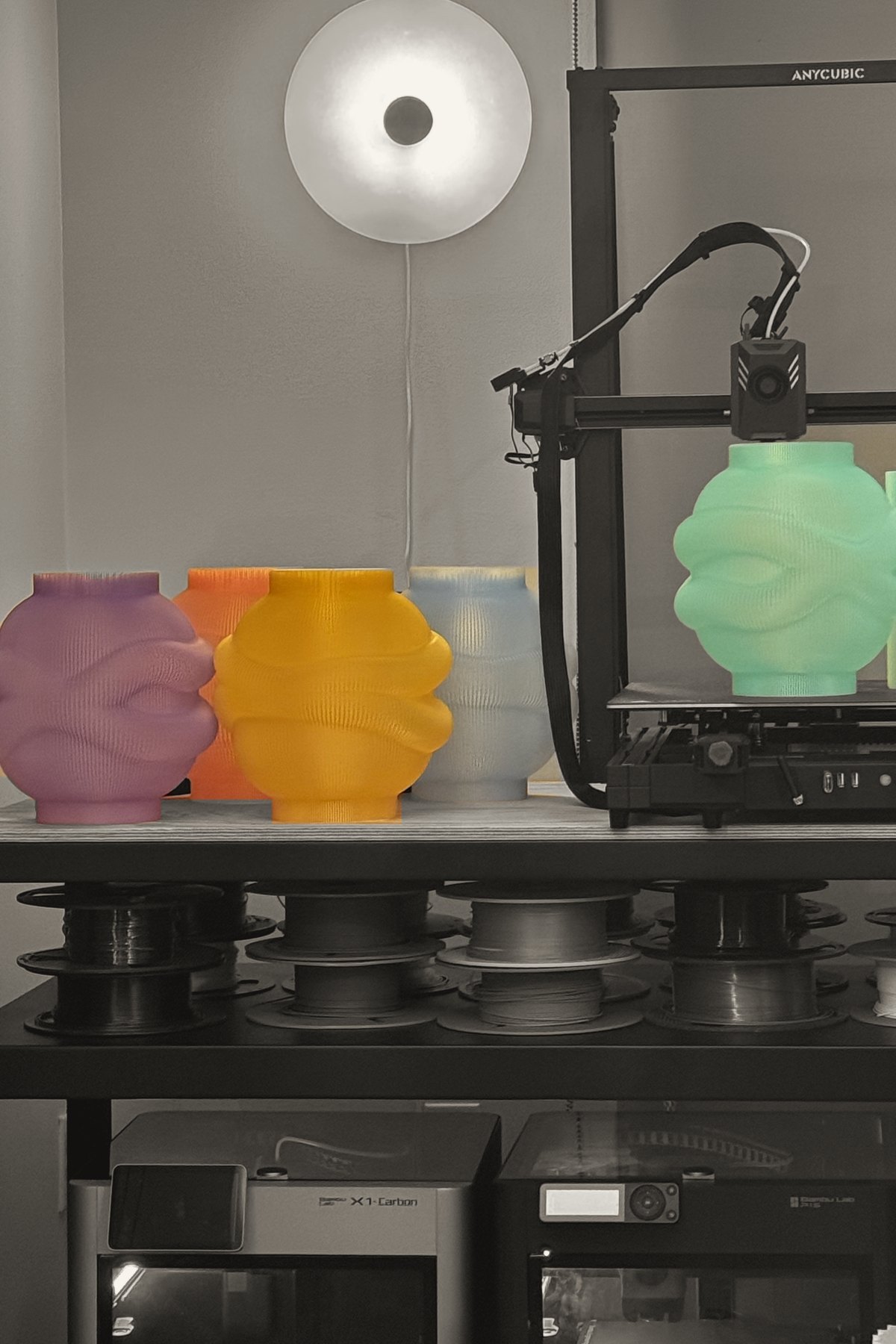
For a rounded silhouette, HALO has a wide translucent dome and a ribbed base, with Electric Green listed in the current catalog. The mushroom reference is easy to recognize, but the shape can also read simply as a curved canopy above a tapered support. Give the dome enough room that you can see its edges. Measure its full width, not just the footprint of the base.
Use repetition when you want a quieter reference.
Organic design does not always mean a round or irregular object. Repeated lines can suggest grasses, trunks or layers while remaining quite architectural. This is useful when you like the idea of a connection to nature but prefer a room with straighter furniture and a restrained arrangement. A repeated structure can relate to slatted cabinet doors or the vertical edge of a curtain without matching them exactly.
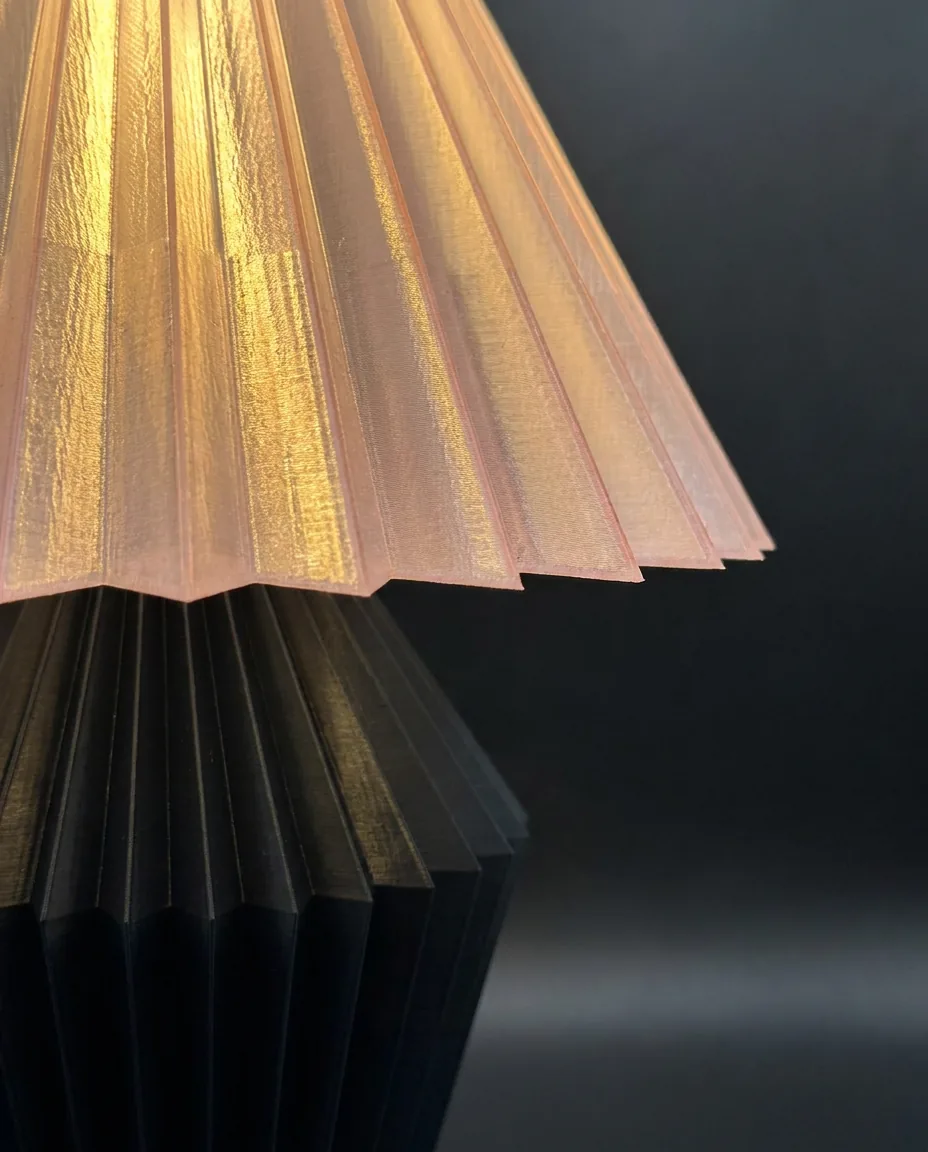
For example, EVERGREEN is inspired by the forests around Seattle. Its green open ribs echo the rhythm of tree trunks, with light visible between them. That is a different design approach from HALO’s broad dome. Compare the actual light effect as well as the outline: open ribs and a translucent shade create different visual experiences. Our guide to translucent shades and open ribs looks more closely at that choice.
Let color connect to something already there.
A green lamp does not require a green room. Look for one existing connection, such as a small area of a painting, a textile or a plant seen elsewhere in the space. The relationship can be loose. Repeating the exact color across cushions, curtains and ornaments may make the lamp feel less distinctive rather than more integrated. Try removing one matching accessory before buying another.
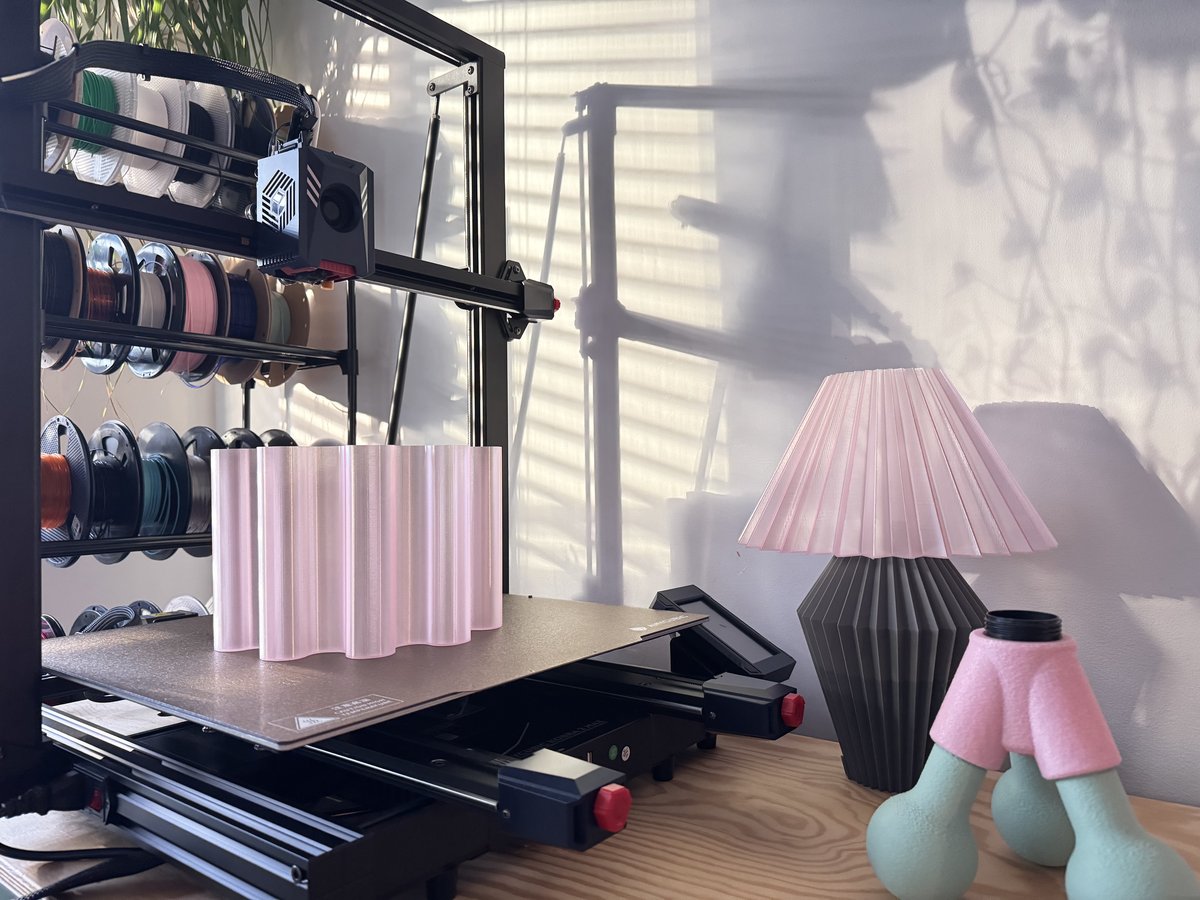
If the shade is strongly colored, let the wall behind it help define the outline. A quiet background can make a dome or ribbed edge easy to see; a busy pattern may blend into it. This is a visual preference to test in your own space, not a rule that bright lamps need white walls. Our colorful table lamp guide offers ways to compare contrast and repetition without starting the room again.
Leave room for the ordinary objects.
A nature-inspired lamp can be the most expressive object on a surface while the objects beside it remain familiar and useful. A shallow bowl for keys, a book you are reading or a plain frame can provide enough company. Resist adding several smaller objects with the same motif. A mushroom lamp does not need mushroom ornaments to explain itself; its outline already gives the room that character.
Try viewing the arrangement from two positions: the doorway and the seat nearest the lamp. From the doorway, check whether the silhouette stands apart from nearby plants or artwork. From the seat, make sure the lamp leaves room for a drink or the other things you use there. If you keep shifting it to put something down, it may need a more generous surface rather than more styling.
Make the final choice in daylight and after dark.
A lamp has a visible role even when it is switched off. Review daylight photographs to understand the shade’s color and the relationship between base and top. Then compare illuminated photographs to see where light appears in the form. Photographs can help you judge character, but they cannot establish how bright the lamp will feel in your room or whether it will serve a reading task.
Keep inspiration separate from product specifications. A forest or mushroom reference describes a design idea; it does not establish what a lamp is made from, its environmental impact or its technical performance. Check those details on the product page. Choose the shape because you enjoy living with it, and confirm that its size, light and controls suit the place you have chosen. That gives the reference to nature a useful, lasting place in the room.