Bedside lamps can match, coordinate or serve different jobs. Choose the approach that suits the two sides of your bed, then connect the lamps through shape, color or the way they look when lit.
In this story (6 sections)
Choose what the pair needs to do.
No, bedside lamps do not have to match. An identical pair is an easy way to repeat a shape across the bed, but two different lamps can feel equally considered. Start by deciding whether both sides need the same kind of light and have similar space. A bedroom shared by a reader and someone who only wants a little evening glow may need two different lighting arrangements.
Take everything off the nightstands except the objects you actually use: perhaps glasses, a phone, a book and water. Now note the clear area left for each lamp. This gives you two real starting points. It also prevents a common mistake: choosing a beautiful pair from a room photograph, then discovering that one lamp occupies the only useful space on the smaller table.
Use matching lamps to connect different furniture.
An identical pair can be especially useful when the nightstands are different. Repeating the shade outline and base color gives the eye a connection across the headboard, even if one side has drawers and the other has open legs. Keep the rest of the arrangement relaxed. The books, objects and storage on each side can reflect the person using it.
Matching lamps do not have to sit in precisely mirrored positions. One may need to move toward the wall to leave space for a glass; the other may sit closer to the outside edge of a larger table. Check each placement for a stable footprint and a reachable switch. Let the repeated lamp shape provide the visual order without making ordinary use awkward.
Try one shape in two colors for a gentle difference.
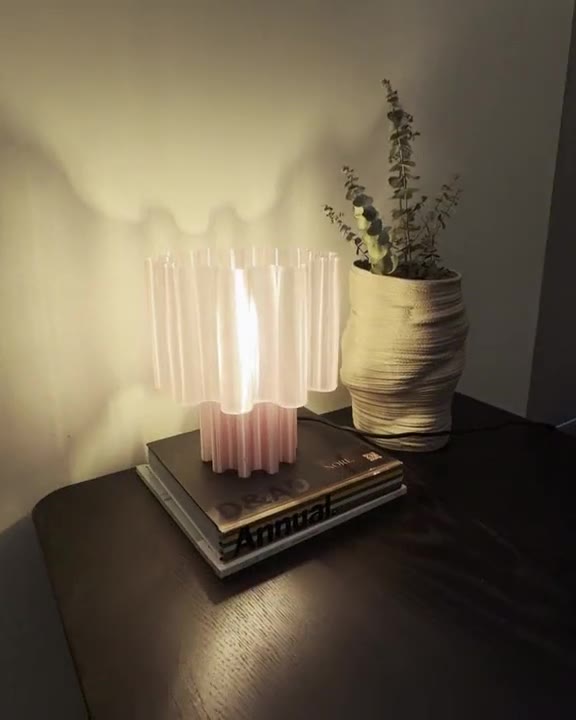
If you like the clarity of a pair but want each side to feel personal, begin with the same model in different finishes. SOFT COTTON has a pleated conical shade and ribbed base, with Sage, Coral and Blue options in the current catalog. Keeping that silhouette consistent lets the base color carry the variation. Compare the selected variants in the product photographs before choosing.
Pick colors that already have a reason to be in the room. Sage might relate to a green thread in the bedding; Coral might connect to a small area of artwork. You do not need matching accessories beside each lamp to explain the choice. Keep the bedding or wall behind the pair fairly quiet if you want the two colors to remain the main difference.
For different shapes, choose one clear connection.
A mixed pair becomes easier to assess when you decide what it shares. That might be a pale shade, a repeated base color or a similar amount of visual presence. Change one thing at a time while comparing photographs. If shape, color and apparent size all differ, the pairing may still work, but it asks more of the surrounding furniture and artwork to hold the room together.
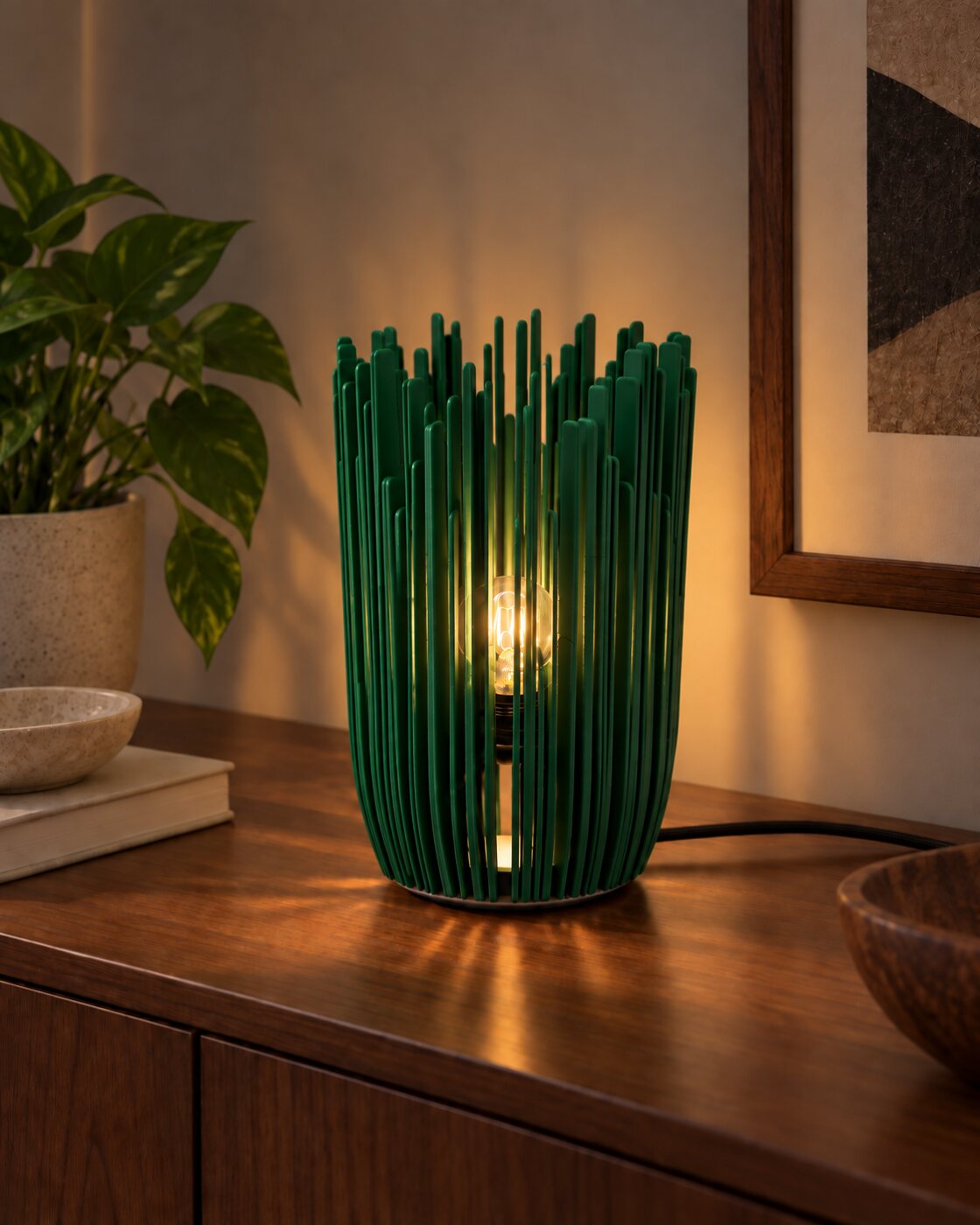
For example, compare the conical outline of SOFT COTTON with NOVA’s vertically ribbed form. Both currently offer Sage and Coral options, giving you a color connection to explore across different silhouettes. This is a starting point for a palette, not a promise that two finishes will look identical in every light. Review each lamp’s full dimensions and illuminated photographs separately.
Judge height from the furniture up.
The height printed on a product page is only part of the composition. A lamp on a tall chest starts higher than the same lamp on a low nightstand. Compare the combined furniture-and-lamp arrangement from the doorway, then check it while sitting in bed. If the higher side feels dominant, consider a shorter lamp or a less expansive shade on that side.
There is no need to make both shade tops meet an exact imaginary line. The more useful question is whether either lamp feels uncomfortably close, exposes a bright source at your seated eye level or crowds the pillow. Our bedside lamp height guide covers the relationship between mattress, nightstand and lamp. Use it for each side before judging the two together.
Check the pair after dark, with both routines in mind.
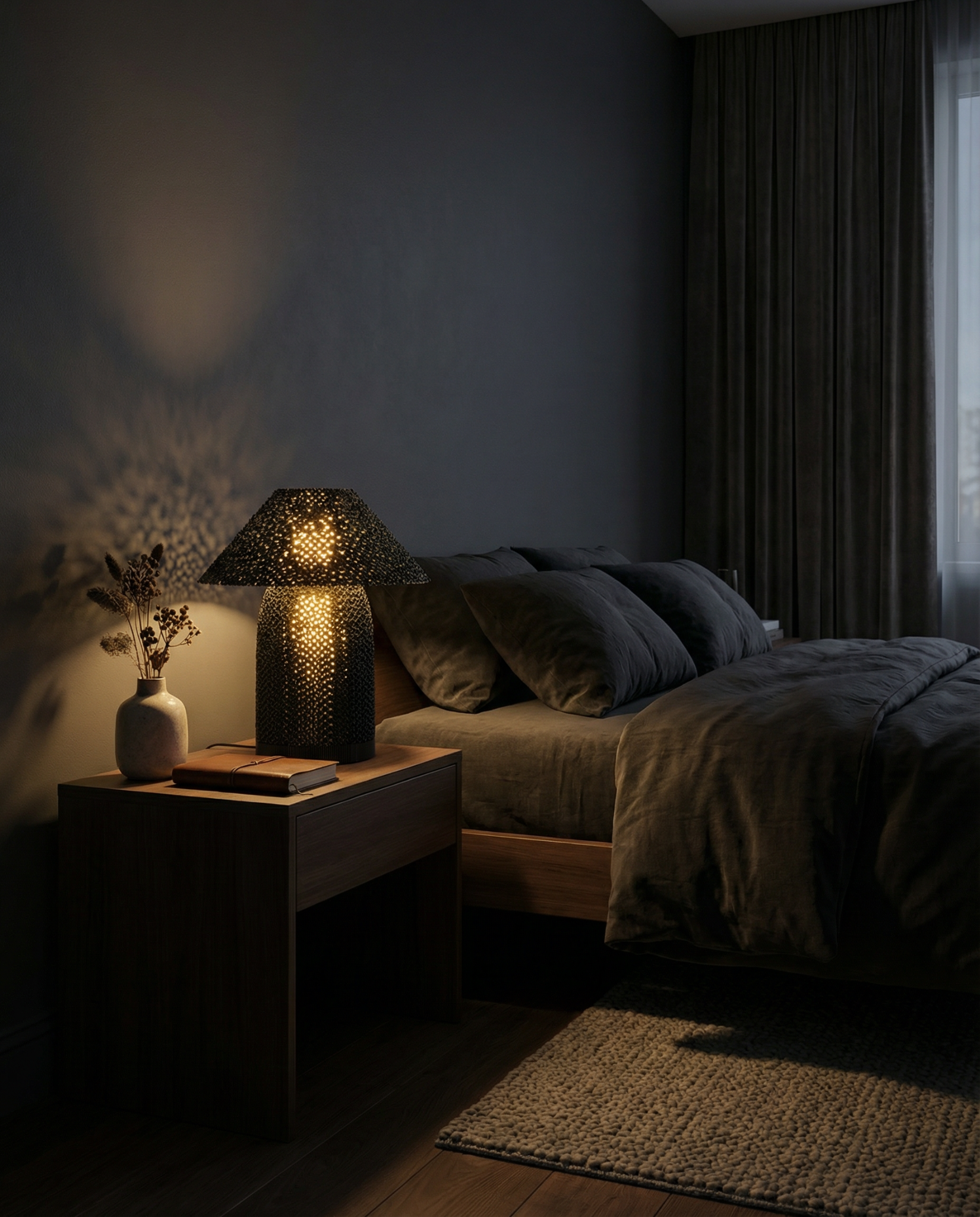
Two lamps that balance well when switched off can look very different once their shades glow. Compare the illuminated area as well as the base: a broad luminous shade may draw more attention than a narrow one. If you already own one of the lamps, use it as the reference while reviewing the second. Avoid trying to infer brightness from a styled photograph alone.
Keep reading needs separate from the desire for a coordinated bedroom. A decorative lamp can provide atmosphere while a separate reading light serves the page. See our reading light versus ambient light guide before expecting a pair of decorative lamps to perform both jobs. Finally, try the switches from each side of the bed. The strongest pairing is one you can live with comfortably, whether it is identical, gently varied or deliberately different.