The useful answer to bedside lamp height: how the lamp, mattress, nightstand, and line of sight should work together in a real bedroom.
In this story (4 sections)
Start with where your eyes land when you are in bed.
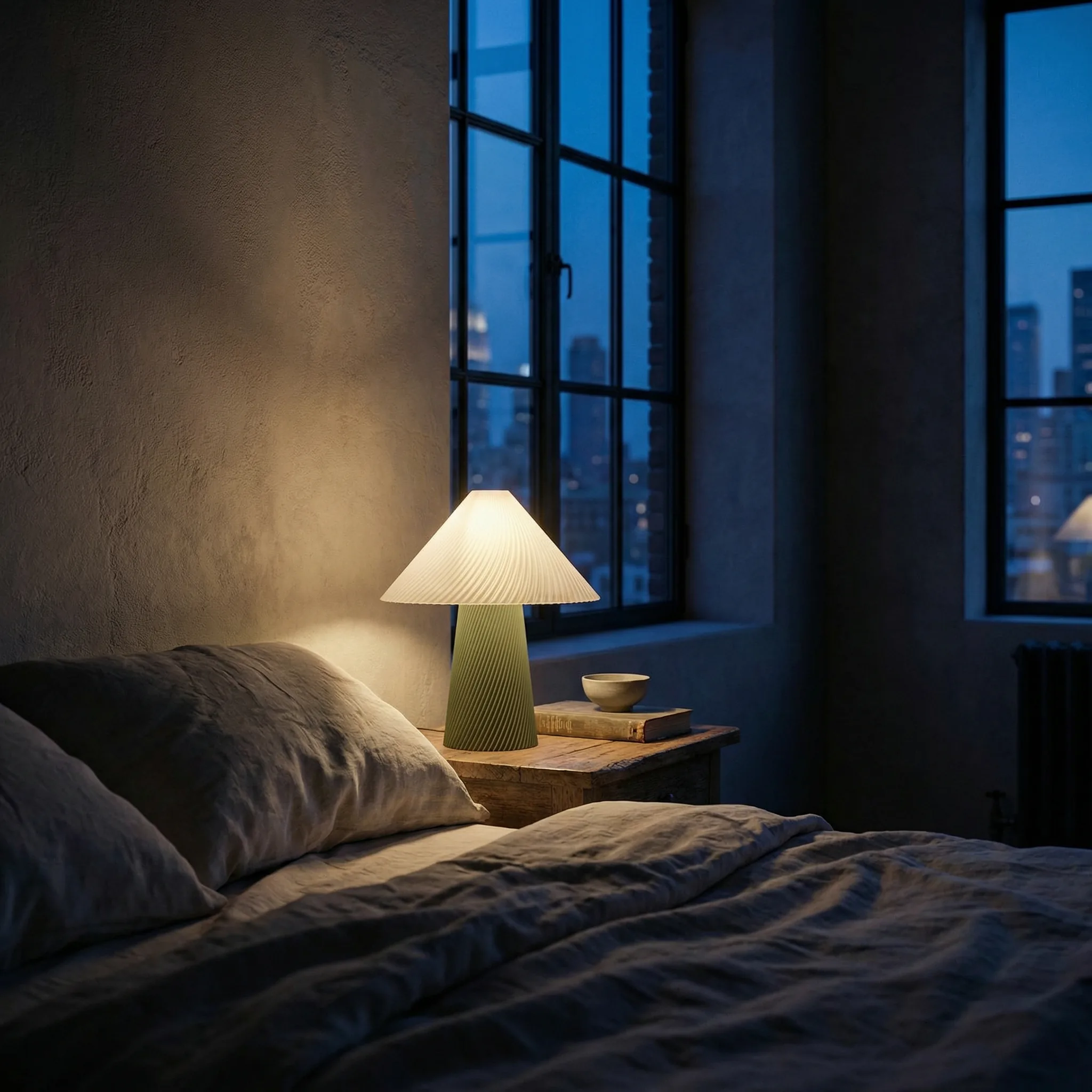
The most useful bedside lamp places its glow close to your resting line of sight without exposing a bare bulb or forcing you to look up into a harsh source of light. Sit on the bed as you normally would and notice the relationship between the top of the nightstand, the mattress, and the spot where you would read or reach for a book.
Instead of chasing one universal measurement, use this relationship as the test. A lamp that is too low can leave the bed feeling visually unanchored and its light trapped on the table. One that is too tall can become distracting, especially with a wide shade or an exposed source.
Let the nightstand set the first proportion.
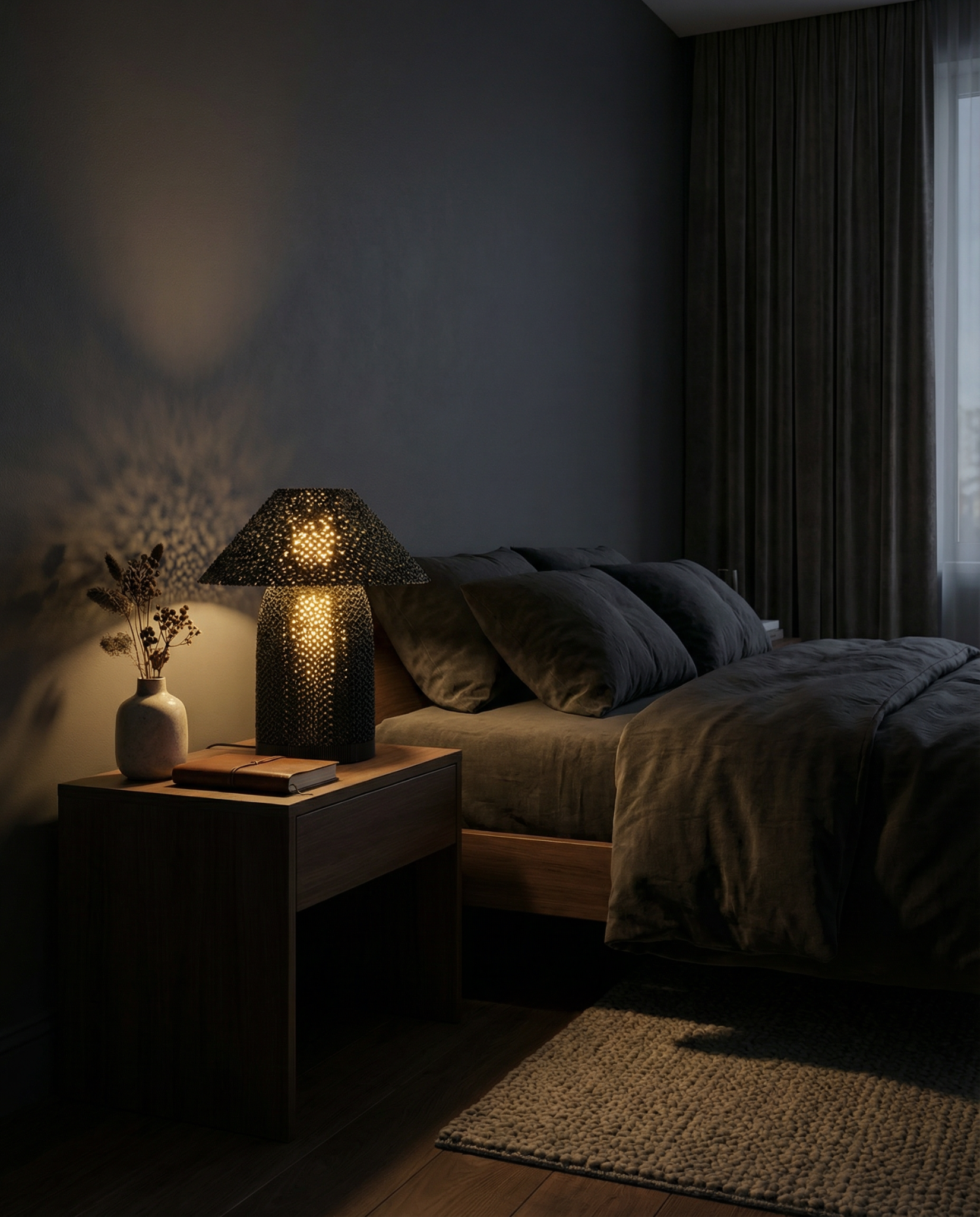
A low, broad nightstand can support a lamp with a fuller silhouette. A narrow table usually benefits from a more vertical or compact object that leaves enough surface clear for daily use. The lamp should feel like part of the table, not a separate sculpture that happens to be balancing on it.
Leave a little breathing room at the front and sides. That negative space makes a lamp feel chosen rather than oversized, and it gives you a practical place for water, glasses, a book, or a phone without turning the table into a storage surface.
Use the bed as the second reference point.
The top of a bedside lamp often feels most natural when it relates to the headboard or the upper edge of the mattress rather than sitting much lower or higher without a reason. You are looking for a conversation between the lamp and the bed, not a strict alignment. A sculptural form can sit slightly outside the expected range and still work when its mass feels balanced.
In a room with a tall upholstered headboard, a smaller lamp can disappear. In a room with no headboard or a very low frame, a compact lamp may be exactly what keeps the bedside area from feeling crowded.
Prioritize a comfortable glow over a dramatic measurement.
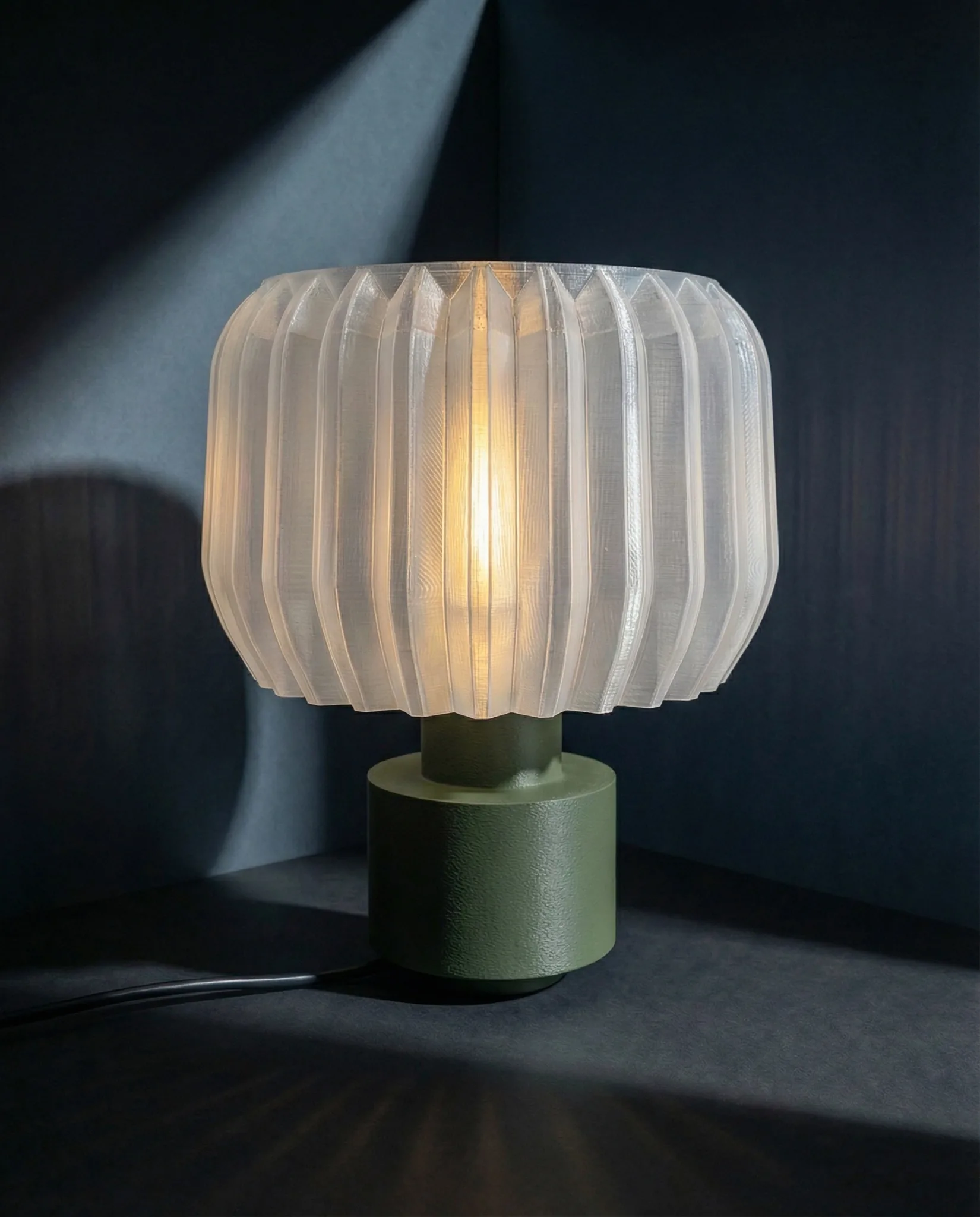
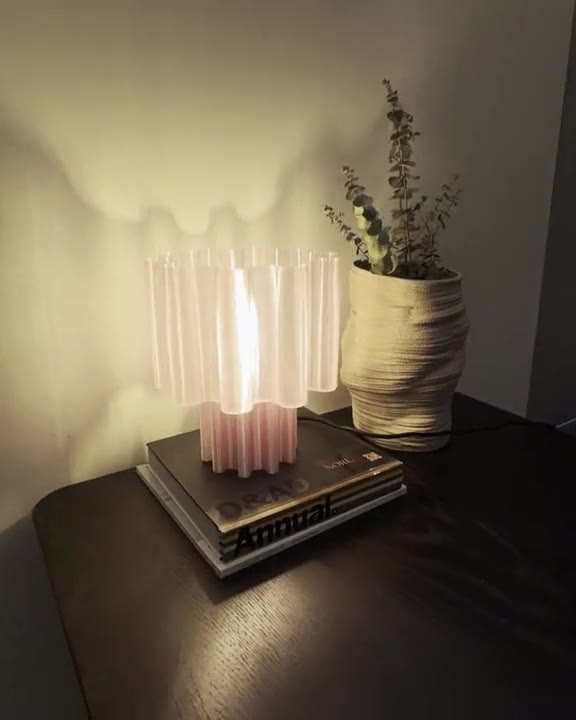
A bedside lamp is used close up and late in the day. Its shape should diffuse the source enough to make the room feel calm, while still giving you enough light to find what you need. This is why height, shade geometry, and placement matter together rather than as separate decisions.
Once the practical relationship feels right, choose the lamp whose material and silhouette make you want to switch it on. The best bedside object earns its place in the room in daylight and becomes even more useful after dark.