A simple guide to choosing between 2700K and 3000K table-lamp light for bedrooms, living rooms, reading corners, and calmer evenings.
In this story (4 sections)
Kelvin describes tone, not how much light you get.
Kelvin, written as K, describes the color temperature of a bulb. Lower numbers read warmer and more golden; higher numbers read clearer and whiter. The difference between 2700K and 3000K is subtle on paper but meaningful in a room, especially once evening begins and the lamp becomes one of the main visible sources of light.
Brightness is a separate decision. A 2700K bulb can be bright and a 3000K bulb can be restrained, so look at lumens when you need more output. Use the Kelvin value to decide how the light should feel, then choose the brightness for the lamp's actual job.
2700K is usually the gentler choice for winding down.
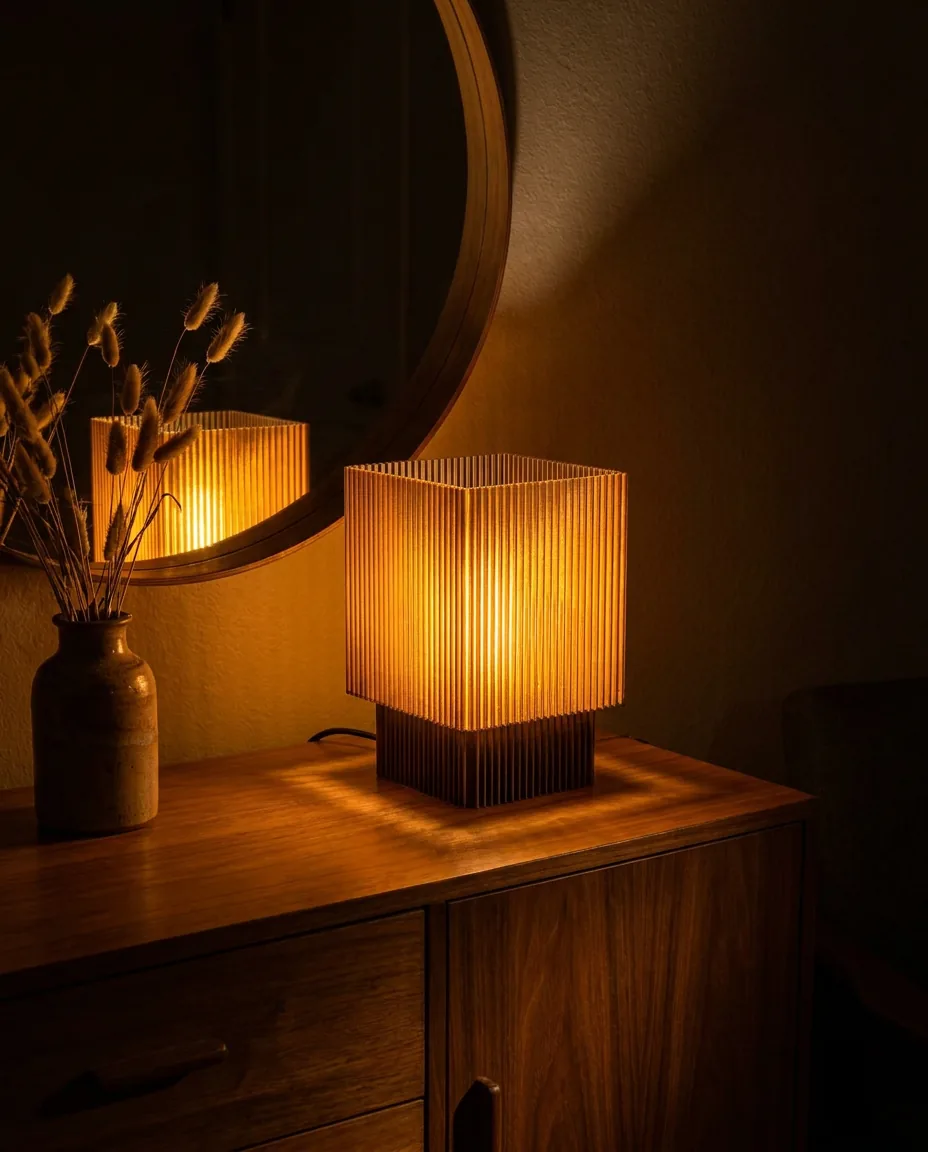
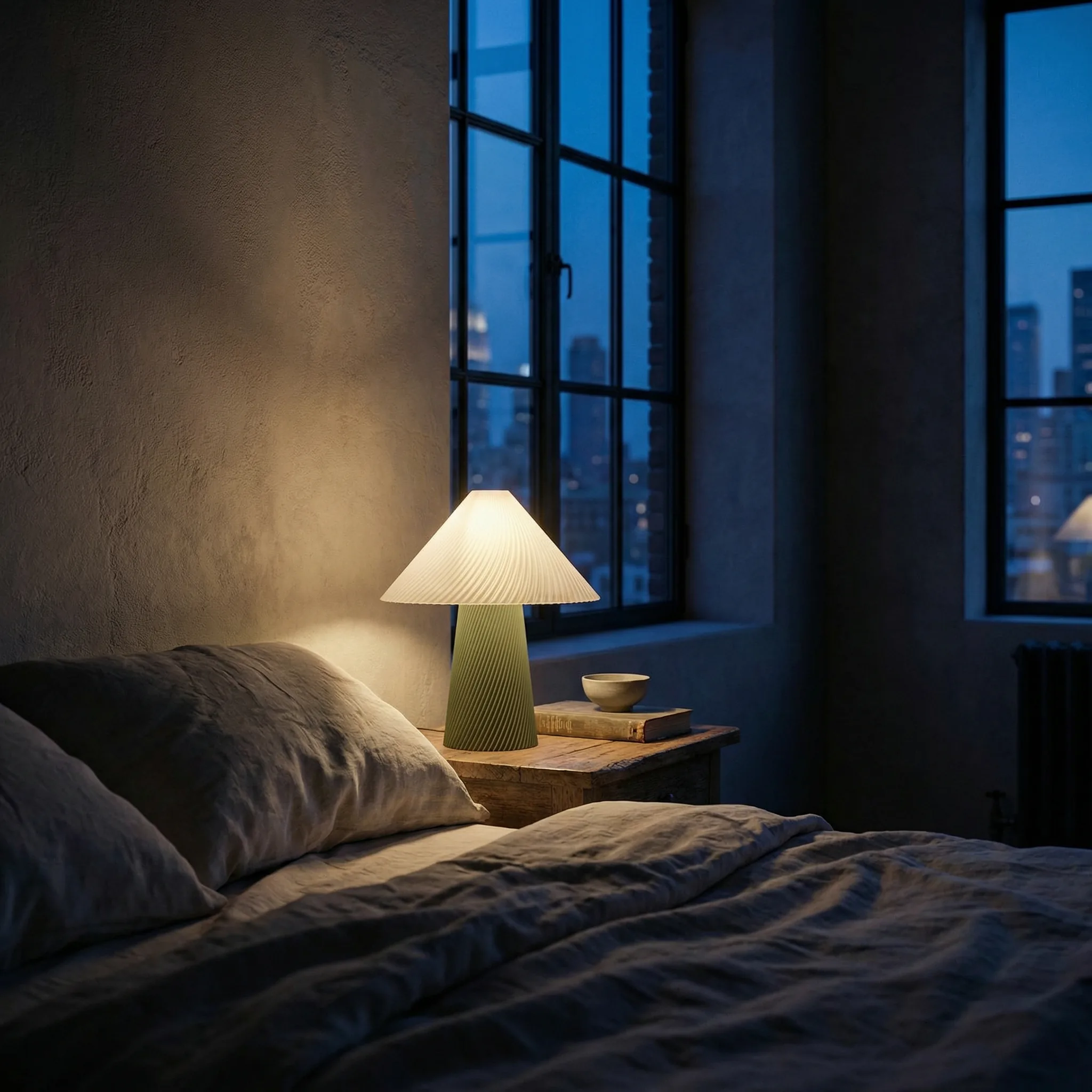
For bedrooms, living rooms, and the quieter end of a day, 2700K is a strong default. It has a warmer, more familiar tone that tends to make wood, textiles, and warm-colored finishes feel more relaxed. In a table lamp, it can help reduce the hard contrast created by cool overhead lighting or screens.
That does not mean every room needs to become amber. A well-diffused 2700K bulb can still look clean and modern. It simply shifts the atmosphere away from task lighting and toward a softer local glow.
3000K can feel clearer without becoming cold.
At 3000K, white surfaces tend to look a little more neutral and details can feel easier to read. That can be useful at a desk, in an entry, or beside a chair where the lamp sometimes supports a focused activity. It is still on the warm side of white light, but it carries a slightly more alert, contemporary character than 2700K.
If a room has very warm walls, richly colored timber, or a lot of amber glass, 3000K can also prevent the whole space from becoming too yellow. The right choice depends on the room's material palette as much as on the bulb itself.
Diffusion and placement matter just as much as the temperature.
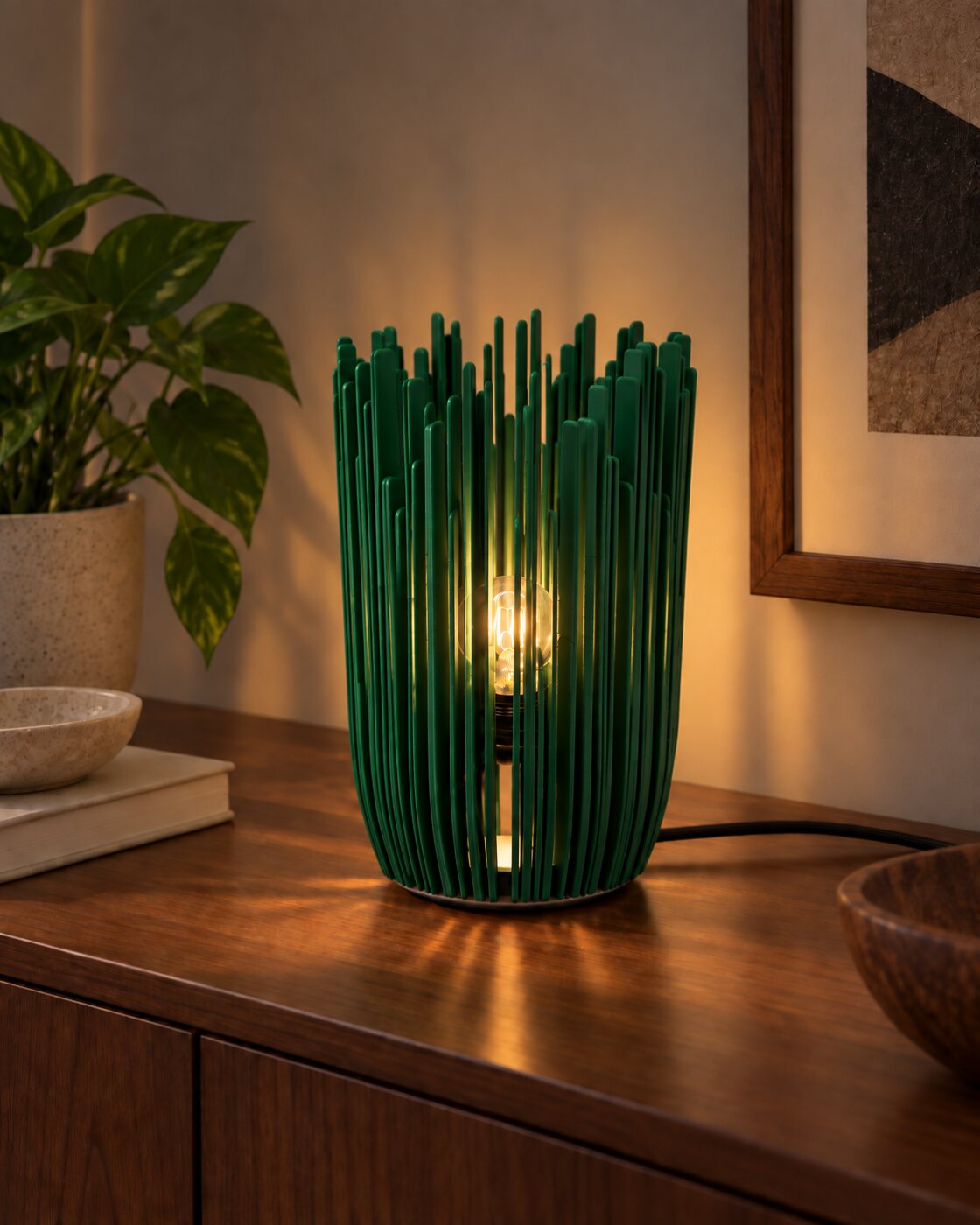
A bare bright bulb at 2700K can still feel harsh, while a well-diffused 3000K lamp can feel remarkably calm. Shade geometry, opacity, surface texture, and where the lamp sits all shape what your eye experiences. Put the light near a wall, curtain, bookcase, or textured surface and the room will carry some of the glow for you.
For most cozy home settings, begin with 2700K and see how the room feels at night. Choose 3000K when you want a little more clarity. The better decision is the one that supports the way you actually use the space, not the one that sounds most technical.